October 22, 2026
STYLISH,  BUT DRESSED  DOWN

STYLISH, BUT DRESSED DOWN

Is Rohit Khattar building India’s biggest collection of
casual-but-gourmet restaurants?

By Anoothi Vishal
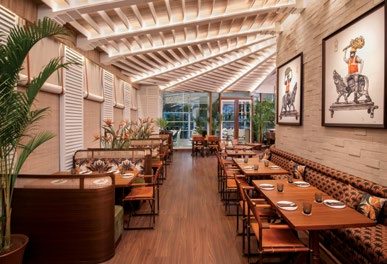
The last time, I met chef Harish Rao it was at a long dinner by India’s top chefs, in a mango orchard, in the middle of nowhere. Rao had not cooked any of the many courses. He was only “helping out”— except that it was so intensive and extensive that I was told by a friendly chef also present at the event (who was cooking and had benefitted from the help) that the former had in fact fainted! Apparently, when I had met the good Samaritan soon after, it was with the quip: “so, you are the chef who fainted!” Luckily, Rao, far from feint, is now firmly in charge at Hosa, Gurugram’s latest “with it” restaurant.
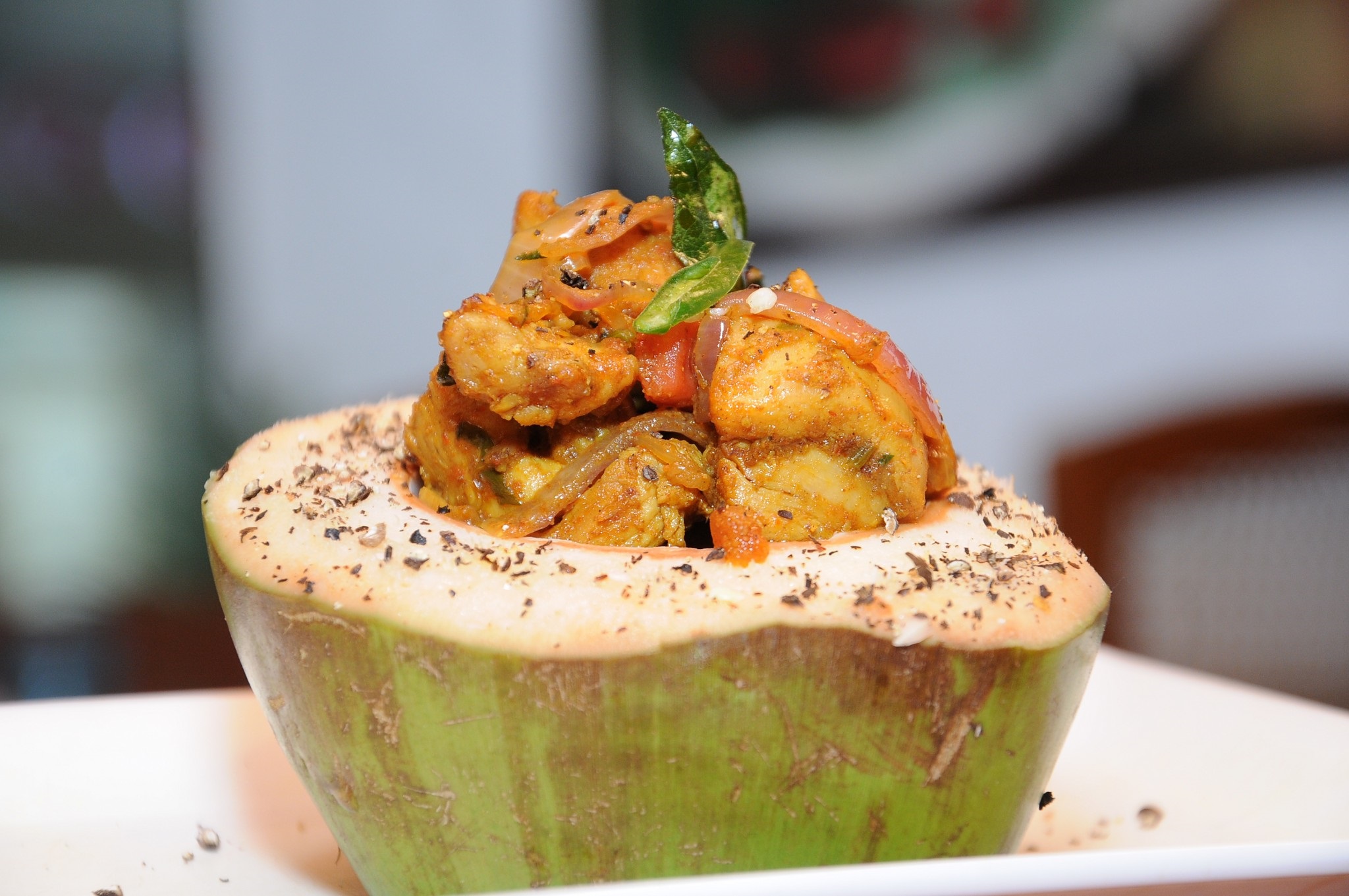
Things have been pretty hectic here, and houseful every evening since the restaurant opened – with people even calling former employees of the restaurant’s parent company, EHV International, to facilitate bookings! When I visit, it is on a sunny afternoon, a few days before the launch. Invited guests such as I am, are tasting the menu, giving their feedback to the energetic team and chef. Dishes such as brain pepper roast, silken and decadent, elaneer fry, where tender coconut may masquerade as squid and you wouldn’t know, roti cannai that arrives with fluffed up eggs in its hollow, curry poured on the side, inspired by the parottas of chef’s Madras street crawls, and Pamban chicken, with its northern Sri Lankan Tamil pedigree and a whiff of lemon grass pointing to trade links between the south and south-east Asia since antiquity, are at different tables. Rao’s talent is very much in evidence, and, as the afternoon wears, I find myself happily going through at least two-thirds of this smashing menu.
Mentored by two of southern India’s most knowledgeable chefs, Praveen Anand and Regi Mathew, Rao has been a hidden gem if not in the close-knit world of food professionals, then for the rapidly growing tribe of food cognoscenti in Mumbai, Delhi and other major Indian restaurant markets till now. But eat enough of his food, and you conclude that here is not just knowledge, first-hand cultural connection that is so important to regional Indian food, but also dexterity. The chef can, and does, layer up all disparate elements, references and tastes in sometimes unconventional but always conceptuallysound ways
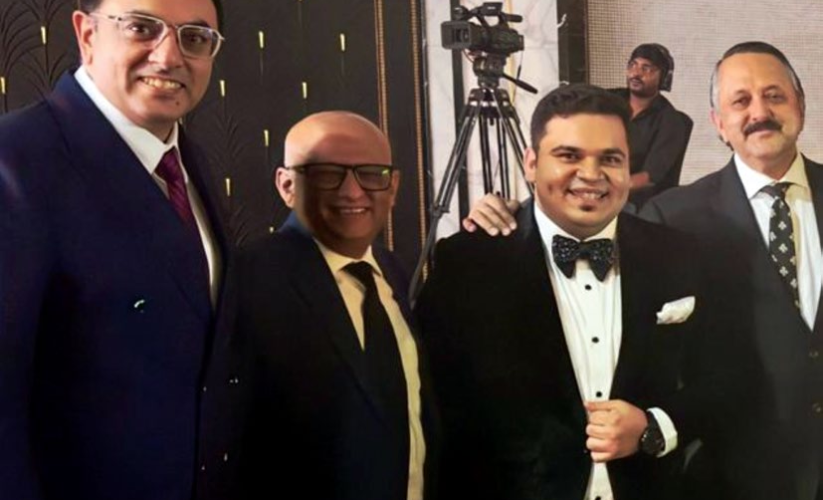
Team EHV International (L-R): Dhiraj Dargan (Brand Chef, Comorin); Shantanu Mehrotra (Executive Chef, Indian Accent New Delhi); Rijul Gulati (Cluster Executive Chef, Mumbai); Rohit Khattar (Founder Chairman); Rashmi Khattar (Director Design); Satvik Handa (GM Catering); Erick Monteiro (AGM – Comorin, Fireback, Drift Mumbai); Kaustubh Haldipur (Brand Chef, Fireback)
The credit for bringing him onboard and showcasing his exceptional cooking goes to EHV International’s founder chairman Rohit Khattar– long regarded as India’s most successful restaurateur with a marquee brand that he created in Indian Accent more than a decade and half ago, but also known in the industry to have a knack for spotting — and retaining — talent, rare in a world where poaching, not just poached, is common.
It is perhaps this gift with people that is going to stand him in good stead as he goes about building what is increasingly looking like India’s biggest, or at least its most substantive, chain of gourmet (but casual) restaurants.

One restaurant opening every month!


From April 2025 to March 2026, EHV International will have
opened around 12 restaurants across 4-5 “fine casual” brands
in four different metros in the country. This averages an
astonishing one restaurant opening a month
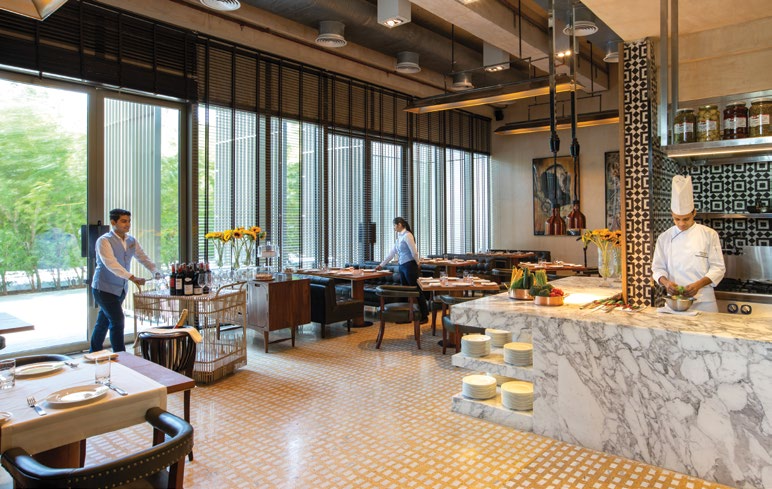
The brands that Khattar has conceptualised (and incubated two of them in Goa since 2022) are Hosa (let’s call it “imaginative” south Indian), Fireback (an upscale Thai restaurant, with the world-renowned David Thompson as its culinary director), and Drift (a café/all-day diner with European-style food and smart cocktails that opened its first outlet in Mumbai earlier this year). Then, there is Comorin, conceptualised by Rishiv, Rohit son, in Gurgaon seven years ago but which has gone to Mumbai in a stylish new and better avatar. It will go to Hyderabad next along with the others. And all of these are set to open an outlet each in the four-five metros Khattar is bullish on: Delhi, Bangalore, Hyderabad, Mumbai and Gurugram. In addition, there is an upcoming bar brand (under Varun Sharma, the company’s uber talented head of mixology, who deserves a showcase of his own). Comorin, Fireback and Drift made their Mumbai debut earlier in 2025, the search for an apt locale for Hosa is on. In Gurugram, Hosa has just opened, just across Comorin at the One Horizon Centre, once again a hub for big restaurateuring, while the search for an apt Fireback location is on. And all five brands are readying to launch in Hyderabad even as we go to press.
This mega scaling of what are essentially full-fledged, layered and nuanced, gourmet restaurants that are chef-led (even if the pricing and service is casual) is not easily done. And while there are a few examples internationally of big restaurant companies that managed to build empires while keeping intact the sophistication of the small individualistic restaurant in their DNA (Danny Myers and the Union Square Hospitality Group that made its reputation running upscale NYC restaurants before turning to Shake Shack and fast food to make his billions, comes to mind), there are virtually no examples within the Indian hospitality space of entreprenuers who have — successfully — managed to scale to this level multiple gourmet brands — with or without funding.
The closest to what Khattar and EHV are attempting may be in the UK: Samyukta and Dinesh Nair of LSL Capital, whose culinary enterprise is headquartered in Londonwith restaurants that include not just the Indian restaurant Jamavar (which has grown outlets in Dubai and Doha), but also other Mayfair sophisticates, offering cuisines ranging from Italian to Cantonese. Some of these are positioned as luxury, unlike the EHV new collection but the detailing may be similar.


In marrying the finesse of a more sophisticated restaurant
with the price points (small plates at Hosa are between
Rs 695-1100, a little less that what you pay at some of the
standalones at Eldeco Centre in Delhi not half as polished)
and service style of a more casual diner, Khattar has created
a new category of “fine-casual” restaurants in his own
words. As we sit down to lunch, he quips: “It’s a pace a PE
fund would have put me through. But here I have taken it
up on myself!”

The obvious question is why? In 2022, soon after Covid, Rohit Khattar rethought his life, he says. “I asked myself what is it that I truly wanted to do in the next decade. And that introspection led me to exiting almost half of the businesses (like films) I was involved in (apart from restaurants). I was able to exit these elegantly, by not being greedy. I found it freed up so much of my mindspace, as a result,” he tells me. From there to where to go, the answer, for Khattar, was inevitably not just more but different kinds of restaurants.
“I have always liked creating concepts. And this after all is a business I know with its measurable risks,” he pointsout. Post covid, eating out had changed. This seems to have been a motivation for transforming what was till then a close, personalised business into a large professional structure that he hopes will now drive the growth — and stability.
The scale of ambition is only beginning to become apparent now. Opening 12 different restaurants in one year is breathtaking pace, given these are not QSRs or replications of the same brand. Yet, the plan seems sorted. The growth is going to be in clusters, where collaborations with landlords who are ready to invest with locations has been worked out. In Mumbai, for instance, EHV International was invited by Asian Paints to open Comorin, Fireback and Drift within the spectacular Nilaya Anthology — a curated space for fine living.

But there is also a pretty smart strategy for growing Chor
Bizarre, Khattar’s first restaurant at the Broadway Hotel built
by his maternal grandfather (who gifted it to his daughter,
Rohit’s mother) which lies at the historic junction of the old
and new Delhi. This is set to sprout a second outlet — in a
hotel, in Jaipur. The idea is to license out the brand to local
players in smaller towns. “We will place one head chef and
a Kashmiri chef and a front-of-the-house manager but on the
rolls of the hotel to maintain brand standards, and we will
manage recruiting and training,” Rohit Khattar says. An
asset-light model under contractual arrangements, akin to
what international and big Indian hotel companies are doing
with their brands.
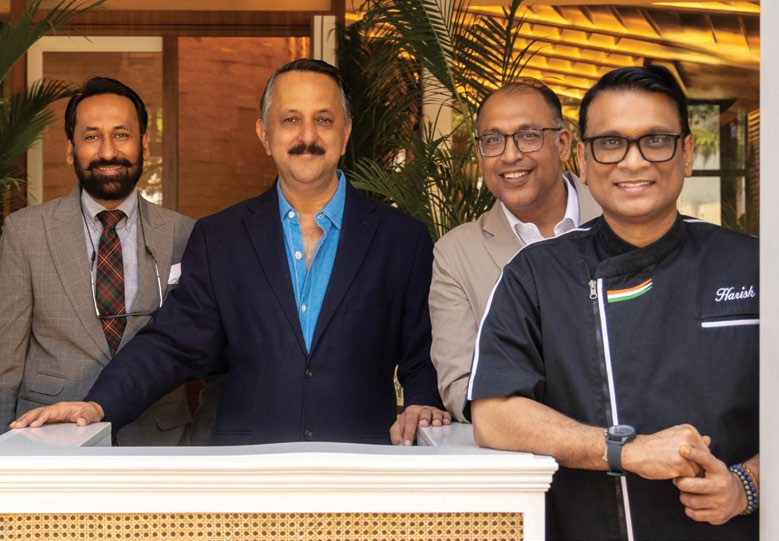
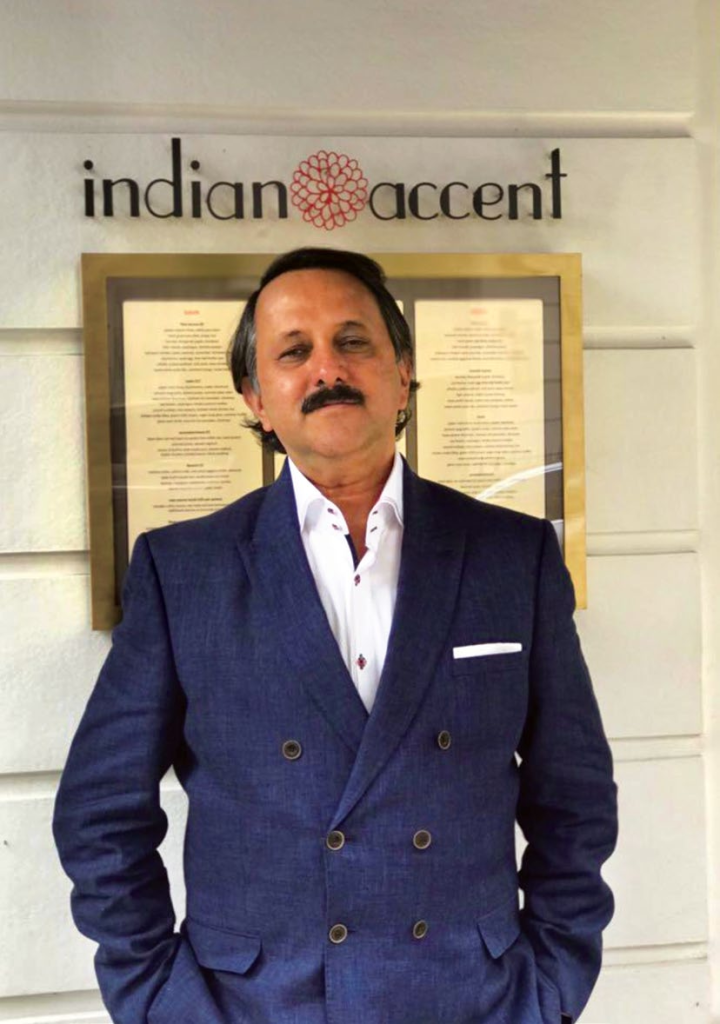
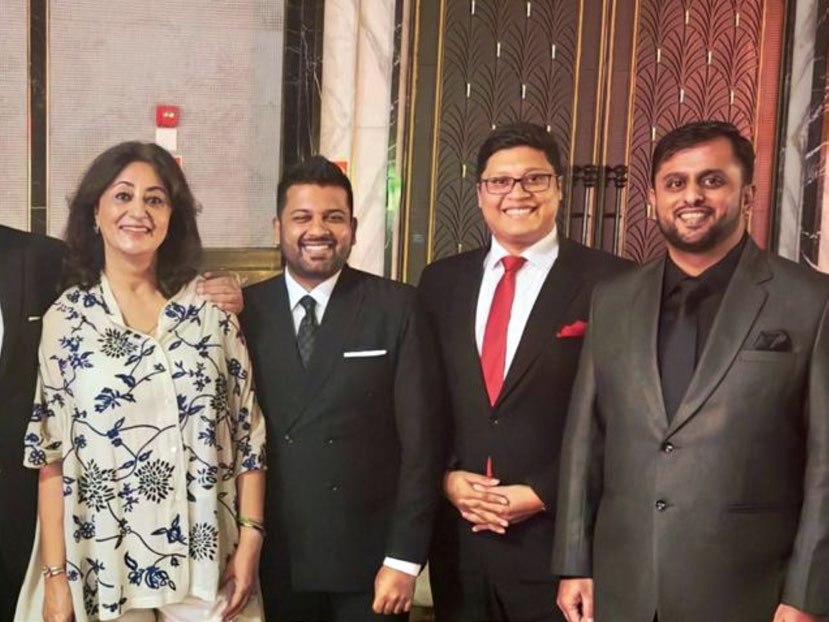
Team EHV International at the opening of Hosa Gurugram (L-R): Varun Sharma (Head of Bars); Dhiraj Dargan (Brand Chef, Comorin); Nitin Mathur (COO); Rohit Khattar (Founder Chairman); Vikram Taneja (Area GM); Harish Rao (Brand Chef, Hosa)

The new band of “bros”: The star-chefs


One reason why restaurant companies fail to credibly scale
concepts that are detailed and nuanced is because a lack of
stable talent.

Restaurants with depth— more likely to appeal to well-todo post-covid Millennial and Gen Z diners seeking novelty + authenticity and an “experience”– require talented and thinking chefs. For the longest, if Manish Mehrotra and Indian Accent were the top-of-the-mind associations with EHV and its predecessor Old World Hospitality, since Mehrotra’s exit a year ago, not only has the second line come into their own, but newer talent has been brought in. Each of these chefs is in charge of one brand.
Like Harish Rao, brand chef for all the Hosas, whose transformation of the menaskai, Udupi temple food, into the charred pineapple with buttermilk mousse confection underlines his star-in-the-making credentials. Or, the softspoken Kaustubh Haldipur, once a Japanese chef, who was hired by Khattar and sent to Bangkok along with the team, to train extensively under David Thompson, who is famously a stickler for traditional and nuanced ways of cooking Thai. In Mumbai, when I visited Foreback, Haldipur, Fireback’s brand chef, and his team were cooking beautiful and spot on Thai, using Indian ingredients. The curries were beautifully done as were the salads with the freshness and sweet-sourchilli-bitter- balance one associates with Thai cooking and the way elements of a dish were put together stylishly.
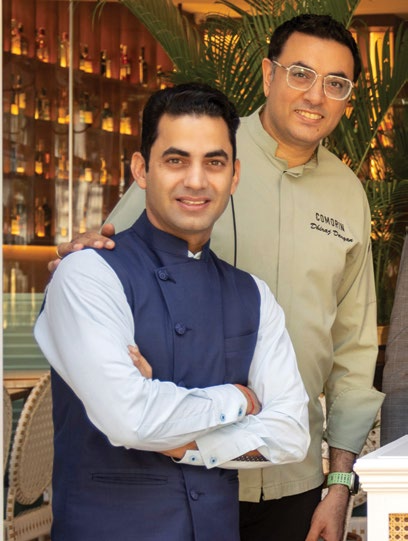
Then, there is Dhiraj Dargan, easily among India’s top 15 chefs, who heads all the Comorins. Mentored by Mehrotra, he is doing intelligent plates such as aam ki kadhi with khoba roti in Mumbai, and has a knack for flawless spicing as seen in his faux galawati or simple Himachali cha gosht. The plates are wholesome but not stodgy, sophisticated sans artifice—a problem with many “contemporary” Indian chefs today.
Khattar tells me how he hopes to function as just the custodian for all his brands to ensure continuity “and to ensure that nothing is mundane”, while allowing chefs their creativity. “I can tell you about Kashmiri khana, but what do I know about South Indian? I don’t belong to the region, how can I tell the chef what to cook?” This should somewhere feature in the manual for aspiring restaurateurs.
Among EHV’s stars are also Rijul Gulati of Indian Accent Mumbai and Shantanu Mehrotra in Delhi, both of who have been part of the Manish Mehrotra team for decades, but are now finding their own voice and experimentations. The food at both restaurants is noticeably different, which is important.
Each cluster has its own chef in charge and a general manager, who reports to the COO, Nitin Mathur, a veteran with Khattar’s restaurant businesses for over two decades (he started as a restaurant manager at Oriental Octopus in Delhi). “It’s a professionally managed company, where I am involved with conceptualising brands and doing a bit of the initial PR and marketing, and then the idea is to hand these over to the team,” says Khattar. If he pulls this off in the decade to come, it will be a scale of success the Indian restaurantscape hasn’t encountered before.
Avatar photo
About Author

FTAlmanac

Leave a Reply