MAPPING (NEW) LUXURY

FTAlmanac
- November 20, 2025
How have people changed decisively post Covid? And
therefore what is the kind of luxury they are consuming?
Varun: It’s such a deep question you ask. When I look back,
many things have changed, and then in many ways nothing
has changed! It’s a cycle of life. Some things are trends.
Some things are evergreen because they are about human
behaviour and psychology. What has changed in a big way
is luxury-seeking guests have become a little more informal,
friendly, warm, biologically and mentally, younger, and
open to listening. They are sharing their experiences with
great intent. When I was younger, people came to me and
kind of taught me. “Hey, Varun, if you go there, if you go to
Italy, have you done this?” This olive is not okay.” And it was
more like, “I know it and you don’t.” Today, conversations
are more genuine, and sharing. You feel there is an intent
of collective improvement. It’s not bragging rights. Earlier,
people loved telling you how many countries they had gone
to. Today, real luxury consumers have become easy, open.
And you can straightaway tell in the first three minutes if they
are really luxury consumers!
Aditya: At one point, it used to be ‘this is the car I have
or this is the watch I have or this is the bag
I have’. But now it’s more about ‘this is
the experience I have’. And I think when
it comes to sharing, I totally agree with
you, Varun. Today people are openly
sharing their experiences with others
in order to build a bigger community
and promote that exchange. That is
where I see luxury evolving. Community
is going to be one of the ways, and that
community is growing bigger and bigger
as we progress.
With experiences becoming aspirational, do top hotels and
restaurants reserve a certain percentage of their revenue for
“experience managers” or “dream weavers”? What is the
economics of it?
Aditya: You can’t put a price to it. We were on a holiday in
Peru a few weeks ago and we were in the Sacred Valley, at the
Belmond hotel. One day, when we were out the whole day
for an excursion and came back after an 11-hour car journey,
Aditi was very tired, and called to check if the spa was open
because her feet were aching. The hotel said it was shut,
because it was past its operational hours. But 20 minutes later,
there was a knock on the door, and there was a masseuse sent
by the hotel to press her feet– free of charge. He pressed her
feet for 45 minutes till she fell asleep and when I asked, “how
much”, the hotel said, “nothing, it’s from us”. These are things
you always remember. They create an emotional connect. It
is the same for us in F&B, where we overhear guests or we
overhear something, we try to remember it and we try to do
it. I think it starts with generosity.
Luxury has also become about authenticity and people are
open to different cultures. How has that changed the idea of
Indian luxury?
Varun: Authenticity is very important. I think today’s
luxury consumer will not settle for something that is not
authentic. And I’ll give you an example. When I came out
of the Oberoi Center of Excellence, and I’m very lucky to
have been trained by Mr Oberoi, our chefs at the Indian
restaurant used to speak great English. And they were
wonderful in explaining the spices and the cooking in
that language. Today, the hero chef in my hotel is Taj (the
master chef at Sahib Room & Kipling Bar at The St Regis
Mumbai) and he does not speak English. When guests
come from Europe and America and Spain, he goes to the
table and talks to them in Hindi. Interestingly, the highest
and the most profitable restaurant in this hotel is Sahib
Room. It is full every night and Taj is at every table because
he is authentic.
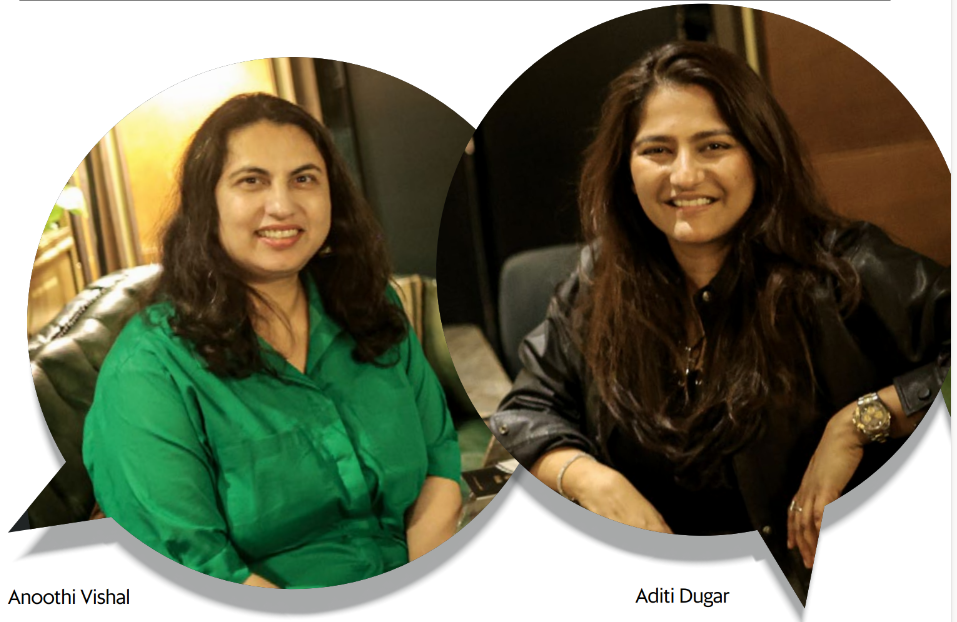
Aditya: People are seeing what Indians are creating.
It is not just butter chicken and naan. It is so much—that
has always existed. And this journey of celebrating what’s
in our kitchen is not an isolated journey. Globally, what’s
being celebrated are also the great Indian whiskeys and
Indian gins. People are coming to India and say they want
to drink it because it matches our food and culture. And it’s
also about Indian craft that always luxury being recognized
as such. We are seeing it in fashion. We are seeing it in
design. India is all about layering. The true essence of India
is just the layers.
Aditya: In the late 1990s, there was still a very stereotypical
image of Indians. Like my doorman at my dorm in New York,
he said, ‘you speak such good English’. And I said, ’90 per
cent of the country speaks English.’ We were still regarded as
the land of snake charmers and levitating artists. Everyone’s
image of India was Indiana Jones.
Aditi: As Indians we are also now finding parallels and
telling people about these, that many of the things they have,
this is part of our culture as well. This is nothing new to it.
We are recognizing that. Not just as diners, but as chefs, as
people. It’s like with Indian fashion, too, with everything.
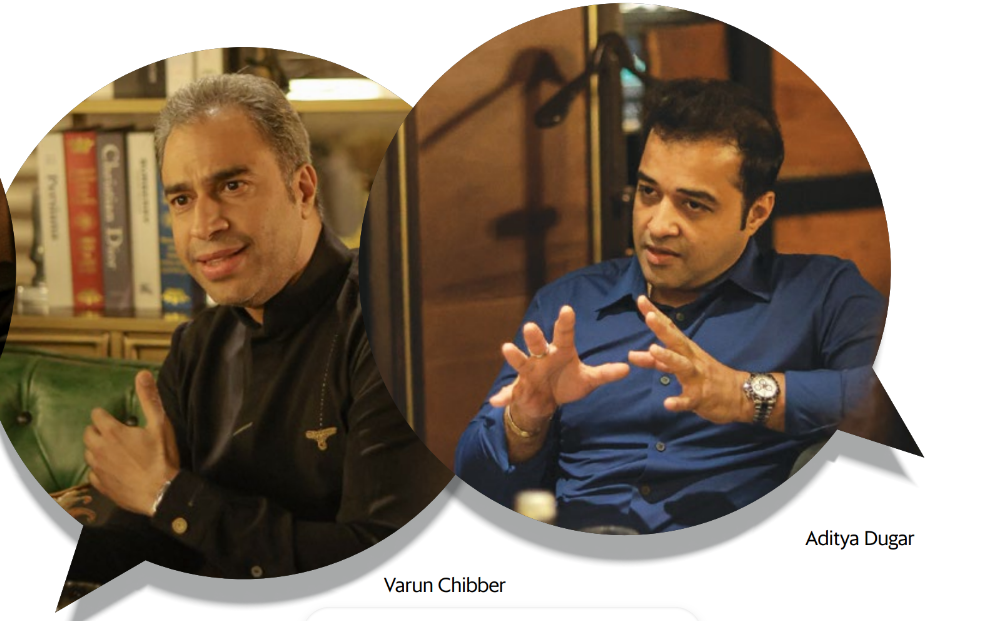
On the art of storytelling… Is it taking over the product?
Aditi: Initially we were so excited or proud about “oh, we
travel like 100 kilometers to find this”. So, therefore, you tell
people. But, over time, we’ve refined that. You cannot go and
interrupt the conversation with your story in a restaurant.
Aditya: people are interested in knowledge. But does
every consumer want to know? No. If someone wants to
know more, we’re happy to share. But information overload
at the bar– that’s not happening.