India’s First Modern Cuisine

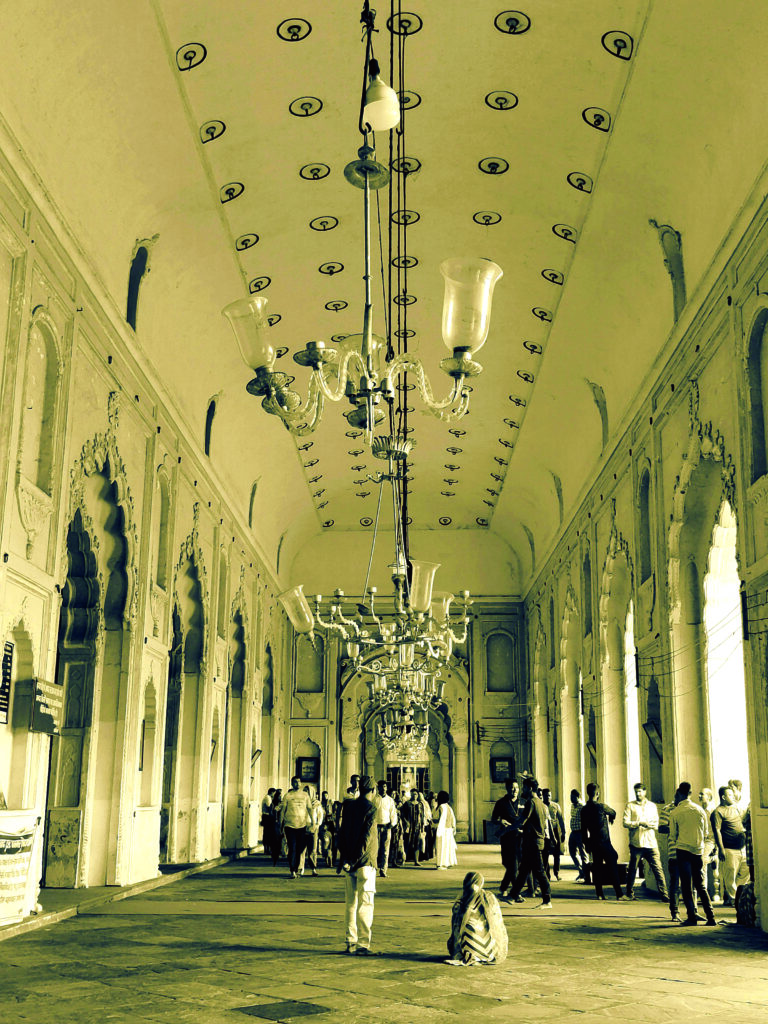
Lucknowi food of the 19th century brought in the idea of chefs as celebrities, techniques to refine cooking processes, and new ingredients. It was built around a culture of artistic sophistication, and marks the advent of modernism into Indian cooking. This is the cuisine we must champion, when we say, “Lucknowi”, argues Anoothi Vishal
By Anoothi Vishal
Before Calcutta’s tryst with fusion and new foods concocted by cooks in the marble mansions lining the Hooghly, “Nakhlau”, as it was called, birthed India’s first modern cuisine. From the late 18th to much of 19th century, Lucknow, the richest and most sophisticated of princely regional capitals of early-modern India, saw an influx of and patronage to ideas, ingredients and talented cooks that transformed the dominant Mughal-inspired courtly cuisine of the day to something much more lavish and sophisticated. Today, as the city, anointed as a UNESCO city of gastronomy, draws culinary tourists from all over, there is confusion as to what Lucknowi food really is. The one distinguishing feature is sophistication. This is no food of the countryside, instead an expression of a culture of luxury bedrocked in a long and influential artistic tradition.
Think 19th-century Lucknowi food and what are some images that should come to mind? Refined gravies, chaats pan-grilled to perfect, crisped brown with judicious not bunged-in flavouring, layered aromas, perfumery and the use of ghee as an aromat too to mask smells of meat-iness, no khada or whole spice or large cuts, for a society that considered visibly chewing food at the dining table rude(!), no fiery flavours, slow cooking, and the biryani rice that is not a hodge-podge with masala but glistening, clean, separate. Then, there were the dexterous desserts: whole sheets of cream or balai set and folded to make a paan, tiny boondi called righly “motichoor”, or “nuqti”, after the dot in the script, or oranges and carrots cooked in milk and/or sugar, caramelised, set on thalis and cut into squares.
Textures were paid attention to in the way modern Molecularists now do — Kulchas were not just soft and “pillowy” flaccid but came with crusts rivalling baguettes’, makhan malai or khurchan of the dairy-rich temple towns between the Ganga and the Jamuna, was transformed into whispy “Nimish”— just froth skimmed off on cold dewy mornings, served on leaf pattals with bits of milk solids, sugar, and strands of saffron, Kakori kebab with galawat–green papaya used as tenderiser, put on to seekhs to be grilled on sigris (horizontal grills, unlike the vertical tandoor) without sliding off in miraculous sleights of hand. Nargisi kofte, flawless and smooth sticking to the egg, reminiscent of daffodils in spring. Qorma without overpowering smells of onions or masala, glistening stately, the scent of the earthen haandi becoming part of the flavour. Even the chaat had nuance. The quintessential Lucknowi Matara is unlike any plain boiled white peas common all over other plains of the Subcontinent. Here, a tikiya is shaped, spiced and grilled like a faux kebab, and flavoured with just ginger and a dash of lime, apart from the cumin and black pepper-laced chaat masala. There’s a certain sophistication to everything here.
19th-century Lucknowi cuisine was certainly not provincial— though many provincial influences came together to shape it. The various “rajas” or large landowners of the Avadhi countryside built homes in the city, the richest occupying the highest geographic points by the Gomti (and maintaining elephants as a mode of transport). Their large households brought influences from an agrarian village life but dishes and the cooking were refined by highly-paid cooks who also gravitated to the city to find employment in these rich households. The chefs built their reputations as carefully as they built their dishes. Weddings and community functions were occasions to flaunt prowess. Ghalib, 19th-century Delhi’s most celebrated poet, who migrated to Lucknow for a few years (but hated the city), for instance, writes in a letter of the 30-40 kinds of pulaos he encountered at a nawabi wedding — ranging from the “moti” pulao with “gold” and “silver” pearls (made with meat) in the rice, to the “koku” pulao, named after the cuckoo bird. Rich city weddings were catered to by celebrated chefs; this, as a phenomenon lasted well into the 20th century. Chef Ghulam Quereshi, who presides over the kitchens of Lucknowi food’s most fabulous restaurant expression anywhere, Dumpukht Delhi, and who comes from a line of celebrated cooks, talks of the “janwasas” he
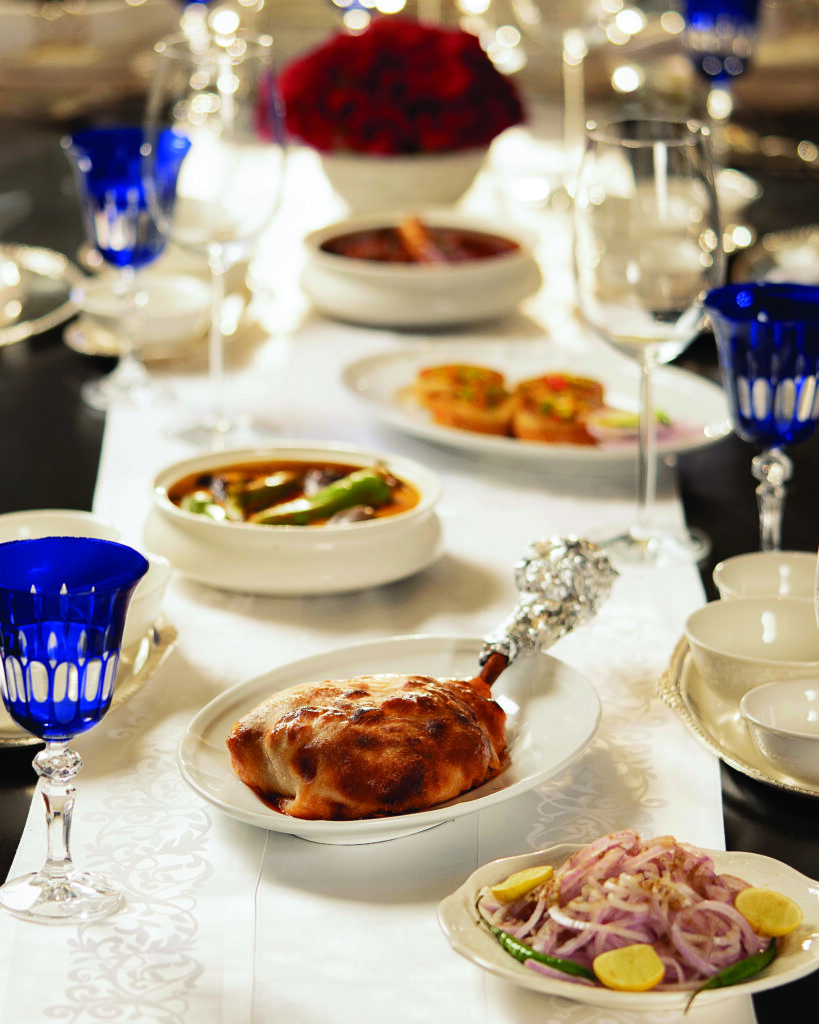
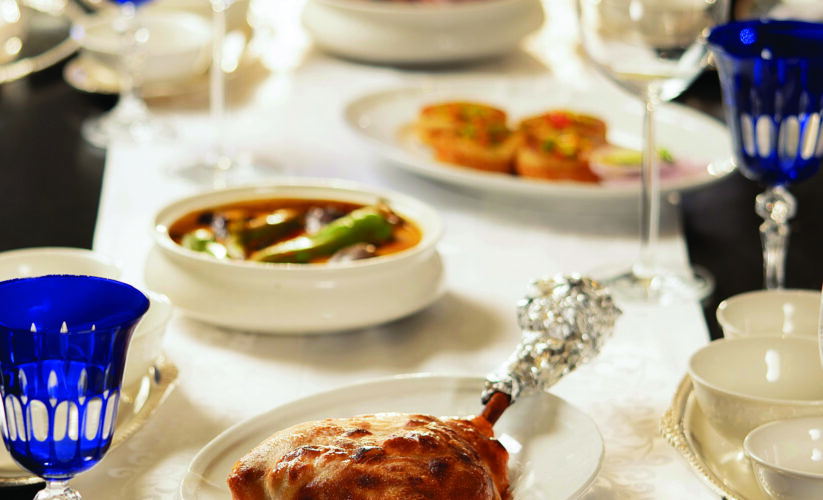
Photos: Dum Pukht, ITC Maurya
and his Quereshi clan would cater to 40-50 years ago. This casual conversation took me back to my grandparent’s day—where wedding parties would be hosted in enclaves called “janwasas” and the girl’s party extend extensive hospitality to the groom’s party; food by a celebrated chef being just one of the things.
Chefs in fashion
Abdul Haleem Sharar, one of the most famous chroniclers of 19th-century Lucknowi life, writes about the “rikabdars” in his classis, “Guzishta Luknow” (bygone Lucknow). Rikabdars were highly paid chefs, under who worked a whole retinue of other chefs such as the masaldaars for pounding spices, halwais for frying and bawarchis, humbler everyday cooks. In this hierarchy, the one spicing a complex dish, was considered the most important—something we find in other Indian kitchens too, including in the south, where the sambaar cook was typically the highest paid. The rikabdaars made their complex spice combinations according to the tenets of Ayurveda (and its spin-off Unani, or Greek medicine), which has been the basis for much of Indian cooking over millennia. Exotic ingredients such as the dust of pearls, bits of gold, apart from rose petals, sandalwood and spices were incorporated in the belief that these give youth and vitality. But exaggerated tales of what
all goes into a kebab or qorma are equally the result of a Lucknowi culture that was full of exaggerations, hyperboles and all manners of courtesies and etiquette observed in public. I’ll come back to this modern aspect of story-telling in cuisine later.
Like today’s celebrity chefs, Lucknow’s chefs styled themselves as stars, commanding both high salaries and prestige. About 20-30 years ago, hotel kitchens in India, that served some of the complex and hard-to-replicate Lucknowi dishes, had chefs who were known for having magic in their hands: tales about how they’d come with a fistful of masala (no one knew what) to add to a bubbling gravy, or how they’s just touch a lagan to result in a flawless dish were part of their lore. One surprising (to many) aspect of this city and elite culture was also how homes routinely ate chef cooked or bazaar-bought meals. Books listing an “ideal wife’s” responsibilities make no mention of heavy duty cooking (Aslam Mahmud/Awadh Symphone/Rupa Publications). Instead, learning to how set curd, making a light salan and layering a paan or betel leaf was valourised. “Biddy”, an Englishwoman married into a nawabi household, who wrote an account of her life 19th century life in Lucknow, writes about most of the lunch and dinner gravies bought from “outside”. These came in earthern pots, and were served as such. Used to finer dining tableware, she records her disappointment at first, only later realising, that the earthern pots contributed to the flavour and aroma—the Lucknowi fascination with the scent of wet monsoonal earth also finding its bottled expression in Kannauj’s petichor.
Before I move on to the next aspect of what makes Lucknowi a modern cuisine, one more story about its celebrated chefs: The idiom “yeh mooh aur masoor ki daal” in Hindi connotes a scoffing disbelief around someone’s ability to do something.
It’s said to have come about as a colloquial Lucknowi expression, after a chef dismissed his prospective employer, who questioned him about a long and expensive list of ingredients he handed out for the household’s monthly consumption. When the employer questioned the excess, the chef, scoffed “yeh mooh aur masoor…”How can you afford my masoor ki daal with this face?
An urbane taste
Lucknowi food is an expression of an urbane, sophisticated city life. In 18th-19th century Lucknow, art, dance, literature and language all had a cultural flowering. This cultural flowering was not just a result of an inherent syncreticism but based on a bedrock of an older Avadhi culture that was influential and powerful too. Avadh gets its name from Ayodhya, the ancient capital of Kosala, one of the ancient and powerful political states of the later vedic period. The culture of this region spread all over and literature from Kalidasas’s Raghuvamsa (Raghu’s vansha, after the great Ikshvaku king, ancestor to Rama) to the 16th-century Ramcharitmanas show how vital the region has been to the Indian imagination and thought.
Avadh or the ancient Kosala has been the heart of the bhakti movement too, and Avadhi one of its prominent languages, even though now the stature is lost. In the modern city of Lucknow, these great underpinnings of literature and culture informed life and lifestyle. Munshi Naval Kishore’s printing press, founded in 1858, was the largest in Asia, influencing education, and culture of not just Lucknow but a much larger world. Among its publications is the magical fantasy of Tilism-e-Hoshruba, a dastan or oral tale that had long been in circulation but which Naval Kishore commissioned two rival poets to write, to be published in consecutive volumes. The poets competed with each other in embellishing their tale with fantastical elements, both imaginary and inspired by the countryside.
This is exactly how many of Lucknow’s fantastic dishes are likely to have been composed too—with infinite improvisations to the existing to conjour up something better and more magical. How to make each grain of rice glisten whiter (there are tales also of a gem-like pulao, with half the grains glistening red like rubies), how to make each boondi smaller, how to make each kachori puffier, how to construct a sugar sculpture that looked like a lamp, how to scent a liquid without having too much masala in it. In a world that had lost its political power, but was rich, men (perhaps women) were not just playing shatranj or chess (as in Shatranj Ke Khiladi, the film masterpiece by Satyajit Ray taking off from Munshi Premchand’s short story), they were also patronising fabulous food and ceremonies around paan. Part of Lucknow’s urbaneness was also the fact that
it emerged as a place for all sorts of artists, merchants and adventurers. The French presence in Lucknow is well documented. Claude Martin, the son of a Lyonnaise vinegar maker, came to India in 1751, joining the French army, shifting sides to the British and then becoming the superintendent of the arsenal for the Nawab of Awadh. He made a huge fortune, but left it to be used to set up schools in India and France. And thus the three La Martiniere schools in Lucknow (my alma mater), Calcutta and Lyon.
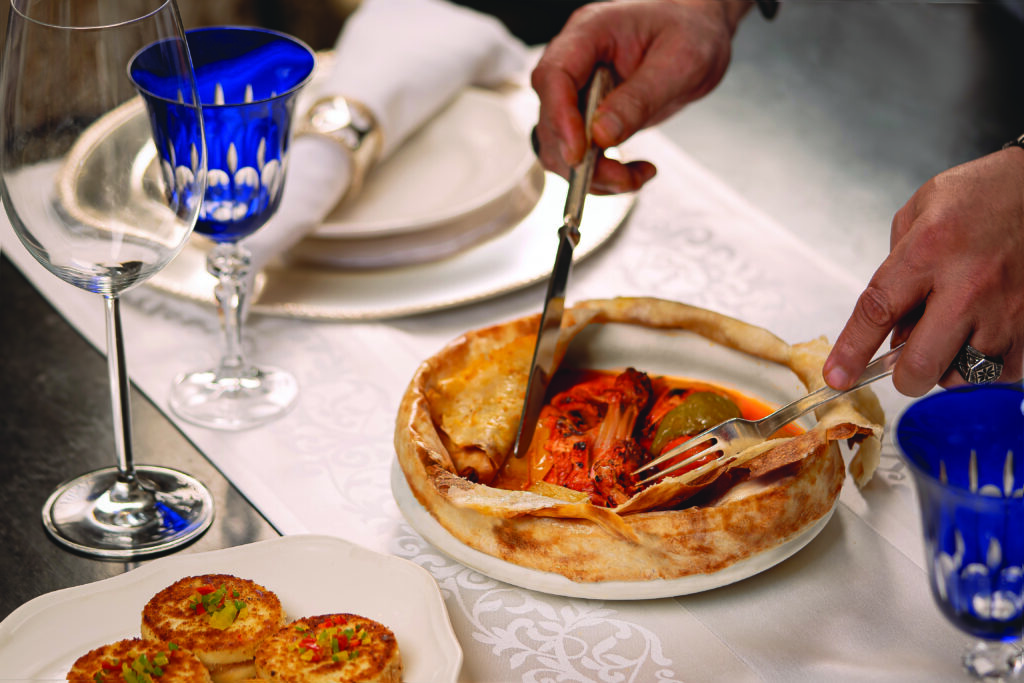
Interestingly, there is a Lyonnaise influence in Lucknowi food— or vice versa, who is to say. The celebrated Burgundy stew boeuf bourguignon, was first documented in France in 1867, well after Wajid Ali Shah exited Lucknow for Kolkata, its cooking method showing a technique akin to dum (before the use of modern ovens), with the stew sealed by dough. In Lucknow, culinary tourists now go searching for “lazzar-e-taam”. But in homes, this is a simple muslin potli with a few spices tied in dropped into the yakhni bubbling for the pulao; whether this potli masala influenced the French bouquet garni rather than vice versa can be argued. Even the straining of the qorma is akin to French sauce making. These are modern kitchen techniques that give the cuisine its cheffy sophistication.
New ingredients
Among Claude Martin’s collections were a set of 600 plant drawings (now with the Kews Botanical Gardens collection) by unknown Indian artists. These were part of an explosion of botanical sketches commissioned by 19th century naturalists and enthusiasts to document plant life in the colonised, fertile lands, and reflect 19th century European realism. In India, many were sketched by artists proficient in the Mughal style miniatures, often under the guidance of Ayurveda practitioners, India’s own naturalists. These sketches document both the indigenous and new plant varieties being introduced by the Europeans. In Claude Martin’s collection, the pea plant is striking, as a metaphor for change.
While, field peas were ancient and common foods in India, the new fashion of “garden peas” or tender green peas in pods plucked before they ripened came in only with the Europeans. In France, a fashion for “green” tender peas, plucked while still immature, caught on in the 17th century, and may have travelled to Lucknow in the 18th century. So, while we see the white peas in a chaat like matara, there are also the fresh green peas in matar ki tahiri or chunki hui matar in winters. The potato too came in around the 17th century as a Colonial outcome and while we do not know whether the basket of “aloo” presented by the nawab of Avadh to Warren Hastings was potatoes or other tubers and roots also called aloo till then, it was incorporated into Lucknow’s dum aloo, Chowk ki tikiya, aloo katli breakfasts and kachori-aloo. Lucknowi modern cuisine borrowed also from the food of the rajas or the landowners across communities, and from the cuisines of the knowledge communities who administered it —the Kayasths, Khatris, Kashmiri Pandits, Rastogi merchants and bankers. And we can see aloo and its magnificent uses in each of these community foods. Aloo as a novelty of course made its most legendary debut in Calcutta with a marriage to the Avadhi pulao, after the mass displacement that came in the wake of Wajid Ali Shah’s exile.
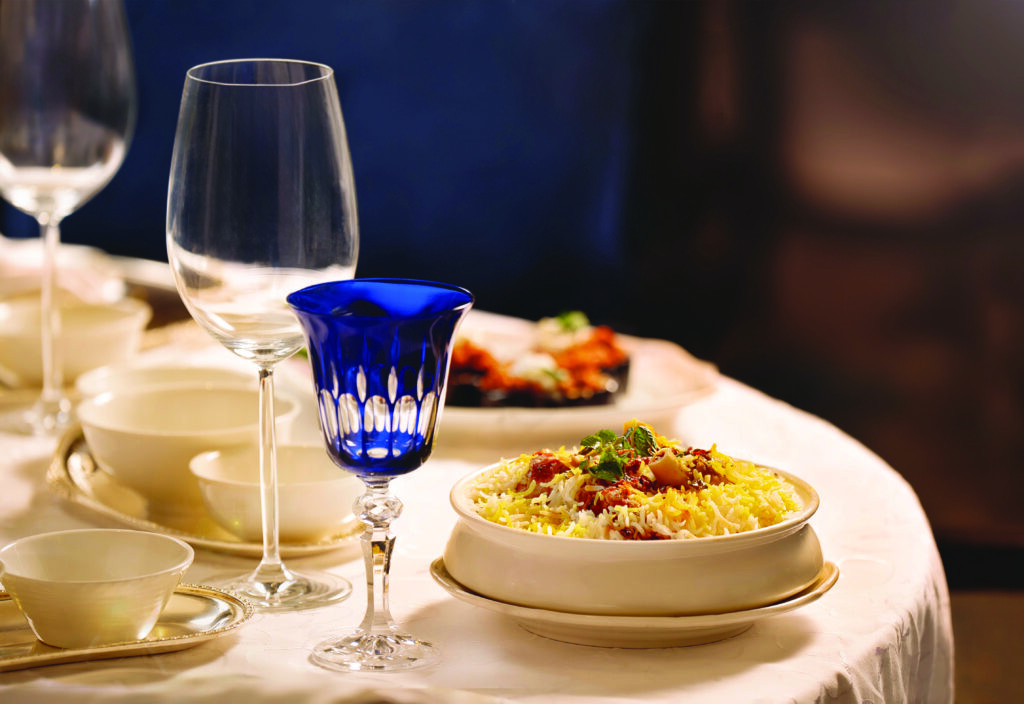
Finally, the cult of the basmati too has a Lucknowi origin story. A long grained rice variety was planted in the terai region by the displaced Afghan royals after the Anglo Afghan war. A plot of land of this fragrant rice was eventually reserved for the nawabs of Avadh and went into their delicate pulaos. As the pulao became a biryani, possibly a “short-cut” to manage commercial bazaar cooking better by precooking the elements and only layering them after in a final refresh, the cult of the basmati too spread—till it lost all meaning, drowned in oil and spice.
That’s what’s happened to a lot of Lucknowi food— the broad stereotypes persist without the sophistication, and understanding that can only come with a cultural immersion. It is a cautionary tale too.
Photos: Aditya Shukla/Unsplash