Where I’ll Splash My Cash

Madras Kitchen in Bangalore has one of the best-researched, impeccably-cooked south Indian menus in the country — representing the different sub-regions, genres of dishes and cooking styles of the erstwhile “Madras Presidency” with clever flair.
By Anoothi Vishal
Bangalore has emerged as the epicentre of quite a lot of culinary inventiveness in the last few years— partly because of its diverse work force, and partly because the cost of setting up a restaurant here is not as prohibitive as in Delhi, Gurugram or Mumbai with their extraordinary rents. Thus, chef-owners, or bartender- owners, as most of these restaurant-experimenters are likely find it easier to take risks. And yet, apart from a few notable exceptions, it is rare to see a seriously well-researched restaurant in the city that you would unflinchingly and wholesomely dine at — without having to listen to a dozen stories preceding every bite.
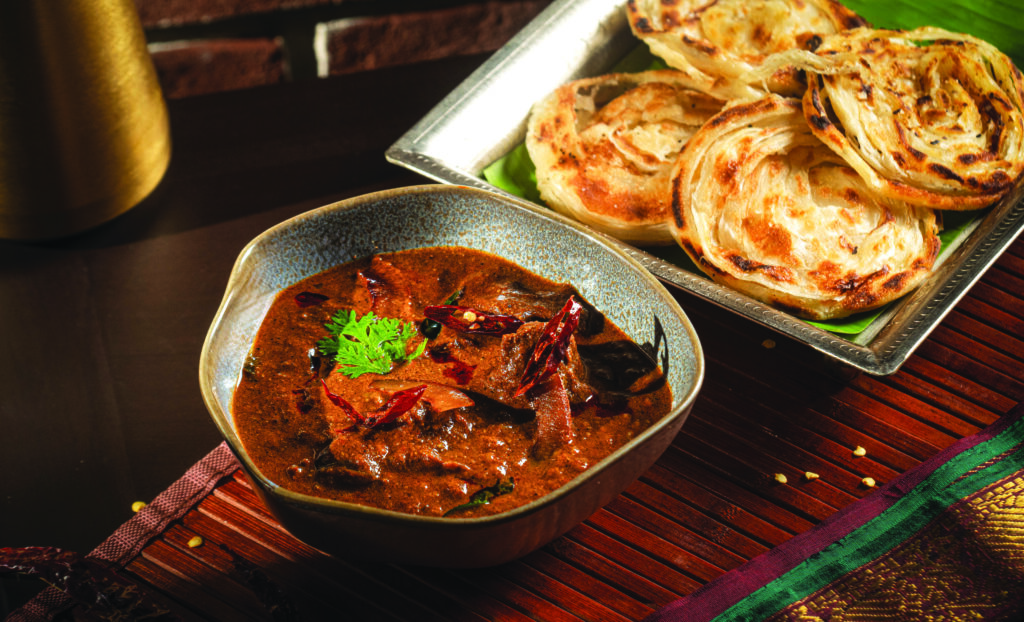
Madras Kitchen, at the Marriott Executive Suites, which also opens into the UB City Mall, has been a pleasantly surprising find. I had a chance to check it out earlier in the year, during a fleeting visit to the Luru. The restaurant takes its name from the erstwhile Madras Presidency — the administrative region of British-India comprising most of the Peninsular states as we know today; Tamil Nadu, north Kerala, much Telangana, Andhra and Karnataka as well as some parts of Odisha.
True to the promise of its name, different south Indian cuisines are represented with depth, nuance and most importantly taste. In fact, I haven’t come across a better researched pan-south Indian restaurant ever since the hey- day of Dakshin at the erstwhile Park Sheraton in Chennai. At Madras Kitchen, the comprehensively but cleverly curated menu balances the lesser-known with the uber-pop across regions— think Udupi’s pathrode and “Mount Road Chicken 65”.
And then, the menu shows a lot of intelligence in dividing dishes not according to their states but according to cooking methods and styles of dishes from across different micro
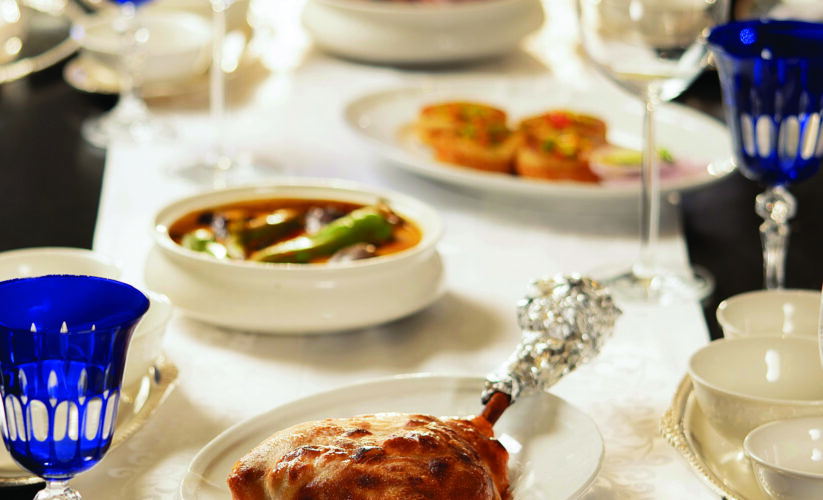
regions. This makes it easier for the average diner (who, given Bangalore’s cosmopolitan make-up, may not be from any of south Indian states at all and thus not well acquainted with the dishes) to choose what he wants to eat from the creditable selection of big and small plates; the latter arriving with casual, attractive plating with the various pachadis, podis and chutneys presented as relishes to accent different traditional flavours. The mains are hearty, not-all-fiery and range from the Kundapur/Mangalore ghee roasts that any one visiting this city and region must get a taste of to the sukkas/chukka (dry roasts of Tamil Nadu and Karnataka). There are also Kerala style roasts, and Andhra and Kerala tawa-frys bearing testimony to how the same cooking technique can produce diversity inherent in Indian regional cuisines.
And then there are “curries” (gravies) and the biryanis, again across regions, proving, if you ever doubted, how spicing changes dishes every 100 kilometres in India. One of the Madras Presidency’s enduring global exports has been the reductive colonial idea of the “curry”. The East
India Company had its first factory on the Indian east coast at Masulipatnam (in Andhra). And then founded the Fort St George in 1639 (from where Madras and its colonial ambitions grew). The idea of the “curry” for any dish with spice came from “koora” in Telugu or “kari” in Tamil, both connoting savoury gravied or semi-dry dishes. The Madras Curry Powder is a colonial invention not to be found or used in India at all, though you may find it flavouring haggis in Scotland or chilli fry in Mauritius.
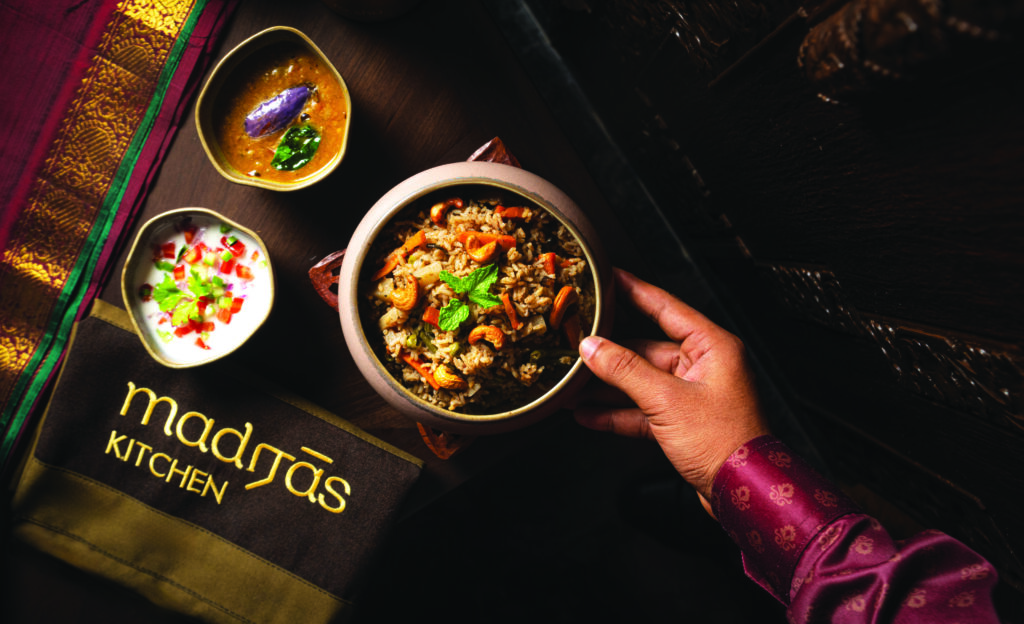
The Madras Kitchen cleverly reverses this idea of a generic “curry” and curry powder by showing off the depth and
diversity of different boldly or mildly spiced Peninsular Indian dishes, which could be gravies, semi-dry preparations, tawa frys, rice with spice and more, and where it is indeed the same technique of cooking with different variations produces different dishes entirely. The curries are a testimony to that. The restaurant shows off how the moilee (a concoction of the memsahib, and a breakfast dish in Anglo-Indian homes to begin with) is different from the rich and coconutty Kerala Varthuracha, how Andhra’s iguru, pulusu or salna are an entirely different lot to the gassis of the western coast.
On the evening I visit, I spot nethili fry (crispy fried anchovies) on the menu and promptly order this rare (for us outside of south India) dish, which may be an acquired taste. There’re plump prawn ghee roast that I highly recco too, and the mild silken moilee with neer dosa makes for a fab meal. I wistfully glance at the karimeen pollichattu before deciding I could not possibly eat that much, before deciding to try a little bit each of the Thalassery fish biryani and a Dindigul veg biryani, all for the pleasure of reporting to you dear reader that the south Indian biryanis show impressive and discernible variation in taste thanks to regional spicing. You also have the konganadu pulao and the donne biryani of Bangalore’s own military hotels on this menu. It’s a stellar meal with a lot of depth, nuance and layers. Thankfully, it doesn’t feel heavy, literally and metaphorically.
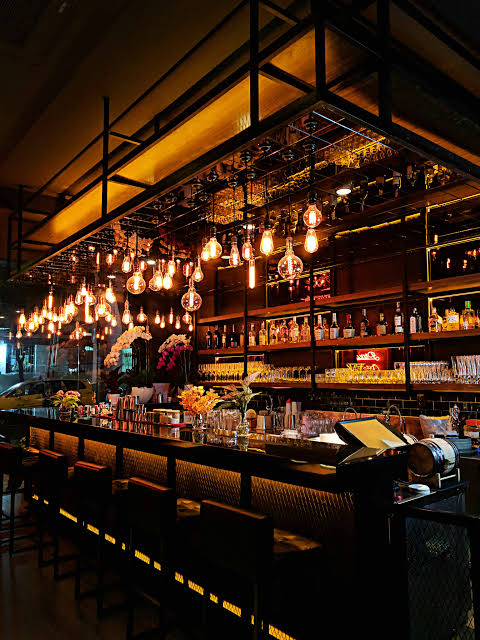
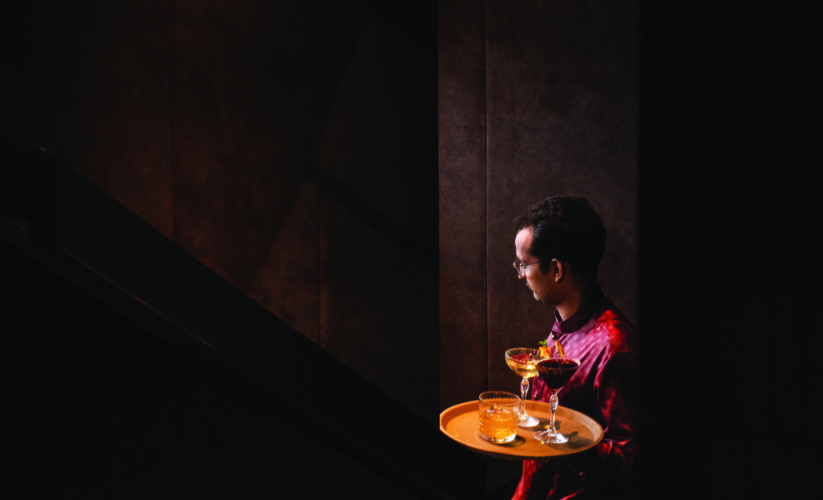
If you can manage it, try the gadbad sundae to polish off the meal. Or just one of the many interesting regional-influenced cocktails. I’ll splash my cash (though this one is shockingly well priced especially if you are used to Delhi prices) for the impeccably-cooked “authentic” dishes, presented with casual ease and charm. This could be a top restaurant in New York. Or New Delhi. I hope it travels.