
Weekend Birding in Bengaluru : A Short Ride to Stillness

By
Milind Kelkar
If you’re anything like me—overwhelmed by apocalyptic AI posts, drained from work travels, living out of suitcases, and numbed by the endless scroll of Insta reels—then a quiet early morning walk at one of Bengaluru’s many birding hotspots might just be the antidote you didn’t know you needed.
The world may feel like it’s falling apart, but here—among the trees, lakes, and chirps—life flows on gently, undisturbed.
It’s cormorant breeding season. You’ll see them drying their wings in the sun like seasoned yoga practitioners, soaking in the morning calm. Cattle egrets, dressed in their buff-plumed finest, pose like runway models on land, while their cousins, the little egrets, stretch their necks, grinding and scourging the swamp for breakfast.
The tiny pale-billed flowerpecker—the smallest bird in Bangalore—greedily gobbles Singapore cherries twice its size, reminding me of my own rushed breakfasts before the daily office dash. The white-throated kingfisher dives like a bunker buster, swift and sure, while the osprey prefers a slow, circular hover before striking.
You might see a parent teaching a child to balance on a bike—right next to a black kite teaching its juvenile to glide and hunt. As I honk my car from “make way” to “get lost,” the white-cheeked barbet shifts its call from the steady “kutroo” to an impatient “kuk.”
Brahminy kites—once regal charioteers of the gods—now share the skies with crows, competing for scraps. And overhead, if you care to look up, slender-winged swifts swirl and dive like a ballet troupe in perfect sync.
On any given walk, spotting 30 species is easy. With time and a bit of wandering—from serene lakes to the flowering trees of Lalbagh, the cool heights of Nandi Hills, or the open stretches of Hesaraghatta grassland—you might reach 300.
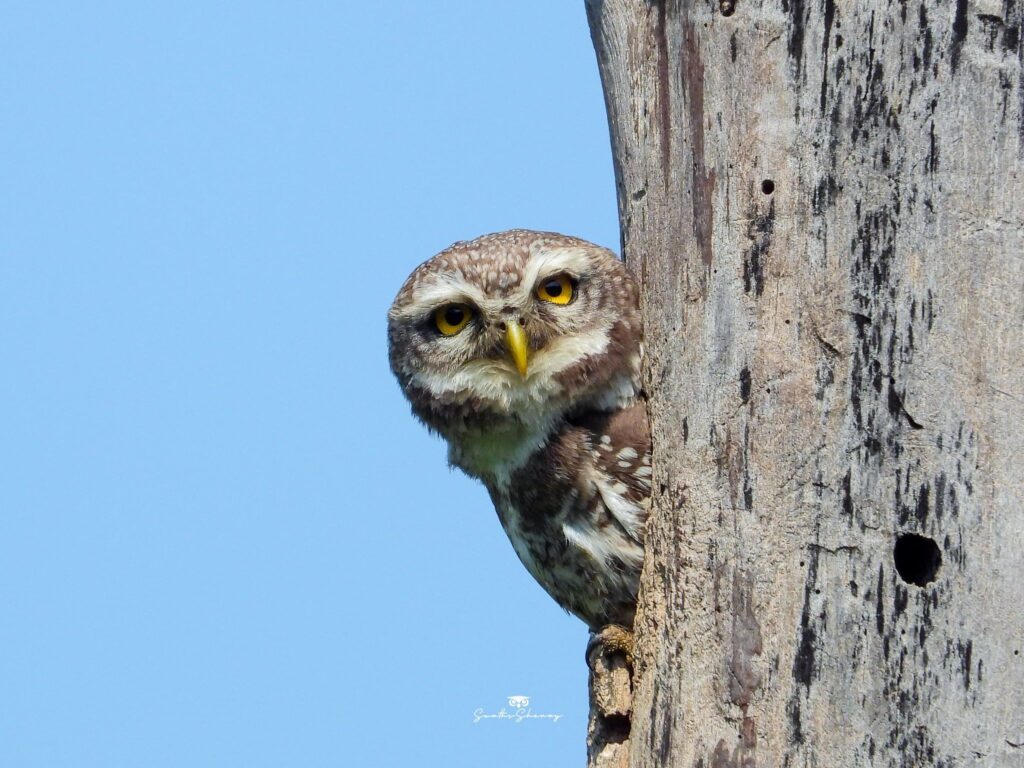
Here, everything has its place. Even a dead tree, which quietly shelters owls and parakeets. Our winter visitors, the Blyth’s reed warblers, are preparing to leave. If you want to catch their song, best not to wait too long.
Bengaluru offers an incredible variety of birding spots — from Saul Kere and Galibore to Hessarghatta and Jakkur. The city also has a vibrant birding community, with groups such as BlrBirders (Birdwatchers’ Field Club of Bengaluru), Bangalore Birds Club, and Bengaluru Wild Tribe regularly organizing birding walks and weekend trips.
These outings often lead to fascinating sightings and stories.
One of the most entertaining birds to watch is the Drongo, which has recently migrated back to Bengaluru. Known for its remarkable mimicry skills, it imitates calls of birds and even mammals to confuse them and steal food. Once, I watched a Drongo mimic a dog’s bark, startling a nearby cat, before swooping in to eat the cat’s food.
Another extraordinary visitor is the bar-headed goose, famous for its high-altitude migration across the Himalayas — one of the most challenging migratory routes in the world.
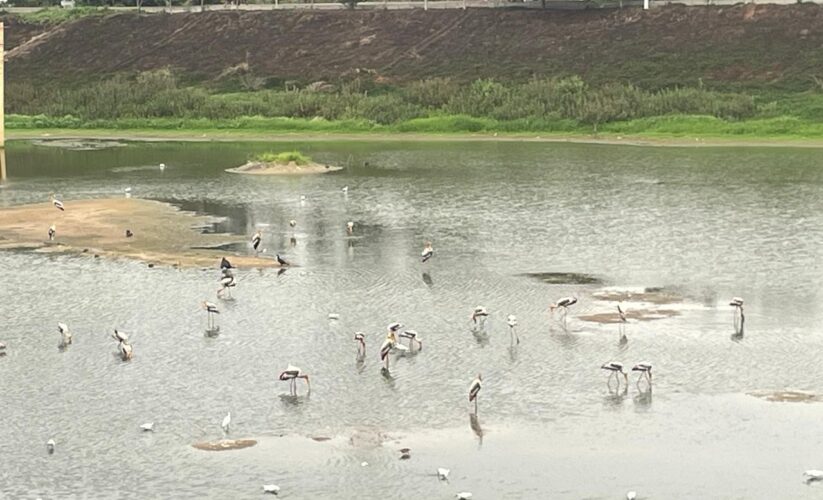
Painted storks, once known mainly as seasonal migrants from the Himalayan region, are now becoming partly resident around Bengaluru’s wetlands, making sightings more common throughout the year.
Kingfishers are another delight for birders in Bengaluru. The city is home to four different species, and on a lucky day, it’s even possible to spot all four in a single frame.
The Indian grey hornbill is a relatively recent resident of Bengaluru. These birds are known for forming lifelong pairs. During nesting, the female seals herself inside a tree cavity, leaving only a narrow slit through which the male feeds her until the chicks are ready to emerge.
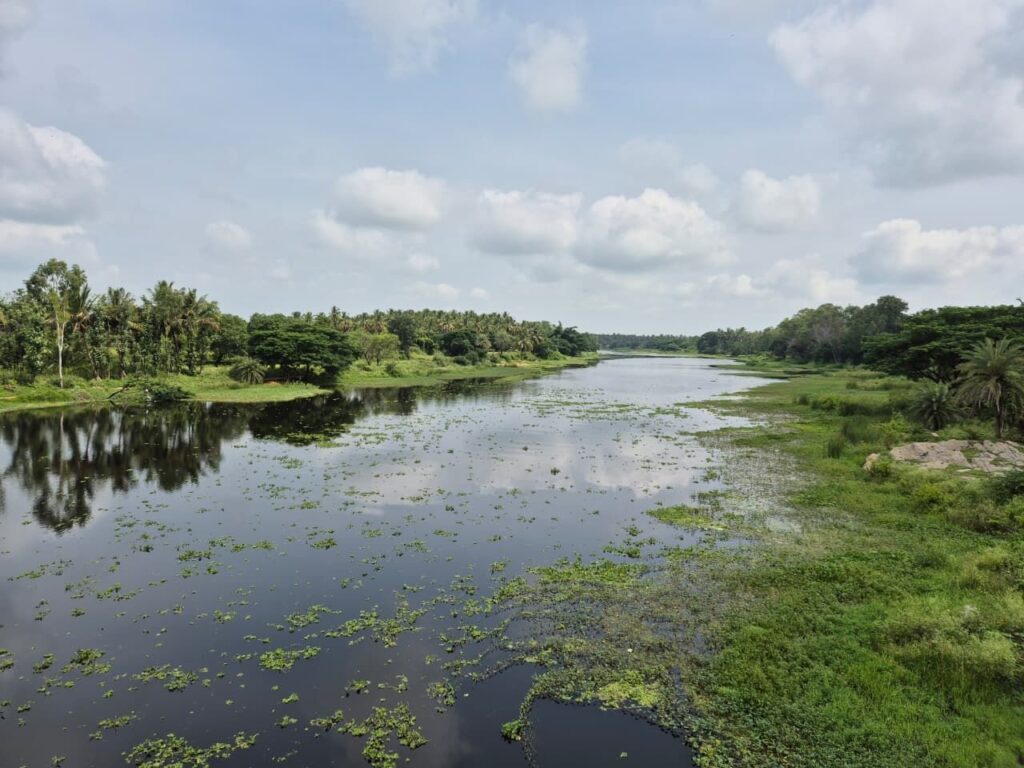
Birding in Bengaluru reveals a quieter, wilder side of the city — where lakes, grasslands, and tree canopies are full of unexpected life and stories.
A few months ago, during a long weekend, I travelled to Kokkarebellur, a small village roughly 83-90 km from Bengaluru, with Rahuldev Rajguru from Rustik Travel who organizes free birding trips.
Kokkarebellur, a place where painted storks and pelicans return every year: Not to a sanctuary. Not behind fences.
But to backyards, temple roofs, and tamarind trees.
And humans? They stay back, protect, wait, and coexist.
Whispers of coexistence, if you pause and listen:
1. No one climbs trees when birds are nesting.
2. Bird calls don’t irritate the villagers; they are part of the soundscape.
3. Children are taught: don’t scare, don’t feed returning birds, let them be.
4. Wounded birds heal one higher branch at a time: slow, steady progress.
5. A nod means hunger. A flutter means energy. Full bellies bring stillness.
6. Pelicans fish in synchrony because no one thrives alone.
7. Even the Kite and Heron stealing Stork’s food is just part of the balance.
What struck me most:
These birds don’t just survive here.
They thrive, because the people chose not to push them out.
That’s the kind of relationship we need with AI.
Human-in-the-loop isn’t just a design principle. It’s a mindset.
AI should augment, not automate us out.
Support, not replace.
Coexist, not compete.
“There was room in the world for a mountain, lion and me.” (Ruskin Bond).
In Kokkarebellur, they’ve done it for centuries. Maybe it’s time we learnt from them.
Pic credit: Swathi S Shenoy