October 22, 2026
THE CARTOGRAPHY  OF SMELL

THE CARTOGRAPHY OF SMELL

The essence of every city is literally in its distinct
smell — and literary greats from Joyce to Dickens
have always been conscious of these sensory
maps, says TFTA literary columnist Ashwin Ahmad.


By Ashwin Ahmad

Smell is something that one does not immediately associate with travel. In the rush to free ourselves from the gaggle of fellow passengers and security checks, we hurtle ourselves into waiting cars or taxis, desperate to soak in the waiting comforts of the five-star hotel. Unanswered emails and WhatsApp messages further cocoon us from the message the city is trying to give in the only language it can – smell.
If we stop to take it in, we discover that beyond the sights and sounds, our nasal senses can convey the essence of a city in ways that can remain etched in our minds for a long time. Writers of literature show us how this is done. James Joyce’s matterof-fact description of Dublin, in his novel Ulysses, describes the city as reeking of “warmish cigarette smoke…spilt beer, men’s beery piss, the stale of ferment”. Arundhati Roy describes her village Ayemenem in The God of Small Things, as a place where “the air smelled of fish and riverweed”. Such descriptions create an image in our minds that no selfie can dislodge.

The concept of using smell to identify
surroundings is not a new one. Biologically, smell
is wired into the brain’s limbic system so it can
send a strong message should we choose to hear
it, or it can be told what to smell. Unfortunately,
rampant urbanisation and pollution have caused us
to decode the smell of a city as something negative.
Therefore, our brains often override the natural
flavours of the city – the smell of freshly baked apple
pie in the United States, the tangy smell of cigarette
smoke and butter emanating from Parisian cafes,
and, of course, the strong smell of steaming vadas
and sandalwood as we enter Chennai. Inundated
with news about climate change, pollution, and
environmental degradation, our nasal senses
focus on what environmentalists call the “urban
smellscape.” This phenomenon ensures the brain
hardwires the nose to pick up smells of garbage,
dust, and industrial odours first, thereby reducing
smell to stench.
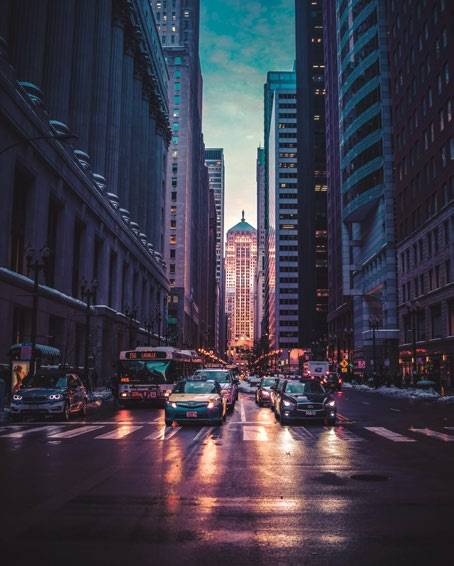
Even the greatest of novelists were not immune to this trope, with Charles Dickens disdainfully describing London as a “great and dirty city” in his novel Bleak House. “Fog everywhere. Fog up the river, where it flows among green aits and meadows; fog down the river, where it rolls defiled among the tiers of shipping and the waterside pollutions of a great (and dirty) city. Fog in the eyes and throats of ancient Greenwich pensioners, wheezing by the firesides of their wards; fog in the stem and bowl of the afternoon pipe of the wrathful skipper, down in his close cabin; fog cruelly pinching the toes and fingers of his shivering little ‘prentice boy on deck. Chance people on the bridges peeping over the parapets into a nether sky of fog, with fog all round them, as if they were up in a balloon and hanging in the misty clouds.”
Dickens was not alone in his descriptions of a “great and dirty” Britain. Other writers took great pains to assure us that smell equalled filth. V.S. Naipaul continued focus on the “dirt of India” played into an image that many westerners already had that India was filthy. Smell was continuously used to justify this trope, thereby ensuring that Indians started to forget the natural fragrances of their cities. Smells of incense and oil lamps, the smell of freshly adorned gajras, the smell of roasted corn burned by street vendors outside India Gate, the smell of early morning dew in the Mughal Gardens, and the smell of spices sizzling up an afternoon or evening meal is still overlooked by many of us today. The entry of artificial fragrances in large urban spaces has not helped matters, and it is only in recent years that India has started embracing the fact that its smells are something to be proud of and to showcase to travellers the world over.

Kate McLean, a British
artist, designed a
sensory maps project
in Edinburgh, inviting
participants to
identify landmarks
through smell

Scent today is being studied the world over, and sociologists and anthropologists are designing blueprints as to how we can understand the essence of a city through our noses. Kate McLean, a British researcher and artist designed a ‘Sensory Maps’ project where she invited participants to identify well-known landmarks in Edinburgh through smell. Working with Atlas Obscura, an American-based travel and exploration company, McLean provided these participants with a “smell visualisation kit” whereby participants had to record what she called “smell notes”. In a diary, the participants had to record the location of where they were, what they had smelt, record the smell, duration, rate it on a scale from one to ten, and add personal notes. The result opened a vista into a different world. Interviewed by local media, McLean said that participants discovered not just over-riding smells but background scents, local-based scents, and even passing fragrances, equipping the participants with a new language of the city. This project has been repeated in other countries with similar results.

Many would dismiss McLean’s smell experiment as an
amusing pastime for rich and slightly eccentric tourists.
But few realise that what we choose to smell or not smell
can determine the city’s character and landscape. So, if we
do not choose to linger and savour the smells of bustling
souks in Egypt, ittar perfumes in Old Delhi, fried kebabs
enmeshed with onion and green chutney in Lucknow
street-shops, they will disappear to be replaced by more
“upmarket offerings.” In this way, our noses transform the
city without us even knowing it.

Eastern Tobacco, Cut grass, chocolate and
chai: Smell defines not just landscapes
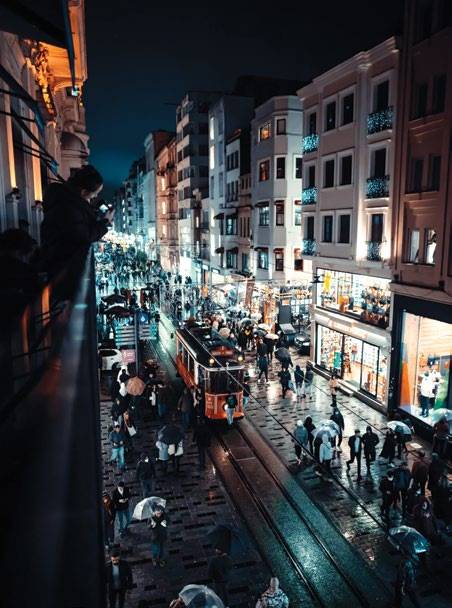
Smell does not just define the city’s landscape; it also gives us a sense of who we are and where we belong. The late anthropologist Dr Victoria Henshaw conducted research in Sheffield, where she found residents defined their rootedness to the city through smell. Cut grass and smells from the local brewery were what residents associated with their city.
This is true all over the world. In India, the smell of hot chai connotes the country in a way no words or pictures can, the smell of chocolates being made in Swiss chocolate factories makes it impossible to imagine you are anywhere else in the world, and even more interestingly – Dubai. This urban jungle of a city, where everyone is hustling to make money, has its own unique smell character, which we can experience provided we open our minds and our noses. Take a walk in the city’s fish market, known as the Deira Waterfront Front, where the smells of fresh fish and other sea creatures give a truly local experience. Smell is the only guide here on what to eat, what to buy, and the experience is not something that can be easily replicated in any other city in the world. It has also exposed us to a place and experience that many of us would normally never think of going.
The tragic thing is that all too often those who truly value the power of smell are those who are bereft of the other senses. In an essay entitled “Smell, the Fallen Angel”, taken from her book ‘The World I Live In’, Helen Keller writes movingly about the power of smell: “Smell is a potent wizard that transports you across thousands of miles and all the years you have lived. The odours of fruits waft me to my southern home, to my childhood frolics in the peach orchard. Other odours, instantaneous and fleeting, cause my heart to dilate joyously or contract with remembered grief. Even as I think of smells, my nose is full of scents that start awake sweet memories of summers gone and ripening fields far away.”
Unlike Helen Keller, we need not be bereft of other senses to truly understand the power of smell. All we need to do is close our eyes and let our noses guide us to the end of the road and beyond. But as Sherlock Holmes shows, we need not even be travelling to explore the world through our olfactory senses; smell can bring the world to us and perhaps even catch a killer in the meantime. The frequent mention of “Eastern tobacco” in the pipe he smokes conveys a sense of an exotic, faraway land, while in ‘The Hound of the Baskervilles’ Holmes unmasks the killers through the power of smell. Reading through an anonymous letter sent to warn the murder victim, Sir Henry Baskerville, he recounts later. “I held it within a few inches of my eyes and was conscious of a faint smell of the scent known as white jessamine. There are seventy-five perfumes, which it is very necessary that a criminal expert should be able to distinguish from each other, and cases have more than once within my own experience depended upon their prompt recognition. The scent suggested the presence of a lady, and already my thoughts began to turn towards the Stapletons.”
While we may or may not smoke “Eastern tobacco” or unravel a letter-writer through the power of our sense of smell, we can and should be conscious that wherever we go and whatever we do, there is an alternative way to map out cities, surroundings, and even our day-to-day lives. It’s time we used it.
Avatar photo
About Author

FTAlmanac

Leave a Reply