FROM KULCHAS TO CROISSANTS: WHAT MY TRAVELS TAUGHT ME ABOUT INDIA

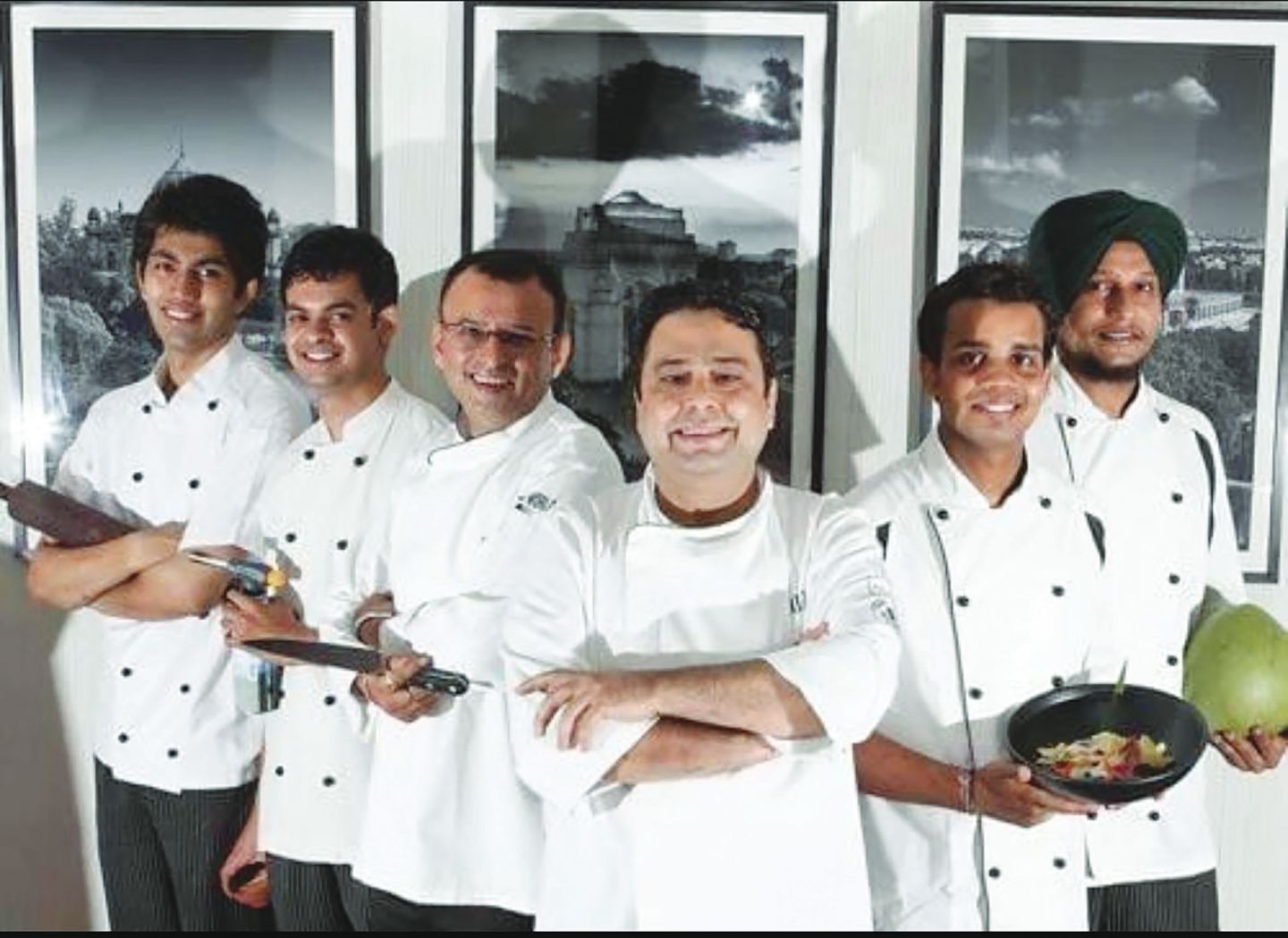
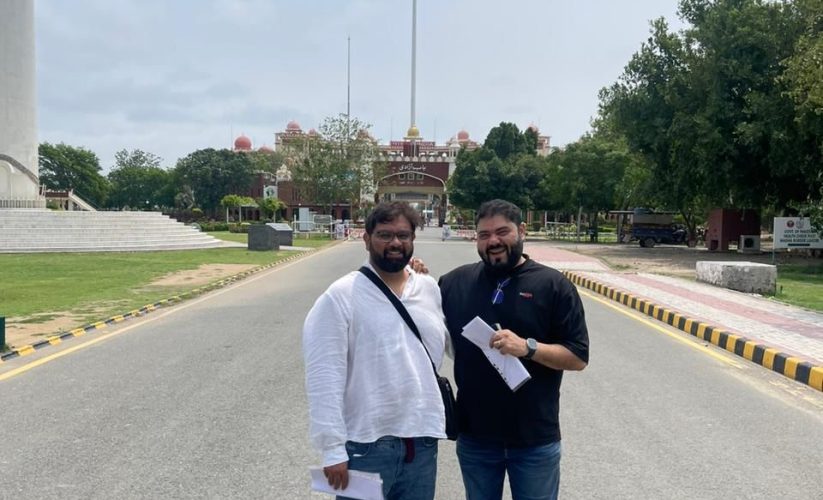
 Standing in the back lanes of a market at 9 am, watching how breakfast moves, or seeing how something is served with instinct and pride and walking through the cities as a student is what makes for a great menu—not a desire to impress, says Chef Shamsul Wahid, Group Executive Chef, Impresario Entertainment & Hospitality, who navigated the streets across India’s most famous food cities from Lucknow to Ludhiana, before refreshing the menu across Social, one of India’s largest and most popular restaurant chains
By Shamsul Wahid
There’s something magical about arriving in a new city hungry. Not just the kind of hungry that craves a meal, but the kind that craves a story. The kind that wanders down unfamiliar lanes, nose-first, following the smell of tandoor smoke, or stumbles upon a kitchen tucked behind a grocery shop, serving three dishes and nothing else. That’s the kind of hunger I’ve carried with me for years, and it’s what has built the very soul of the menus I create.
The SOCIAL menu refresh, after 10 years – The Big Drop wasn’t imagined in a meeting room. It came from years of movement. Years of standing on the floor during service, watching what lands and what gets left behind. Years of travel, not the Instagrammed kind, but the kind where you’re in a back lane at 9 AM watching how breakfast gets plated, or sharing a meal in someone’s home where everything is served with instinct, not instruction. It came together somewhere between Park Street and Hazratganj, between the kulchas of Amritsar and the cooker meat in Ludhiana. It came from real places, real people, and the kind of food moments you don’t forget. This menu is a map, really. A map of moods, memories, cravings and cities that left a mark on me.
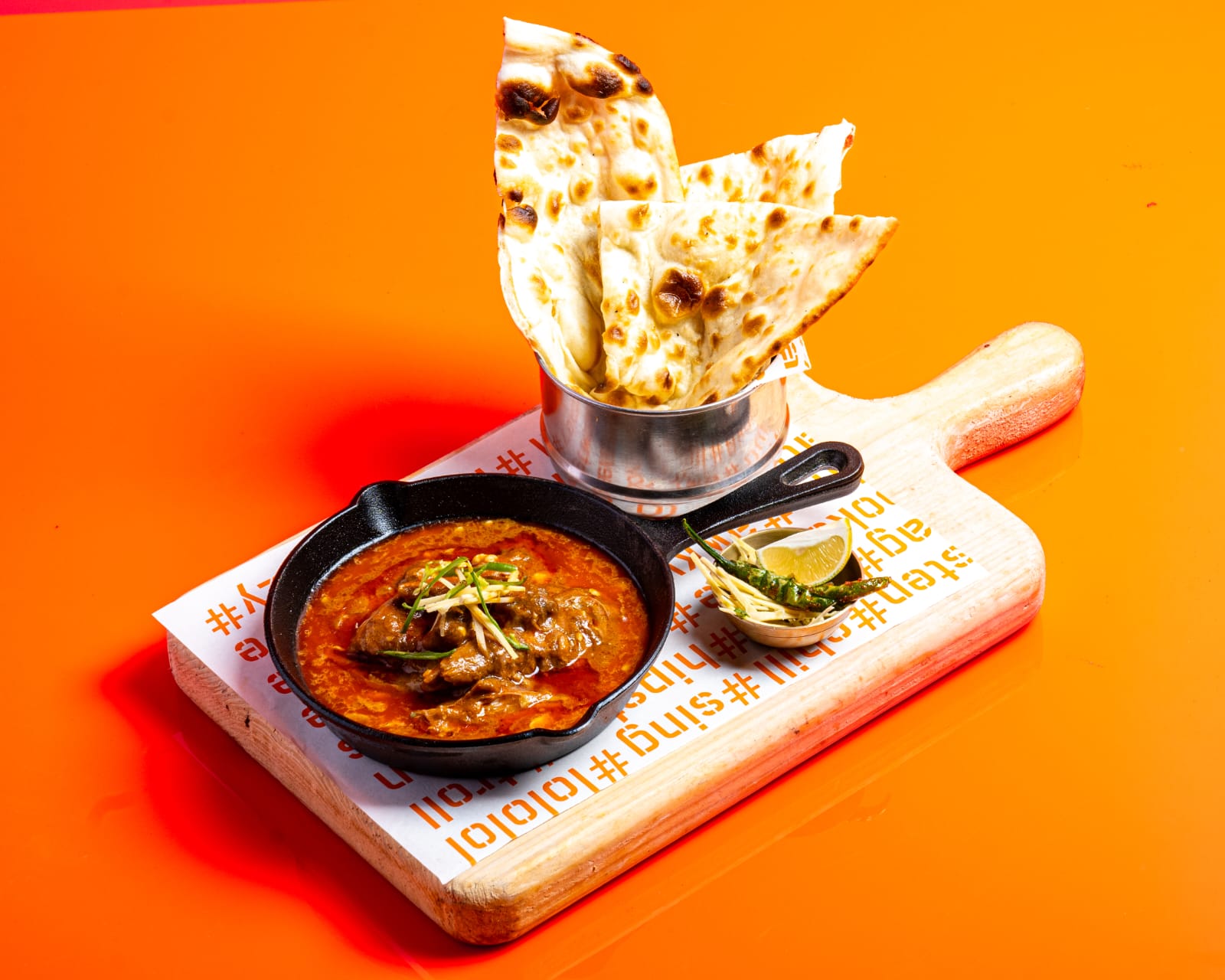
Lemon Chicken in Ludhiana, nihari in Lucknow
Ludhiana was all heart. We were opening SOCIAL in Chandigarh, and I made a pit stop there. The Lemon Chicken at Aman Chicken practically shouted off the plate – zesty, fiery, and impossible to ignore. But it was the Cooker Meat at a dhaba on the way back that truly stayed with me. It arrived rich with fat, pressure-cooked to fall off the bone. No garnish, no theatrics, just depth. It reminded me of the kind of umami mutton dishes I had grown up eating, where the masalas were roasted just enough to caramelise, and the fat hadn’t been stripped off, it had been respected. We couldn’t quite replicate it until we realised the secret wasn’t just flavour, it was drama. So we served it in a cooker and blew the steam off at the table.
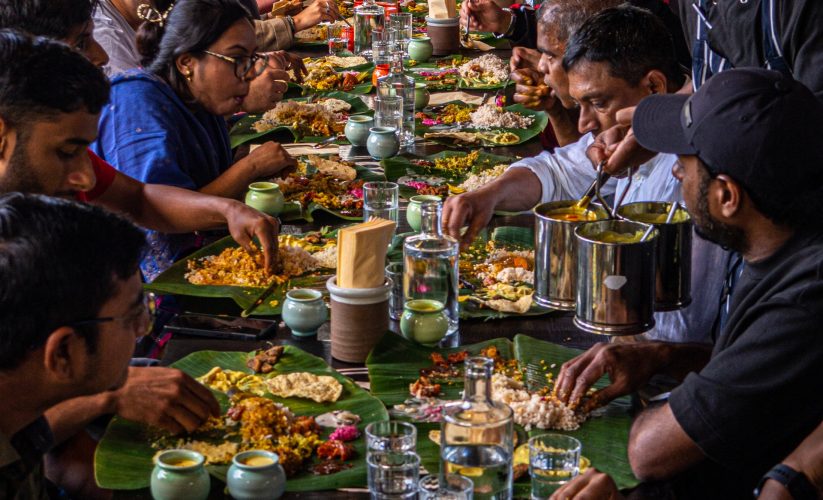
In Amritsar, everything was EPIC. The dal simmering at Kesar da Dhaba, thalis built for sharing with strangers, the abundance and generosity of the meal, it wasn’t about what stood out, but how full you felt. Pehalwan Kulche Waala gave me the kulcha I had been searching for: golden, ghee-laced, stuffed with masala, paired with sticky chhole. We didn’t want to copy it for the menu. We wanted to bottle that feeling that you’ve been fed
fully. With generosity, and with pride. That sense of satisfaction, of being fed fully and proudly, was what I wanted to bring back, not just the dish, but the emotion.
Lucknow, though, was something else entirely. It moves at its own pace. The food doesn’t rush you. Every element, spice, texture, aroma is deliberate. There’s softness
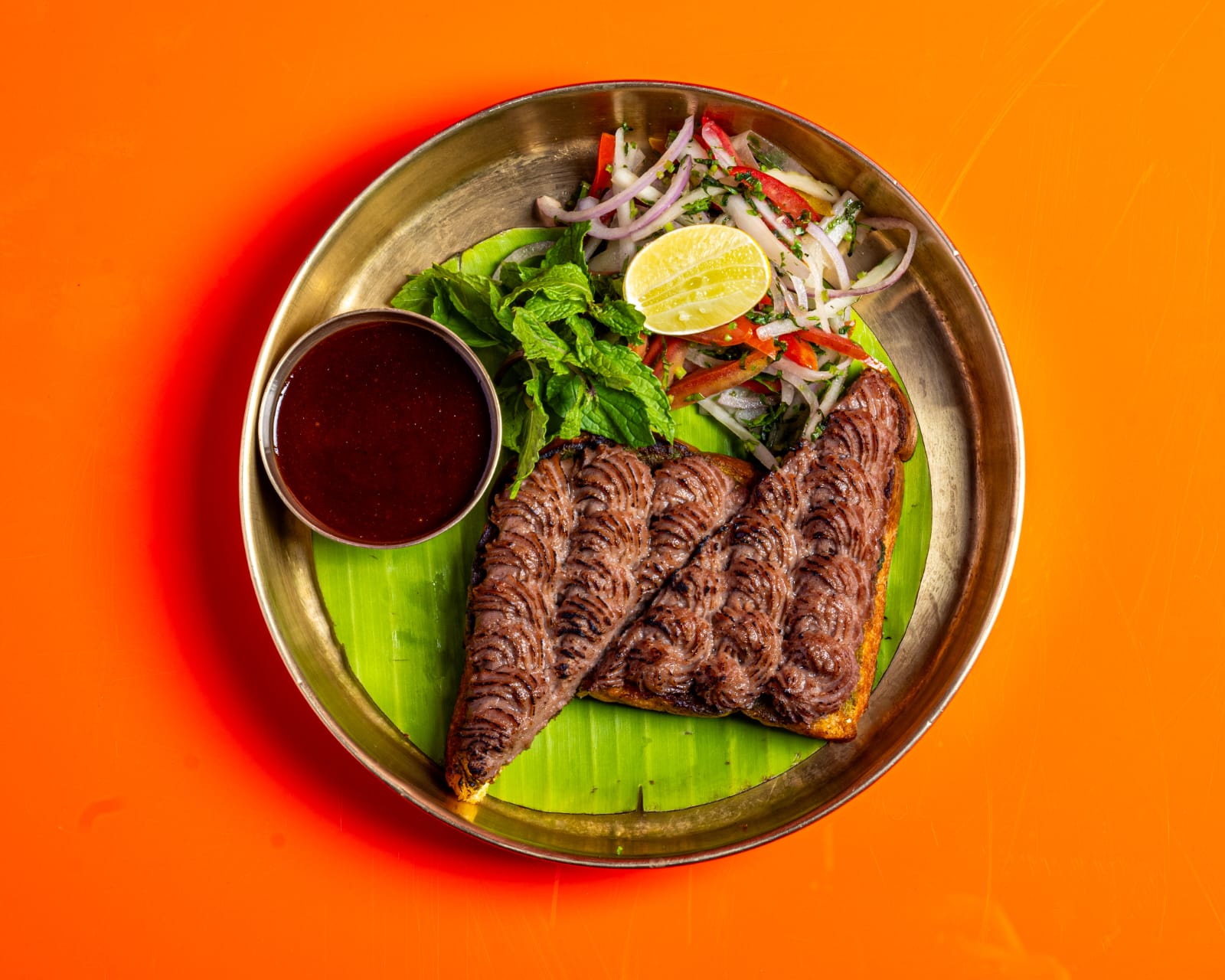
here, in both technique and temperament. Galawati Kebab, not Galouti, is the centrepiece of all great things that are unique to Lucknow. And everyone has their favourite. We walked almost 3 km into Old Lucknow to get to Tunday Kebabi, the original one, not accessible by car, packed to the rafters, and surrounded by two or three copycats in the same lane. The seating was tight, you were served on newspapers and it was epic. The galawati there is like air. It vanishes the moment it hits your plate, leaving behind a rich, umami, smoky, fragrant taste… and a deep desire for more. That’s where the idea for Toast-e-Galawati came from. My wife loves galawati. So I
started thinking: what’s the SOCIAL way to bring it to life? Not as a replica, but as a homage. We landed on an open toast. Crisp, layered, expressive. Something that felt familiar but arrived in a new shape.
Rahim’s Kulcha Nihari needs no introduction, it’s legendary. There are multiple versions of nihari: Delhi, Lucknow, Hyderabadi. But what makes the Lucknowee one unforgettable is the kulcha. That slightly crisp exterior paired with hot, steamy nihari creates a texture play like no other. It’s deep, bold, and completely addictive. I knew we had to bring it to the menu and for personal reasons, I wanted it to become popular.
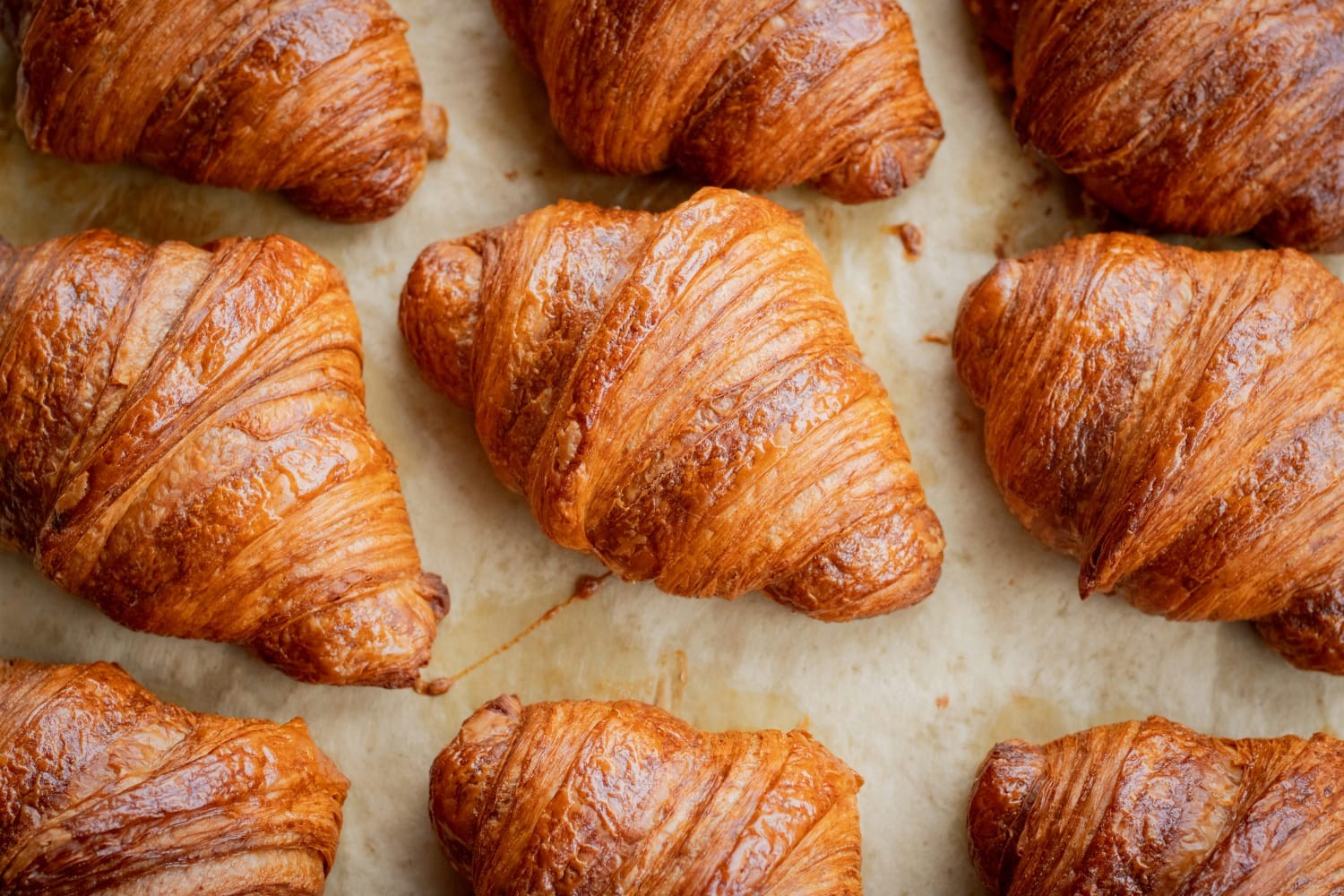
That’s how we created the Nihari Croissant Prashant, a flaky French pastry filled with rich, slow-cooked meat. We tucked it into the snacks section so it could be ordered more often, more easily, by more people.
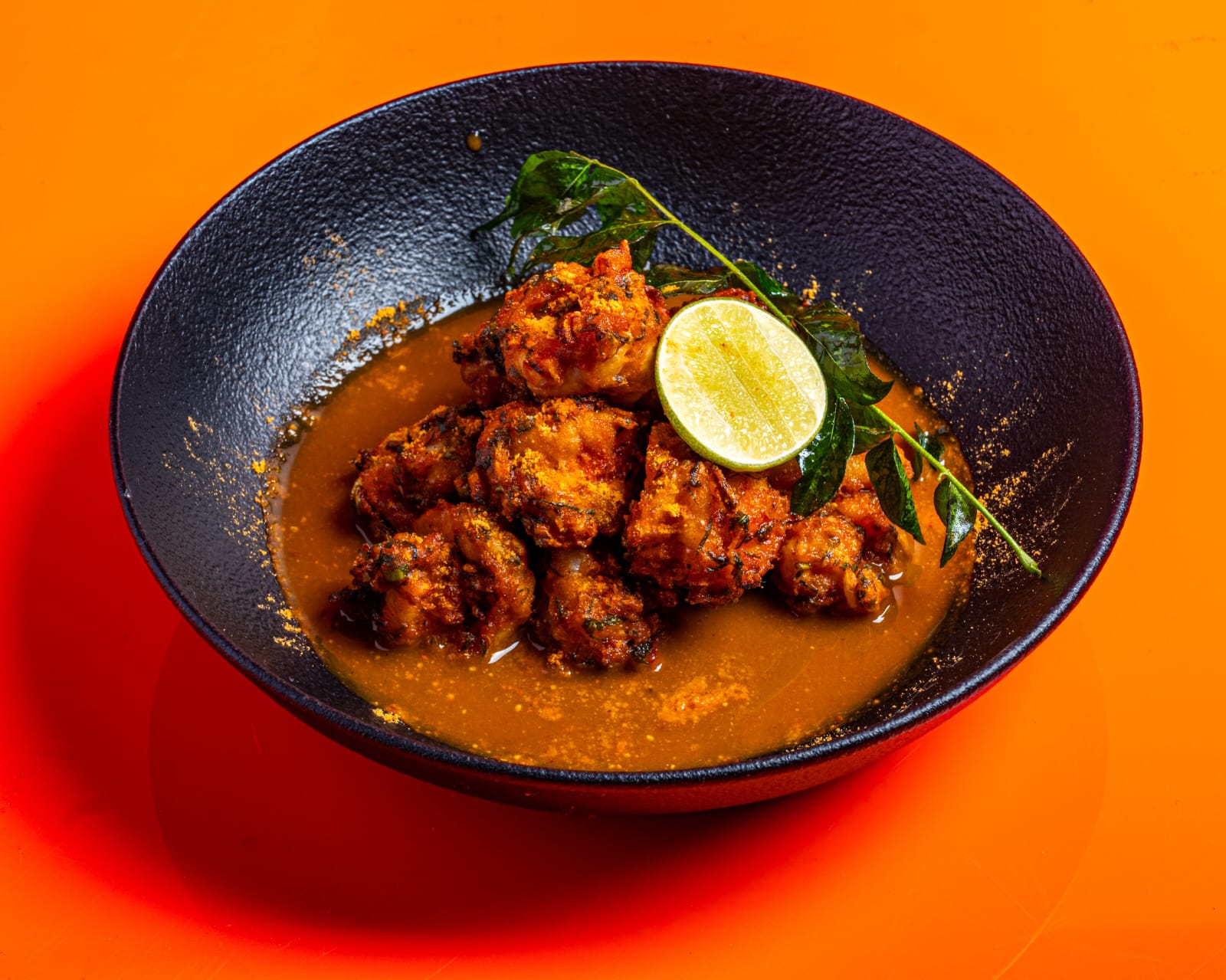
“Calcutta is where I learned elegance”
(And some patience). The kind that doesn’t demand attention but always gets it. I’ll never forget my first Chelo Kebab plate there. It was raining and in Kolkata, when it pours, traffic simply chokes up. It was quite
stressful, and when you’re stressed, your mind craves comfort. For me, that comfort came in the form of a plate of Chelo Kebab at the iconic Peter Cat. Simple, buttery, soft kebabs, fragrant rice, and a sunny-side-up egg. Every bite felt like a pause. That meal showed me that simplicity, done right, lingers.
But Calcutta also gave us play. The Park Street Butter Masala from Amber was actually ordered by a friend who came to meet us. There was something about its richness and ease that hooked me. I kept going back to it—it felt familiar, but just different enough to surprise you. It was a welcome change from the usual, and I knew instantly that it deserved a spot on our menu. As predicted, it’s been quite a hit.
The Calcutta Biryani is another lesson. It’s proof that food can be unapologetically rich and still emotional. Of course, no one can compete with brands like Arsalan and Shiraz, they’ve perfected their sourcing, their recipes, their rivaaji mutton, meetha attar, and yes, even their potatoes. And let me say this: if you’re running a restaurant in Kolkata and haven’t got your potato right, you’re in deep, deep trouble. It’s unpardonable. We went through quite a lot of biryanis and quite a lot of potatoes. There were so many trials. But the locals said the same thing every time: it’s great, but it’s not the same. So we stopped trying to replicate it. Instead, we created something inspired by it. Not a Kolkata biryani, but a version that took cues from it. It’s not traditional, but it lands.
Hyderabad was intensity, full throttle. I still remember trying the haleem at Shah Ghouse. it wasn’t just food, it was force. Slow-cooked for hours, smoky, sticky, with that deep ghee richness and silken texture that coats your entire palate. It hits you all at once: the spice, the heat, the depth. What struck me most was how a dish this heavy could feel so soulful. You sit, eat, sweat a little, and then go quiet. Because there’s nothing more to say. It reminded me that some dishes don’t need innovation. They need respect. That’s the learning I carried back from Hyderabad, not just the technique, but the restraint to leave something untouched when it’s already perfect.
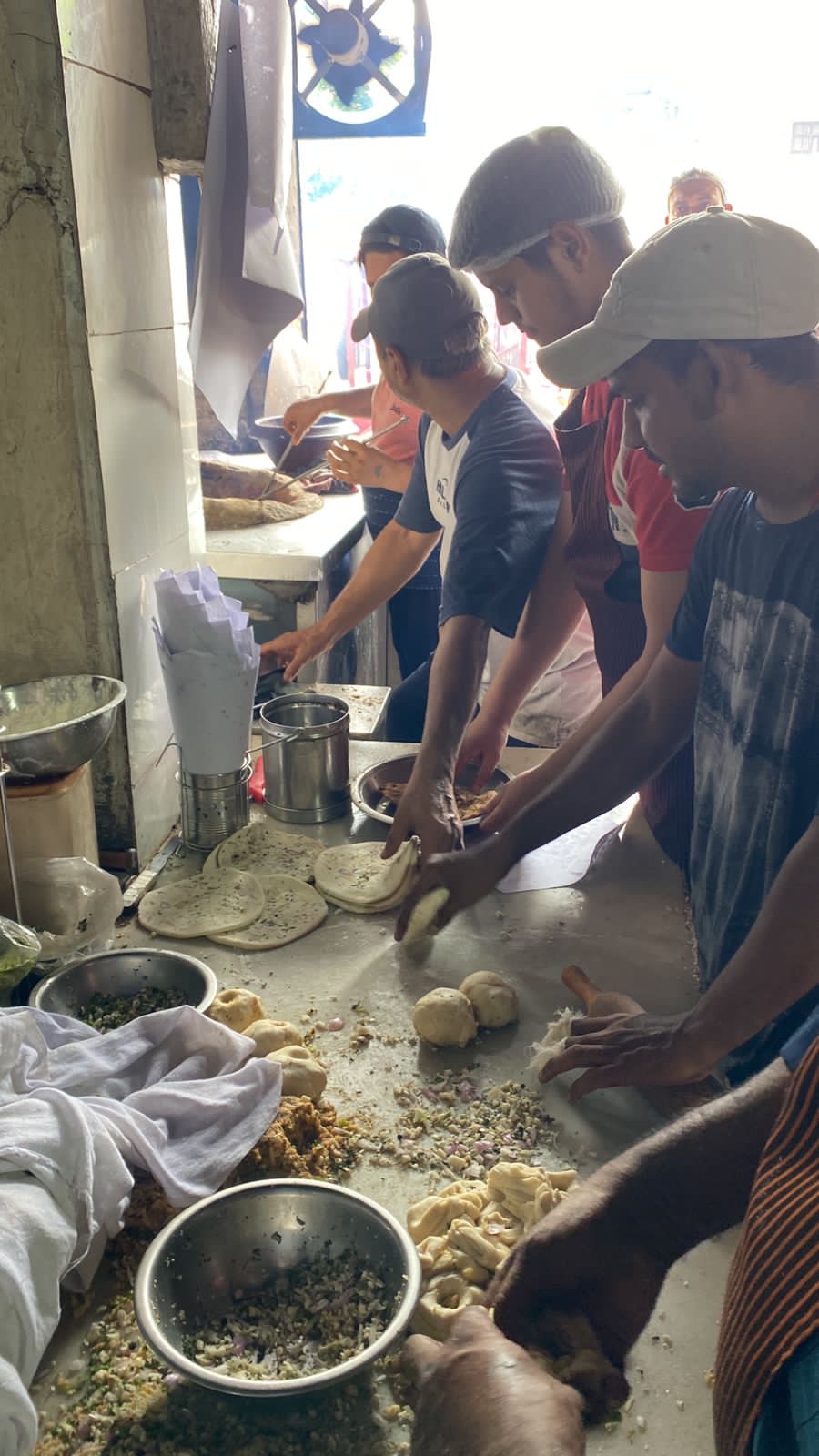
The best menus come not from trying to impress, but from walking through India as a student…
But not every dish has a city! Some are collective cultural moment shared across all cities, moments that bind people together across cities. Chai breaks, thali lunches, midnight Maggi. Indian cities are same, yet different.
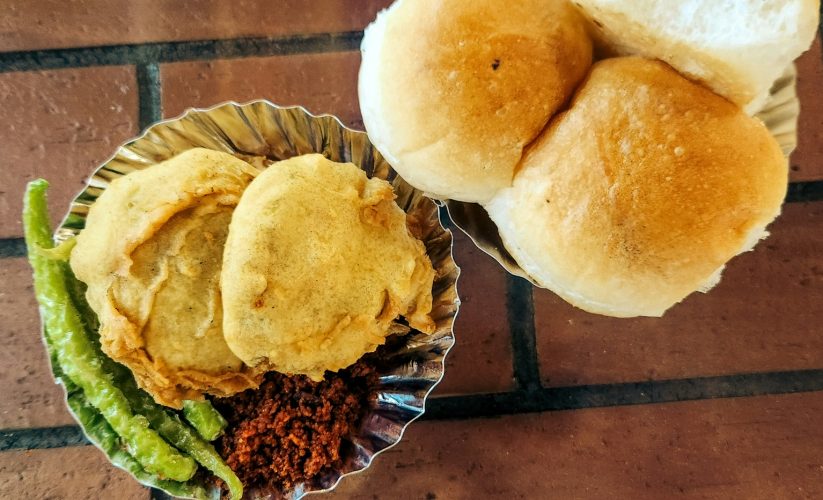
The Dunkables section came from chai breaks taken across cities which are essential. Not one city, but hundreds. People ordering cutting chai and asking, almost casually, “khari milega?” That rhythm. That reflex. That love. We didn’t invent it. We just finally put it on paper. Bun maska, rusk, biskoot, they’ve been part of our lives forever. We just gave them a section of their own on our menu.
Even the ramen on our menu, yes, it sounds global, but to me, it’s just another expression of comfort. Soupy, steamy, savoury. Is it Japanese? Sure. But in feeling, it’s not that far from a hot bowl of rasam or khichdi popularly consumed across India. That’s what we leaned into. What I’ve also realised is that people don’t eat in order anymore. Not breakfast-lunch-dinner. They eat based on how they feel, especially the GenZs. And often, everything lands on the same table. A salad. A ramen. A thali. A cup of matcha. A khichdi, a burger, a plate of fries. It’s not chaos, it’s real life. The SOCIAL Menu isn’t a display of innovation. It’s a reflection. Of how we move, how we eat, and what we reach for when we want to feel full. Not just in our stomachs, but in our hearts.
As chefs, it’s easy to lead with ego. But I’ve learnt that the best menus don’t come from trying to impress. They come from paying attention. From walking through India not as a creator or expert, but as a student. So no, we didn’t chase trends. We followed people across India cities. We watched what was reordered. What was hacked. What guests kept asking for. And we built from there. I didn’t go looking for inspiration. I just paid attention to what was already there.