Off-the grid in Mumbai

 Batata vada, thalipeeth, khandvi ribbons, sancha ice cream, idli-dosa, pineappale sheera… all the farsan shops, temple-adjacent counters, all-veg canteens and where to eat like a local.
Parthip Thyagarajan, CEO & co-founder WeddingSutra, reccos the small, stubborn, and hidden vegetarian institutions of Maximum City
By Parthip Thyagarajan
Mumbai’s best vegetarian food often lives off the grid: paper chits, steel trays, rates chalked on the wall. You go early, pay by weight, and carry a dabba because half the joy is taking it home. This crawl stays away from the headline acts and sticks to quiet masters of consistency—especially in the Gujarati, Maharashtrian, Jain and South Indian belts from Babulnath through Girgaum, Kalbadevi, Dadar, Matunga, Bhendi Bazaar and Worli.
Babulnath and Gamdevi
- DAVE Farsan Mart (Babulnath Road).Post-darshan ritual: khandvi ribbons, nylon dhokla, jalebi and feather-light samosas crossing the counter in steady rhythm. Hospitality here is by the kilo, shutters down by early afternoon.
- Sir Ratan Tata Institute – RTI Foods (N. S. Patkar Marg).A civic-minded canteen masquerading as a bakery: quiches, rolls and bread-and-butter pudding beside honest coffee. The prices are democratic; the crowd spans nurses, neighbours and worshippers.
- Panshikar Aahar (Girgaum border). A Maharashtrian stalwart for thalipeeth, sabudana khichdi and shrikhand, still priced for everyday eating. Go mid-morning when the griddles hum.
CP Tank, Girgaum and Kalbadevi
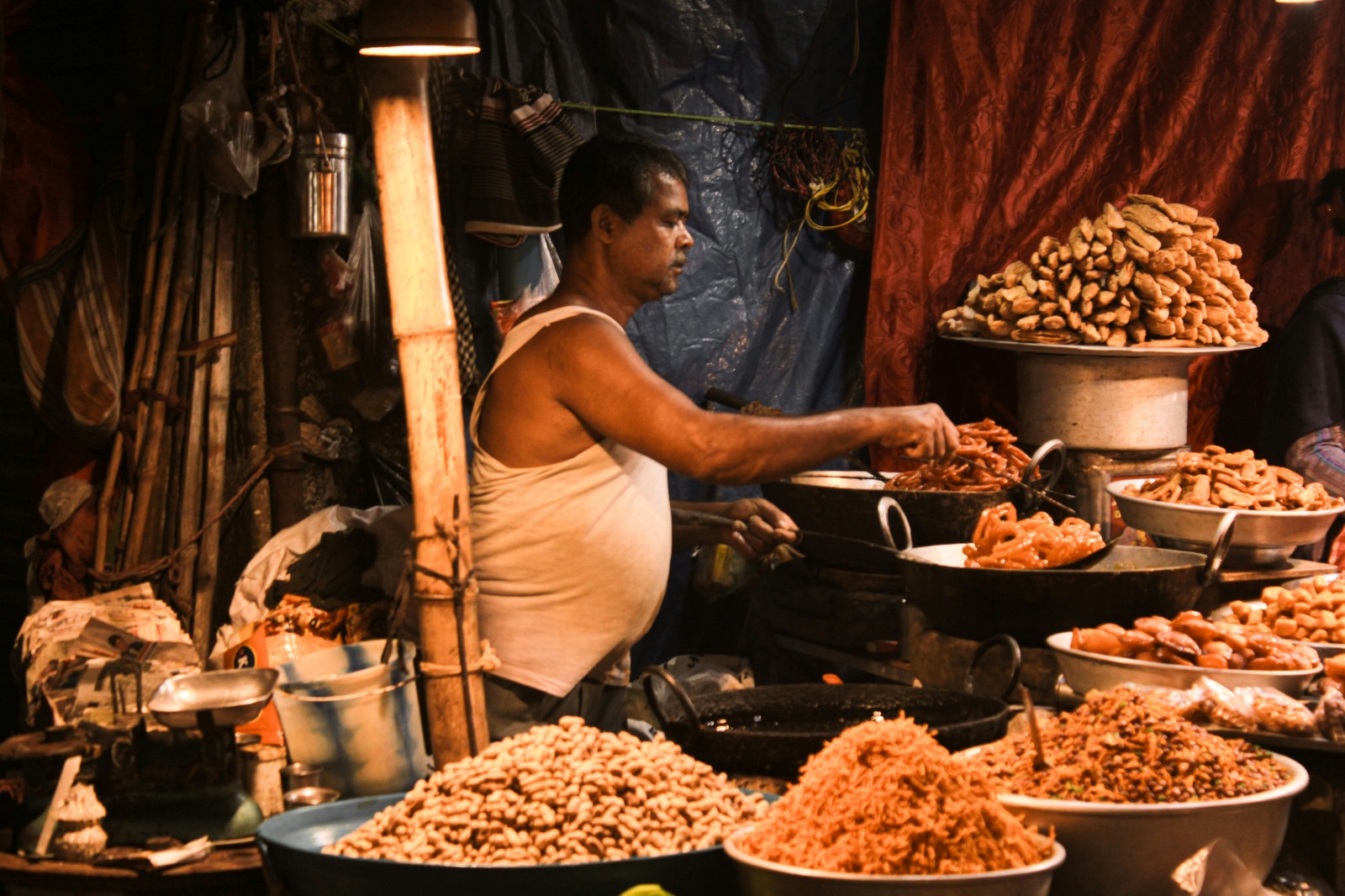
- Hiralal Kashidas Bhajiawala(Vithalbhai Patel Road, CP Tank). Surti logic holds: jalebi–fafda at breakfast, bhajiyas all day, undhiyu when the season smiles. Eight decades on, the spicing is still quiet perfection.
- Radhe Farsan (Girgaum).A counter that reads like a glossary—ganthiya, khamni, patra—accompanied by chutneys that keep pace. Purists line up before festivals; by noon it’s gone.
- Jamnagari Farsan Mart(Opera House/Girgaum and CST). Glass cases rotate through vanela gathiya, methi puri and farali pattice. Look for the Opera House signboard or the CST outpost if you’re southbound.
- Adishwar Swami Jain Temple Bhojanalay(Bhuleshwar). Satvik, no-onion-no-garlic plates in a temple-linked dining room. The opposite of restaurant theatre, which is exactly the point.
Dadar West
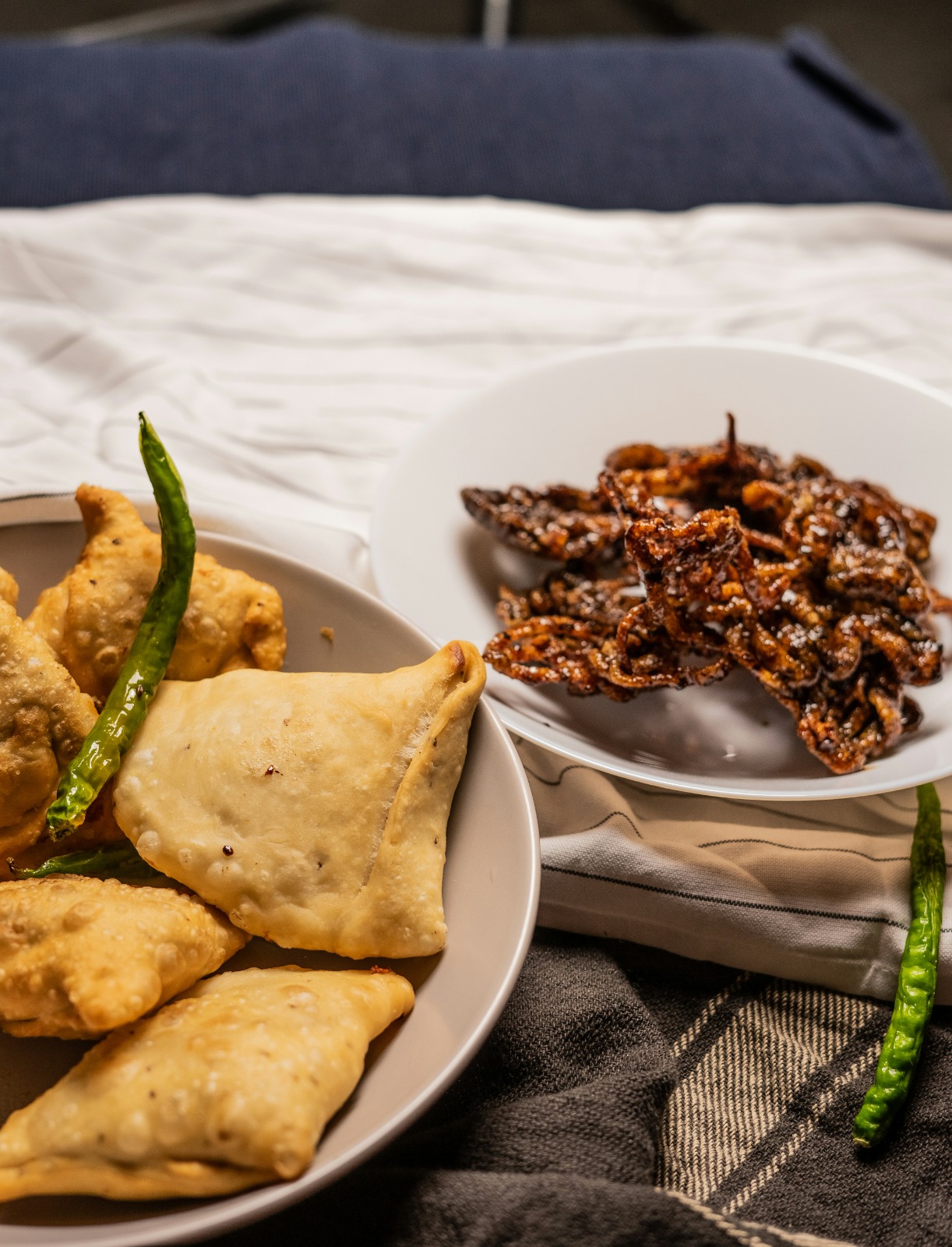
- Saurashtra Farsan Mart(N. C. Kelkar Road). Around since 1923, trays of chevda, ganthiya and festival specials move with a century’s muscle memory—parcel first, chatter later.
- Panshikar & Co.(Dadar West). Sister outpost to the Girgaum favourite: iyush, thalipeeth, iyush, and a sweets counter. Best for crowd-sized dabbas.
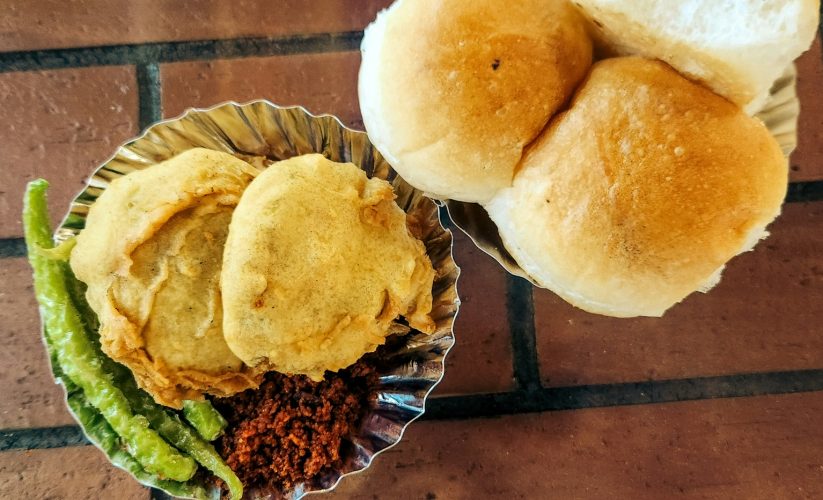
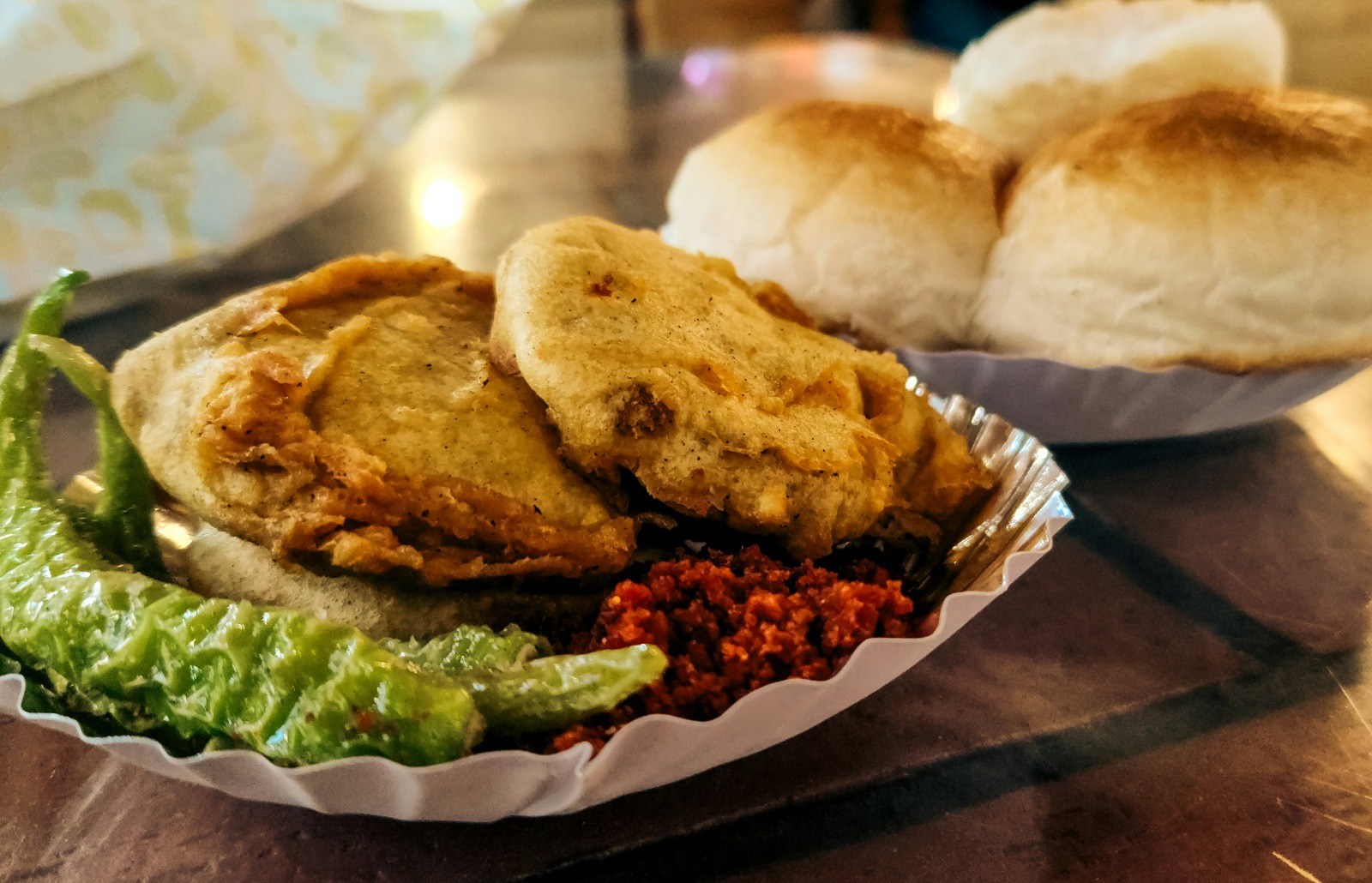
- Shree Krishna Batatawada(Chhabildas Road). A breakfast reflex: tennis-ball batata vadas with a thin, crisp coat and green chutney that hums. The board is easy to miss; the queue is not.
- Prakash Shakahari Upahaar Kendra(Ranade/Gokhale Road). Masale bhaat, sabudana vada, kothimbir vadi—and always a glass of iyush. Festival spreads and weekday snacks land with equal assurance.
Matunga
- Café Madras(King’s Circle). Eight decades of filter coffee, soft idlis and crisp dosas—queues at dawn prove the ritual still holds. Dine-in, communal tables, fast turnover.
- Ram Ashraya(Matunga Circle). Opens before sunrise, closes when stocks finish. Pineapple sheera, rasam vadas and filter coffee move faster than the pen can note.
- Anand Bhavan(Matunga East). A quieter dining hall, older-Bombay in feel, serving dependable dosa–idli–vada plates to office-goers and families alike.
Chowpatty to Bhendi Bazaar
- Vinay Health Home(Ramwadi, Charni Road). Maharashtrian snacks without theatrics: Puneri misal tuned just so, thalipeeth done right, sabudana wada that eats surprisingly light. A Girgaum constant since the 1970s.
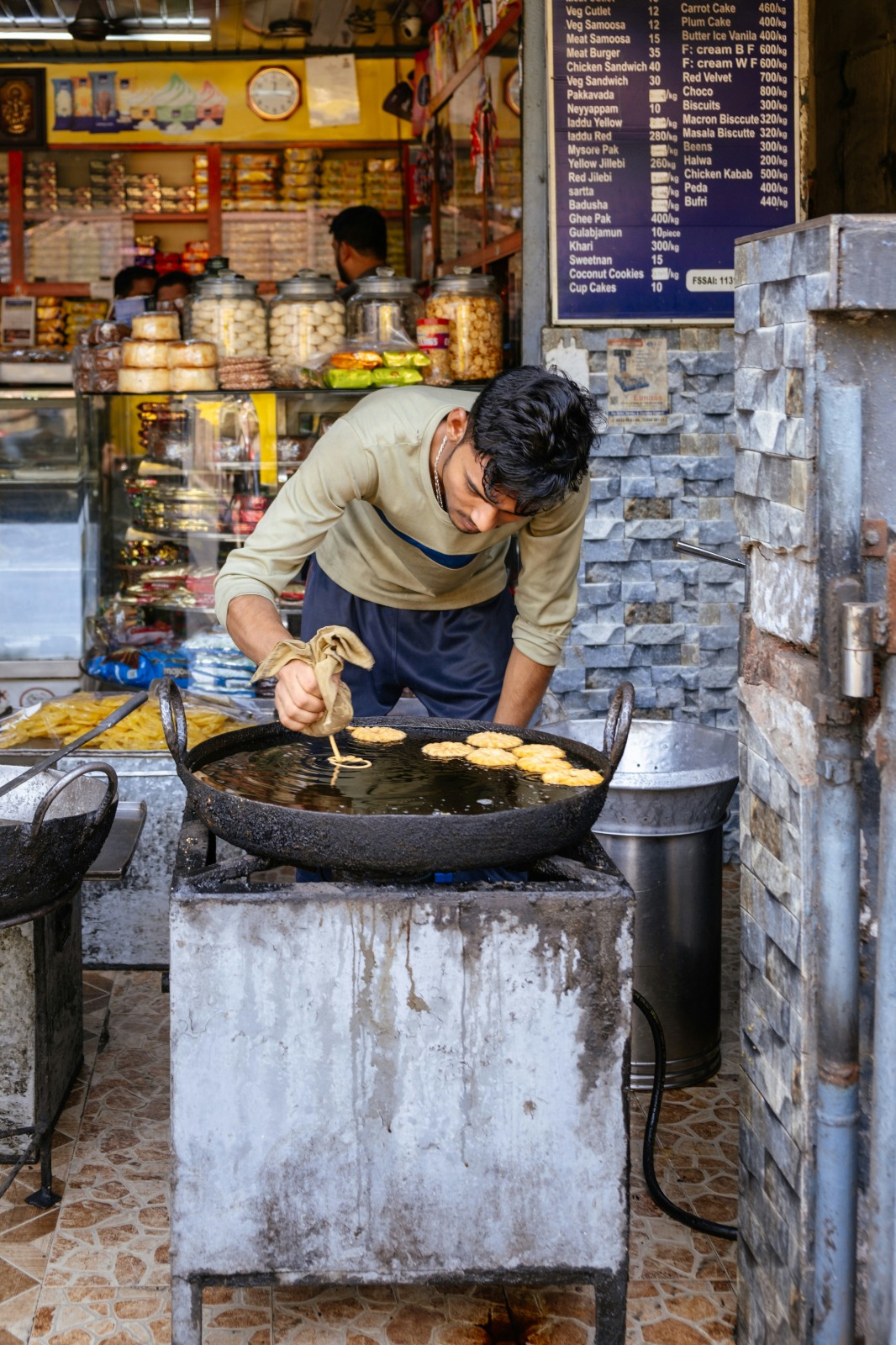
- Taj Ice Cream(Bohri Mohalla). Hand-churned sancha scoops—sitaphal if you’re blessed—spun in copper barrels packed with ice. The method is 19thcentury; the line isn’t.
Worli
- Manchekar Vada Pav(B.D.D. Chawl No. 50). One of the city’s most cherished stalls, drawing a crowd within minutes of opening. The besan-crisp batata vadas are dropped piping hot into pav, slipped with green and dry chutneys. Regulars insist that until you’ve eaten a Manchekar vada pav, you haven’t eaten vada pav at all.
How to eat these like a local
- Go early. Morning batches and festival trays vanish quickly.
- Order by weight and carry tins. Farsan culture is parcel culture; half the crowd shops for home. Newspaper wrapping is common—your own boxes help.
- Sit-down options. RTI Foods, Panshikar (Girgaum) and Panshikar & Co (Dadar), Prakash, Vinay Health Home, the Jain Bhojanalay, Café Madras, Ram Ashraya and Anand Bhavan all have seating. Manchekar and Shree Krishna Batatawada are street counters (stand and eat). Most farsan shops are parcel-first; Taj Ice Cream is a tiny parlour with limited perch space.