The Lotus Eaters

From select gourmet experiences to luxury weddings and intimate birthday parties, Sri Lanka has become a chic getaway for Indian luxury seekers
By Anoothi Vishal
The sapphire waters of the southern Indian Ocean lap up the pristine white beach as we sit sipping on a tropical cocktail, contemplating eternity. There’s no land between here and Antartica, they tell us, just the tranquil deep blue — and occasional dolphins. Welcome to paradise here, in the Sri Lankan south.
With its cheap flights, hotels that won’t break the bank, and an easy visa regimen, Sri Lanka is usually seen as an “affordable” destination, and rightly so. But this summer, as you plan your getaway, be mindful of the turn to luxe that Lanka is taking, in keeping with travel trends gravitating towards high end consumption rather than mass over tourism. Well-heeled and well-to-do Indians are now seeking exclusivity in the island paradise via plush villas, newly renovated resorts and splurgy hotels that are seeking to provide rare and unique experiences of the kind that go far beyond pretty vistas and the usual itineraries.
At the newly-opened ITC Ratnadipa in Colombo, the draw is an opulent bar housed inside a glass bridge connecting two towers of the stunning new hotel– one of the priciest investments in Sri Lanka in the last few years. At Ahasa, the sky bar, as one sits suspended in the glass bridge that even sways with the wind 100 metres above the ground, there’s barrel aged arrack on the rocks, cuvee champagne, a jazz band, couches to sink into to see the sun set over the Indian Ocean, and a steady stream of Colombo socialites.
With a stunning architecture comprising two glass towers facing the ocean, connected by a 55-meter-long and 300-tonne glass skybridge, amongst the most unique in the world, “sky mansions” or expansive suites with 180 panoramic views, a helipad, and nine restaurants and bars, Ratnadipa is hoping to be a magnet for the affluent leisure or business traveller from India —as well as for the affluent local.
The Indian hospitality major ITC Hotels reportedly invested $300 million in the prestigious project—an engineering marvel—bang on Colombo’s poshest promenade facing the Indian Ocean. “ITC Ratnadipa Colombo is our inaugural international venture and a tribute to the rich heritage of Sri Lanka. This landmark hotel reinforces our plans to expand our portfolio and offer unparalleled experiences,” says Anil Chadha, chief executive, ITC Hotels.
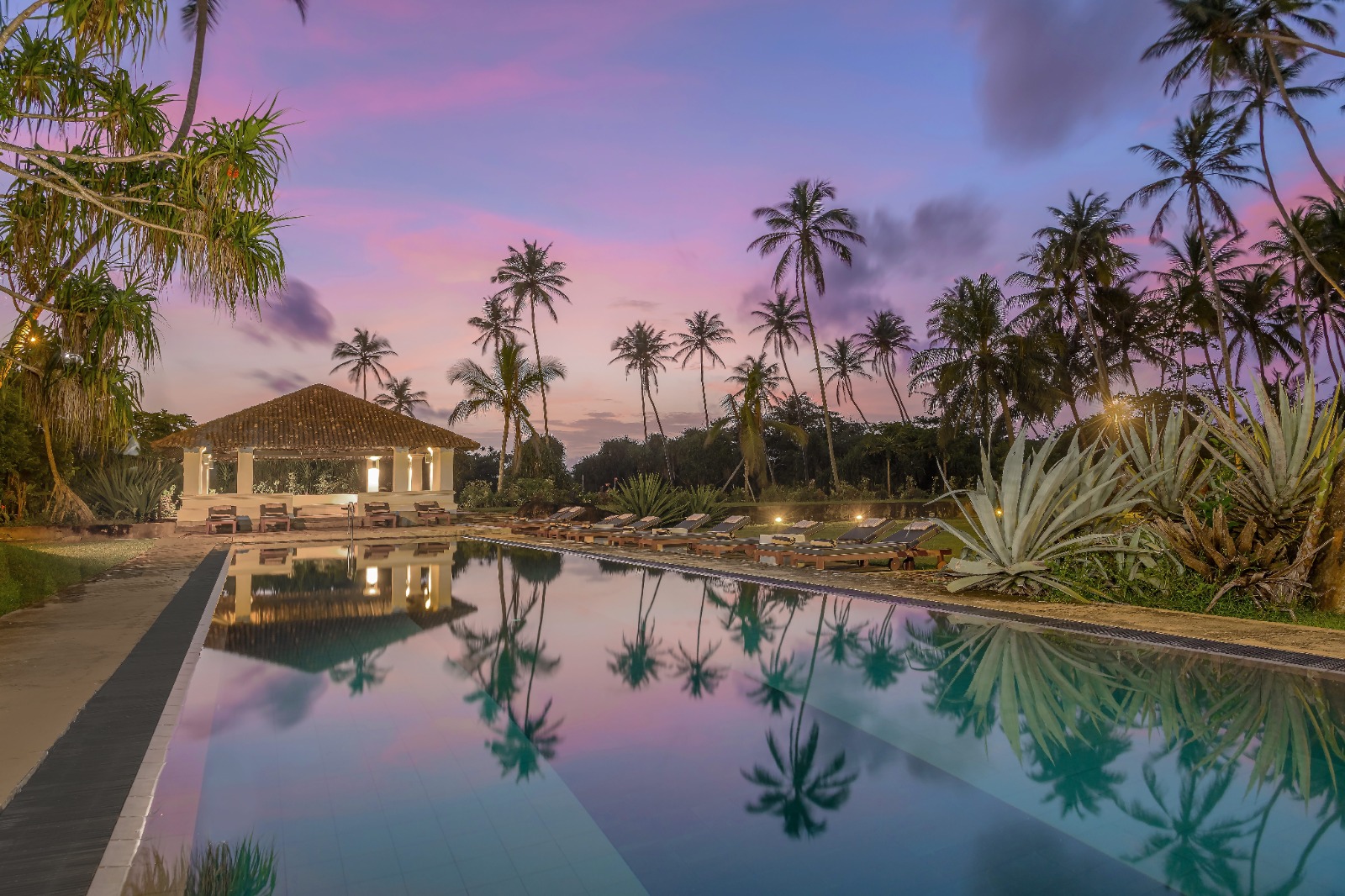
Ratnadipa is not the only luxe stopover either if you are planning a Sri Lanka trip any time soon. Nandini Rishi, a Delhi based, fashion entrepreneur, recently planned an exclusive birthday celebration for her husband’s 40th with a group of close friends in a five bedroom luxury villa with a private chef and the works. With a lavish swimming pool, verandahs and colonial architecture inspired by an old Ceylon but with ultra-modern conveniences, properties such as this and others are fast becoming go-to options for a number of tourists visiting the island for “special occasions”—intimate birthdays, weddings and family getaways.
The stunning Kahanda Kanda boutique resort set on its own mountain inside an organic tea estate off Galle is designed by the acclaimed British designer-turned-hotelier George Cooper, with 12 quirkily laid-out villas, many with private pools and/or mini libraries, lotus pools in the common areas and expansive views of a tropical jungle. Set near the Kogalla Lake off Galle, this resort is an experience in its own right and increasingly attracting Indian HNI clientele.
Experiences offered here around food and local heritage including visits to cinnamon farms, an insight into Buddhist rituals and mask making et al are a draw for multi generational families looking to spend on more than a bed and a view. A tea-infused degustation menu, for instance, is a highlight with the local chef fusing French influences with Sri Lankan ingredients and flavours.
The special menu as well as the visit to the traditional mask-maker, now a disappearing profession in South Sri Lanka, is going to be part of an exclusive experience designed for a group of eight couples—NRI Indians—checking into the property to celebrate another milestone birthday. They’ve bought out the entire resort and have planned a sort of a treasure hunt as a birthday game that involves visiting the local wet market, cinnamon factory and mask maker!
A few hours away, in Bentota, The Villa Bentota, a heritage property dating back to the 1880s reopened in 2021 (it was the home of Sri Lanka’s most famous architect Geoffery Bawa and is one of Sri Lanka’s most historic places), is a coveted stay, not in the least for its Mohotti suite with its antique furniture, and a sunken sitting room. But one unique experience here that ultra wealthy clients can access is chartering an entire rail saloon— or even an entire train—which can bring them from Colombo to the beachside hotel directly. The railway tracks run through the resort, separating the beautiful mansion with its suites and villas from the beach. A few years ago, a wedding group from Australia had apparently chartered a train, and chugged in here, to be welcomed with aperitifs on the tracks! Now, as we stare at the waves, a beach bar is being made, along with a fire pit. Late night bonfires cannot be more blissful.
“Sri Lanka has always had a fabulous cache of luxe and ultra-luxe properties, including the Jetwing ones (the Saman Villas on the southern coast are among the most romantic hotels in the world) and the heritage Cinnamon resorts and hotels,” says Karan Gokani, co-founder and creative director of the famous UK-based restaurant chain Hoppers that has popularised Sri Lankan food in the West.
“Since the Easter bombings of 2019, then Covid and the economic crisis, the affluent tourists were alienated,” he says. “Sri Lanka was seen as a bit of risk and it was the budget crowd, more opportunistic, that started coming. But that notion has been dispelled now,” Gokani rightly points out.
Sri Lankan Tourism has been increasingly targeting “quality over quantity”. As have the newer resorts and niche offerings in the country. An ultra-luxury venture, Santani Wellness resort and spa, sprawled on an entire hill with a eucalyptus jungle, about an hour-and-half’s drive from Kandy, is attracting “people who have everything in the world” to come and experience sustainable well-being.
With therapies centred around Sri Lankan Ayurveda, stripped bare architecture, al fresco pavilions, areas inspired by Buddhist meditation caves, it offers an “architecture of silence” that the Time magazine voted as one of the “World’s 100 Places to Visit”. This is literally quiet luxury; a slow life for those in the fast lane. “We believe peace of mind is the ultimate luxury and Santani is the only property perhaps in the world that manifests this belief from design to delivery. We cater to luxury seekers who have every material good in the world but are still struggling,” says founder and CEO Vickum Nawagamuwage.
Meanwhile, food experiences too are being reshaped. At Santani, a tasting menu that may rival any top restaurant’s globally is crafted out of hyperlocal ingredients—nettles, drumsticks, fatty Japanese grade tuna, which is in fact a major Sri Lankan export to Japan and more.
But a host of other chefs too are creating food which is modern yet rooted in Sri Lankan culture and ingredients. And on the menu is far more than the fiery curries and sambols or hoppers the island nation is known for. It is ironical that while Sri Lanka exports some of its best produce and seafood to global gourmet destinations— blue swimmer crabs and blue fin tuna are sought after in top restaurants all across— the nation has ironically been importing a host of basic ingredients used in day-to-day cooking, including even onions.
But now, a bevy of young chefs and foodprenuers seem to be making an effort to use locally grown greens, vegetables and fruit to create trendy courses. Chef Darshan Munidasa, whose restaurant Ministry of Crab, is in Asia’s 50 Best List, says that there is an interest in lesser-known nuances of Sri Lankan gastronomy, such as the use of katsuobushi (dried bonito, typically imported from Maldives) in the humble pol sambol. Upscale restaurants in Colombo and Galle are putting these nuances on the front burner and educating tourists who come to dine. “We are seeing many self-employed chefs doing amazing things with the cuisine,” says Munidasa, “Sri Lanka will become THE culinary destination of the south Indian ocean,” he predicts. To travel for taste is the ultimate luxury!