Are cultural events, the new food books/shows?

 There is space for new, niche independent food journalism via — not reels and not large media with little retention— but as both slow, physical media and in-real-life experiences
By Anoothi Vishal
There is space for new food journalism. Gen Z consumes digital and inhabits a completely different media universe. If you look globally, reels and random content without credibility are falling out of favour. The space, as we have also seen in the Indian context, is ready to be filled with new, small but trustworthy channels of communication. What are these?
While the rise of new digital news channels focused on reportage, not commentary, is clear, as also the increasing irrelevance of armchair commentary on say LinkedIn posts by jaded Gen X and millennials, when it comes to food media, I am going to predict two outcomes: The reinvention of physical media in small and niche ways that reaches targeted, small communities interested in different aspects of food such as 1. Street discoveries 2. Luxury and upscale experiences 3. Heritage and culture and 4. specific geographies, including the smaller metros where gastronomy in India is booming. The day and age of big influencer followings, based solely on numbers, is over. Globally, trust is replacing numbers, and niche communities is what food media is seeking to build trust with. But the second outcome is more avant garde: in-real-life (IRL) experiences based on an understanding of and commentary around culinary cultures, food histories and even personalities of chefs or “how-to” business tutorials will become a pervasive way in which journalistic “content” around food can reach their audiences in a more engaging way.
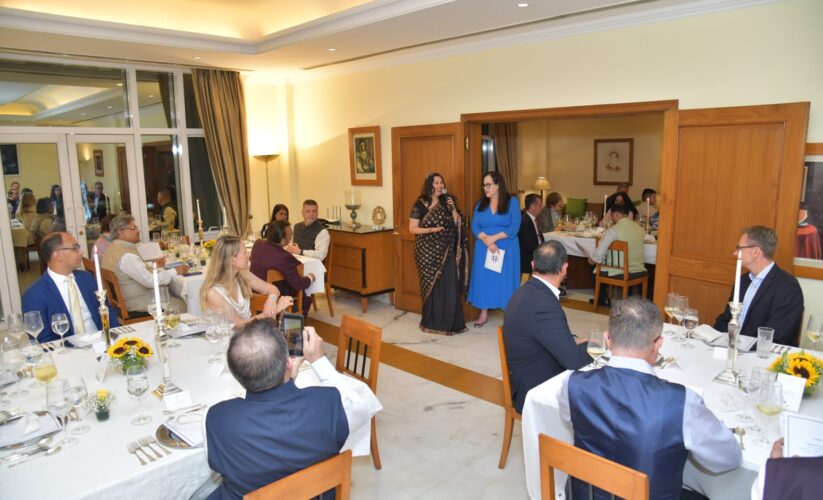
Constant stimulation means that people have little capacity to read or even scroll; retention via these has reduced. Instead, what is more effective is reaching out to niche demographics via experiences that bring to the table understanding, knowledge and credibilty via story-telling— and which are not just pretty and predictable events marketing a restaurant or food brand. This realisation came to me pretty forcefully as I faced an audience of primarily diplomats and older Gen X not necessarily engaged with “food” as many of younger generations are today. The Food And Travel Almanac and I had curated an extraordinary, unique evening tracing the links between India and Greece through ancient times, at the Embassy of Greece in India under the aegis of the Greek ambassador Mrs Aliki Koutsomitopoulou.
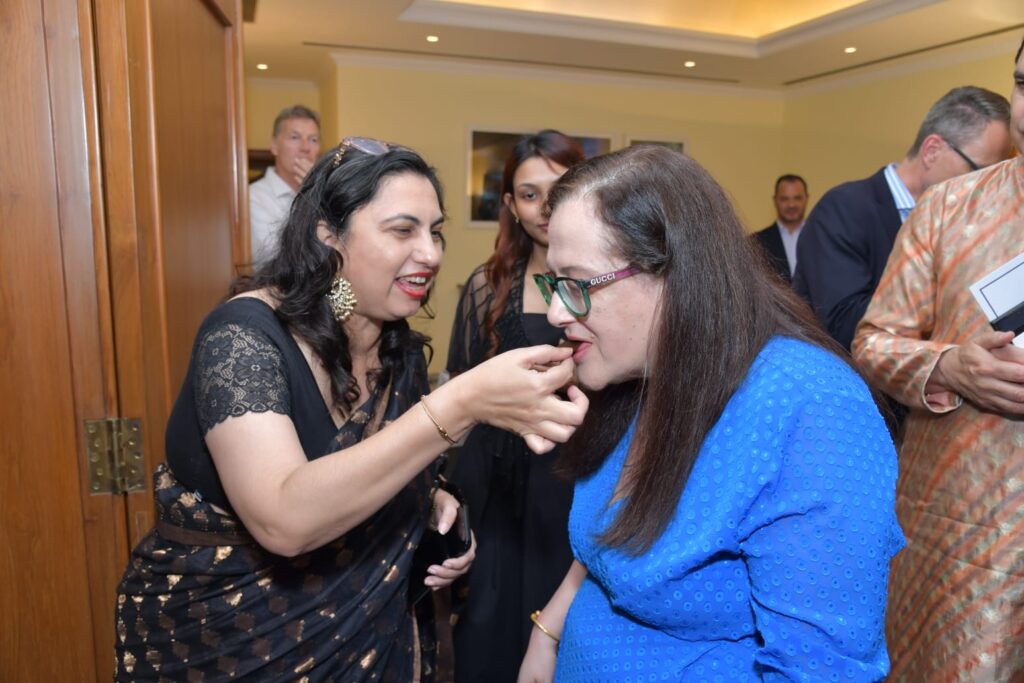
In the manner of an epic, Odyssey being currently rediscovered, let’s now take a detour, and let me tell you about the story that was at the heart of this curation: highlighting India and Greece connections, culturally, and via food. The food histories I spoke about have been part of my columns over the last 25 years, a result of relentless research into how ingredients and ideas have dispersed from India to the world, and vice versa. But here, I was presenting them differently.
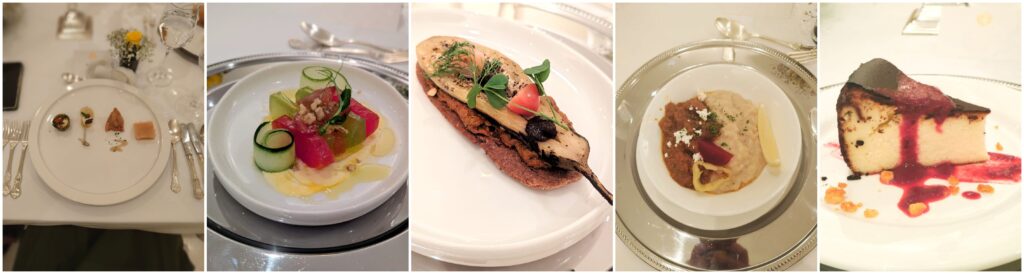
Saffron threads, Herbs that travelled;
Aubergine Tales: From the Sutlej to Santorini;
The Wedding Pilaf: From Crete to Calcutta;
Cheese meets sugar
The ancient Greece-India story
Greece and India have had long and deep ties going back over 2500 years, among the closest between the east and the west. For one, ancient Greeks and ancient Indians both seem preoccupied with the biggest questions of life, its meaning and how to live it best. While it is tempting to think that Socrates and the Buddha, contemporaries in different parts of the world, may have met and exchanged ideas, there is no record of them doing so. Centuries later, a common sphere of influence would emerge, via the Indo-Greek kingdoms influencing global art, language and knowledge, including the dispersal of medicinal systems of wellness such as Ayurveda that may have coalesced with ancient Greece’s plant-based medicinal systems, as the name “unani” suggests. Philosophically, there are many similarities between the various schools of thought of Classical and Hellenistic Greece and the profound philosophies of India; the eternity of life being the most central, now being embraced by the new world, in the age of AI.
Alexander’s march brought the empires of the East and West together, opening vital trade routes through west and central Asia. This resulted in a great dispersion of ideas and ingredients that still shape how we eat and live, and the world’s shared gastronomic heritage. In the Indian masaldaan, or spice box, commonly used spices such as fenugreek (“Greek hay” in Latin, methi in Hindi, and tsemeni in Turkish and Greek), as well as coriander and fennel are a result of a dispersal of ingredients eastwards. On the other hand, the highly-prized and world famous saffron from Kashmir made a reverse journey from the East to the West, via the land routes and cultural connects opened up by Alexander’s Asian army. Used initially as a beauty product (the Macedonian general used it for haircare apparently), saffron became one of the world’s most prized ingredients, its deep flavour, colour heightening the sensory effect of Indian pulaos, kheer and desserts, the Aegean bakes, fishermen stews and ryzi pilafi, not to mention Risotto alla Milanese, northern Italy’s classic. Raw crystal cane sugar, a Mauryan invention (sugarcane is native to India) too dispersed globally, as trade routes opened and refining centres came up all over West Asia, including in “Misr” or Egypt. This would eventually result in a global fashion for desserts that grew from being humble honeyed creations to elaborate confections by the late 17th century. From tzatziki/raita to the melitzanosalata/baigan bharta (aubergine is native to India and Indus Valley Excavations where the remains of a meal have been carbon dated, show the dish to have been eggplant spiced with turmeric and ginger; and travelled west and east, including to the Mediterranean, where it has some of its most famous expressions in global dishes) there are many striking similarities between the ideas of dishes in modern Greece and modern India.
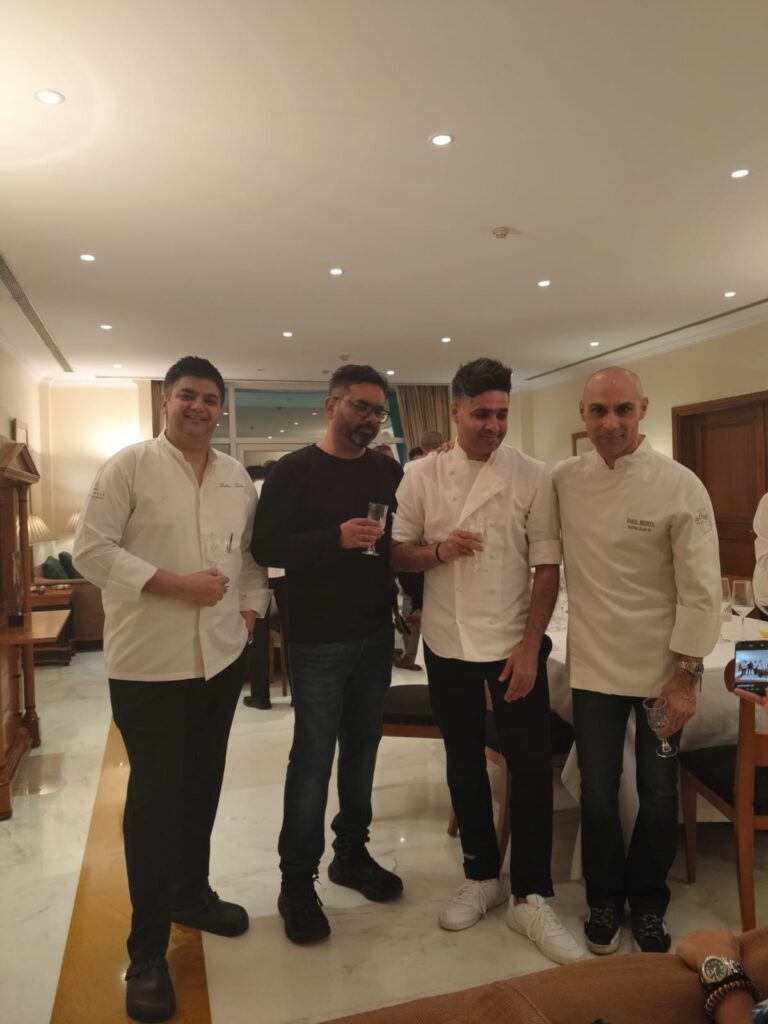
Food as theatre, live commentary with an engaged audience
These are long and complex histories and cultural exchanges and ordinarily would have found a place in a book or column. But through the experience, structured as a Greece-India friendship dinner, as four of India’s top chefs created dishes to reflect these connections (Chef Shubham Thakur, master chef, The Leela Palaces Hotels and Resorts, Chef Dhruv Oberoi, culinary director Olive Bar & Kitchen, Chef Shamsul Wahid, group executive chef Social, and Chef Sahil Mehta, founder Paris My Love), and I narrated stories of ingredients and their histories before every course, the audience was rivetted, fully attentive, consuming not just food, but commentary and knowledge, which is what any media platform hopes for.
From static consumption to an engaged real-life audience exposed to a somewhat theatrical performance, food and discussions around it, are going to find innovative platforms—where chefs and commentators become dispensers of not just taste but also a point of view to their niche rather than general audiences.
That chefs like Gaggan Anand, a pioneer with an intuitive understanding of changing audiences, and cultural currents, are embracing this way of speaking to their audiences just reinforces the fact that for times to come IRL will be the most important way to reach any audience interested in cuisine (and anything else), niche, not mass. The algorithm personalising content pushed “mass” to irrelevance. Now, that niche, seeks more personalised engagement and trust. Any platform that can deliver this — personalisation plus trust— wins.