Kargil Cooks for Its Winters, Not for Your Feed

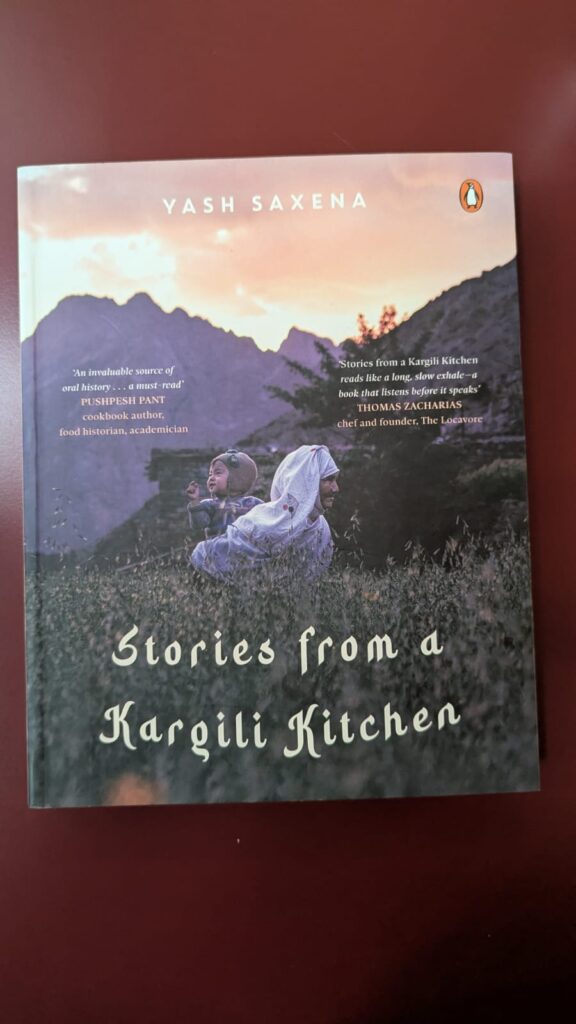
TFTA exclusive with author Yash Saxena on Kargil’s changing foodways, what gets lost when food becomes heritage, and whether a cuisine needs to travel to survive.
By Taniya Sahni
Stories from a Kargili Kitchen presents a textured, revelatory, and transportive account of the cultural and culinary facets of Kargil. This food refuses to be universal, for it was never waiting to be discovered, packaged, replicated or delivered elsewhere. Kargili food was built for snow and altitude, to sustain locals through the harsh months of scarcity, when the Zoji La pass shuts and there is no road in or out. It certainly wasn’t made for the virality of an Instagram feed. You can’t reproduce it at home, let alone order it on a delivery app. It stays where it was made.
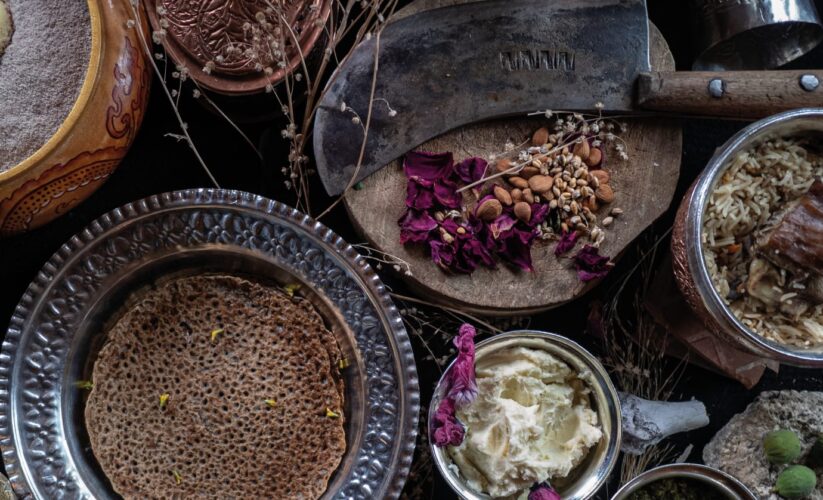
Kargili food is from an Indian land that can seem startlingly unfamiliar even to Indians. Much of what is eaten here is barely heard of in the Indian mainland. Think chuli halba with gurgur cha for breakfast and earthy local breads paired with what the land offers for other meals. In Hunderman village, even birthdays are celebrated once every twelve years, following a different astrological system. Kargil is a place where locals find themselves increasingly estranged from some of their own food traditions. This estrangement comes through poignantly in the chapter titled Embarrassing Heritage, where a feast of sorts is cooked and laid out by Nargis, a local. The spread includes Marzan, prepared from roasted barley flour. A preparation called papa is topped with hot mar (butter), ghee or chuli mar (virgin apricot oil) and served lukewarm. At weddings the bride and groom are given their own plate of Marzan. Nargis recounts how the younger generation complains of not being able to digest Marzan as it is too dry. This sense of estrangement extends beyond food. Nargis’ mother-in-law, Mariyam Banoo, enters the kitchen bedecked in traditional attire. The family explains that they now wear these clothes only at weddings, as they attract stares in the marketplace.
These small moments point to a larger shift: heritage itself seems to have become increasingly ceremonial in Kargil, a land which has been subject to a lot of geopolitical change. Kargil has always been a place of transit, explains Saxena. It is a Purigi word derived from Garkhil: ‘Gar’ means a place and ‘khil’ means ‘to stop’. Traders, shepherds, travellers, monks and people of all kinds passed through Kargil and its bazaars, bringing stories from their native lands. But the closing of borders and trade routes, and the conflicts that followed, altered the region’s food systems. The 1971 war affected the region but the 1999 conflict that thrust Kargil into national consciousness was particularly disruptive. An Abundance of Pears and an Abundance of Bombs is an evocative title for a chapter that holds these two realities, the ordinary and the devastating, alongside each other. It describes how Kargilis were forced to hide in caves or were relocated by the Army to the Churu Valley. What changed in 1999, Saxena shares, was the scale of displacement. During the heavy bombardment, those who could afford it sent their children away to safety to cities near and far. Many of these children left at an early age, by which time things had already been changing for a while.
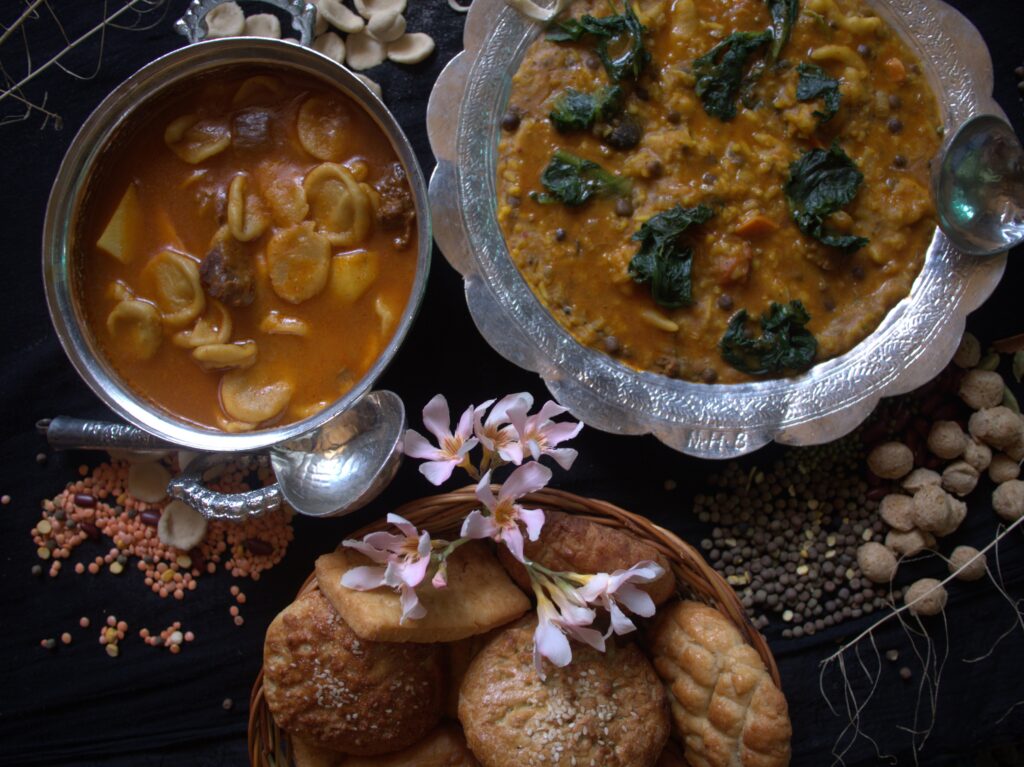
With the war and army movement came some other impactful changes to the foodways of Kargil. These changes seeped into the smallest of everyday life. People learnt to make dal from army messes and through their travels. They increasingly began to consume pulses that are not native to the region.
The reasons for this transformation away from heritage food are multiple and kept accumulating, but 1999 was a very significant one. Under the ration or PDS system, the locals began receiving low-grade white rice, pulses and sugar — foods that were not Kargili. Rice had once been ceremonial, he explains, something one might receive as a precious commodity from Kashmir: 10–15 kg rice for the whole of Kargil, or around 200 grams per person a year. Today, it has become an everyday food. Other local crops, such as black buckwheat, were also being replaced by cheaper cash crops, encouraged by government schemes. Another casualty has been the natural salt sourced from lakes in Nubra and other parts of Ladakh. Once a marker of the region’s self-sustaining foodways, it has increasingly given way to iodised salt.
These changes are difficult to grasp from a distance. Sitting in the plains, picturing life in Kargil, one thinks of a land far away with treacherous mountainscape, few folk, and fewer resources; a land of mystique. Saxena describes the book as an invitation to Kargil’s foodways, where you walk in curious and walk out acquainted with what life can be like in Kargil and empathise with it. These are also the people that had to think hard about how to celebrate their own festivals. A pertinent case in point is the Mamani festival, where locals set out to revive their heritage, preserve and continue traditions, but found themselves unsure of what to cook, says Saxena. Historically, Mamani was celebrated by gathering at a cemetery where morsels of food made from everything the land offered that year would be offered to the ancestors in gratitude. Now, families are invited to the centre of town and they bring traditional dishes prepared at home and share them.
It is not just a loss of memory that is changing what appears on the Kargili table. This shift in Kargili foodways can also be attributed to the aspirations of locals, and the nearest food influence is perhaps from Jammu and Kashmir. Wazas from J&K are hired to cook at weddings and other celebratory occasions by Kargili locals. Saxena points to the growing presence of heavily spiced and oily food pushing itself into Kargili foodways, while Marzan, the heritage food, is prepared and kept in a corner at weddings, sometimes only tasted to keep the tradition alive.
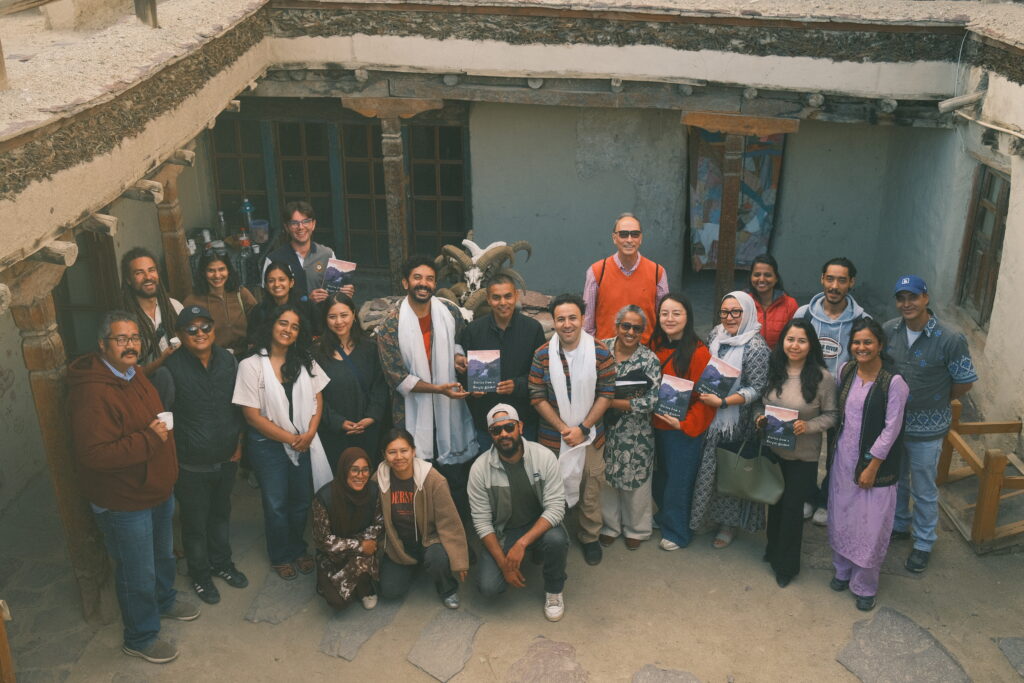
While documenting Kargili culture and food, Saxena was conscious of his role as an outsider and deliberately resisted making the book an encyclopaedic account. He wanted to bring Kargil closer to Indians while allowing its food to remain tied to the place that produced it. It is okay for these recipes to not translate elsewhere, he says. It is okay for this cuisine not to travel, and to let it be. For those wanting to travel there and get to know the land beyond the book, he suggests staying at homestays and seeking out local food experiences such as those offered by Sarai.
But who is making the journey to Kargil today? Saxena says most visitors are adventure travellers: mountain climbers, bikers and snowboarders, while some older travellers come for the wildlife of Drass or to see the old Buddhist statues that predate Leh’s Buddhist heritage. For many, however, engaging with the region remains difficult. When one comes to Kargil and visits the market, there is nothing to do, he shares. Unlike Leh, there is little local food or distinctly Kargili architecture readily accessible to visitors. He suggests Roots Ladakh, founded by Kargil natives Muzammil Hussain and his brother Tafazzul, as a starting point. The organisation works across heritage conservation and responsible travel, offering village homestays, camps, heritage trails and wildlife expeditions. Travel to Kargil has become comparatively easier, Saxena shares, and the upcoming Zoji La tunnel is eagerly awaited by many older residents who hope to see it in use in their lifetime. But Saxena also sees the changes it could bring: greater exposure for the younger generation, more tourists, and potentially rampant construction. I hope that is factored in, he says with concern, as Kargil could usher into a new and very different era.
Stories from a Kargili Kitchen showcases how much of the region’s everyday life remained outside the larger Indian narrative. It is a beautifully conceptualised and tactfully executed book that makes you want to know more about the Kargil outside of the shadows of war.
Publisher: Penguin Random House India
Price: INR 999
Tip: Watch out for the audiobook. Out soon.