Kargil Cooks for Its Winters, Not for Your Feed

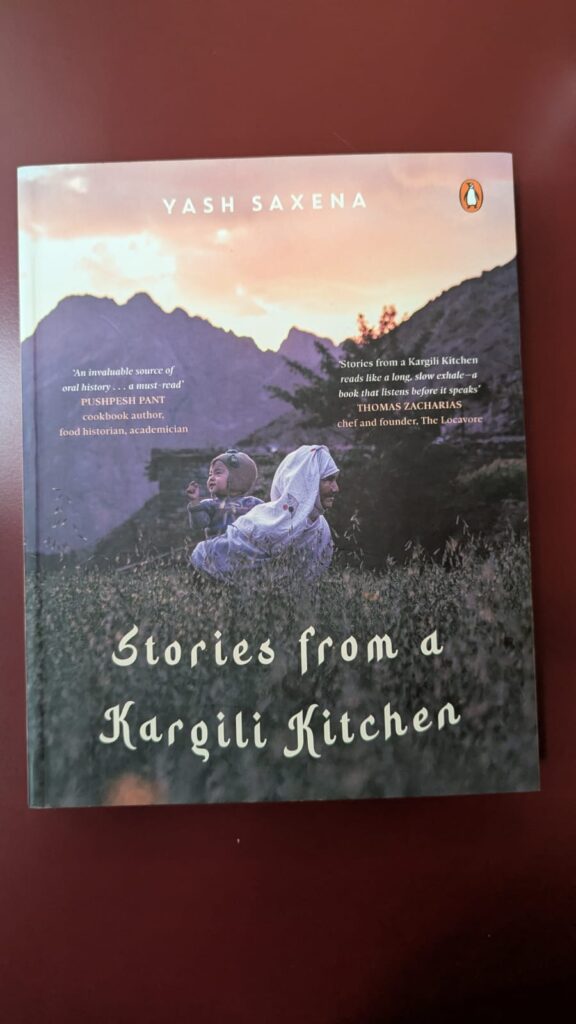
TFTA exclusive with author Yash Saxena on Kargil’s changing foodways, what gets lost when food becomes heritage, and whether a cuisine needs to travel to survive.
By Taniya Sahni
Stories from a Kargili Kitchen
talks about food that can seem
startlingly unfamiliar. Much of
what is eaten there is barely heard
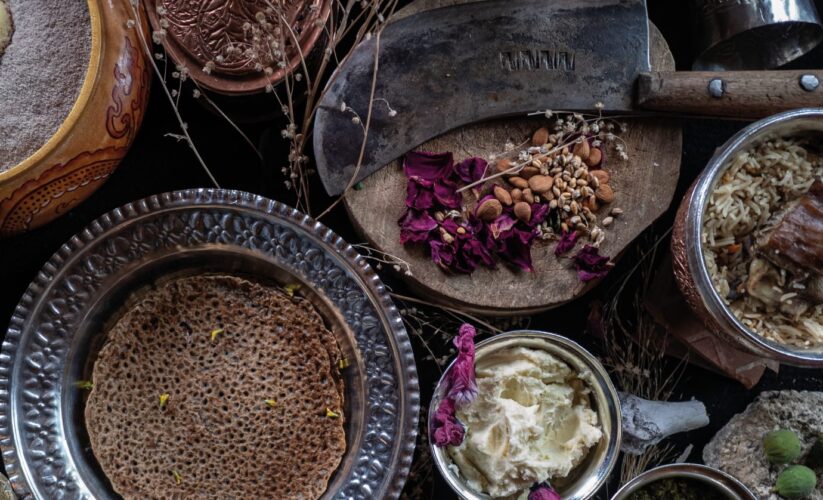
of. Think chuli halba with gurgur cha for
breakfast and earthy local breads paired
with what the land offers for other meals.
In Hunderman village, even birthdays
are celebrated once every twelve years,
following a different astrological system.
Today, even locals find themselves
increasingly estranged from some of
their own food traditions. Marzan, for
instance, prepared from roasted barley
flour, papa topped with hot mar (butter),
ghee or chuli mar (virgin apricot oil)
are wedding dishes that the younger
generation complains of not being able
to digest and to their taste.
Kargil has always been a place of transit, explains the
author. It is a Purigi word derived from Garkhil: ‘Gar’
means a place and ‘khil’ means ‘to stop’. Traders, shepherds,
travellers, monks and people of all kinds passed through
Kargil and its bazaars, bringing stories from their native
lands. But the closing of borders and trade routes, and the
conflicts that followed, altered the region’s food systems.
Many people over the years sent their children away to
safety to cities near and far. Many of these children left at an
early age, by which time things had already been changing
for a while.
All of this has changed the foodways, the author explains.
Rice had once been ceremonial, he explains, something
one might receive as a precious commodity from Kashmir:
10–15 kg rice for the whole of Kargil, or around 200 grams
per person a year. Today, it has become an everyday food.
Other local crops, such as black buckwheat, were also being
replaced by cheaper cash crops, encouraged by government
schemes. Another casualty has been the natural salt sourced
from lakes in Nubra and other parts of Ladakh. Once a
marker of the region’s self-sustaining foodways, it has
increasingly given way to iodised salt.
These changes are difficult to grasp from a distance.
Sitting in the plains, picturing life in Kargil, one thinks of
a land far away with treacherous mountainscape, few folk,
and fewer resources; a land of mystique. Saxena describes
the book as an invitation to Kargil’s foodways, where you
walk in curious and walk out acquainted with what life can
be like in Kargil and empathise with it. These are also the
people that had to think hard about how to celebrate their
own festivals. A pertinent case in point is the Mamani festival,
where locals set out to revive their heritage, preserve and
continue traditions, but found themselves unsure of what to
cook, says Saxena. Historically, Mamani was celebrated by
gathering at a cemetery where morsels of food made from
everything the land offered that year would be offered to the ancestors in gratitude. Now, families
are invited to the centre of town and they
bring traditional dishes prepared at home
and share them.
It is not just a loss of memory that is
changing what appears on the Kargili
table. This shift in Kargili foodways can
also be attributed to the aspirations of
locals, and the nearest food influence
is perhaps from Jammu and Kashmir.
Wazas from J&K are hired to cook at
weddings and other celebratory occasions
by Kargili locals. Saxena points to the
growing presence of heavily spiced
and oily food pushing itself into Kargili
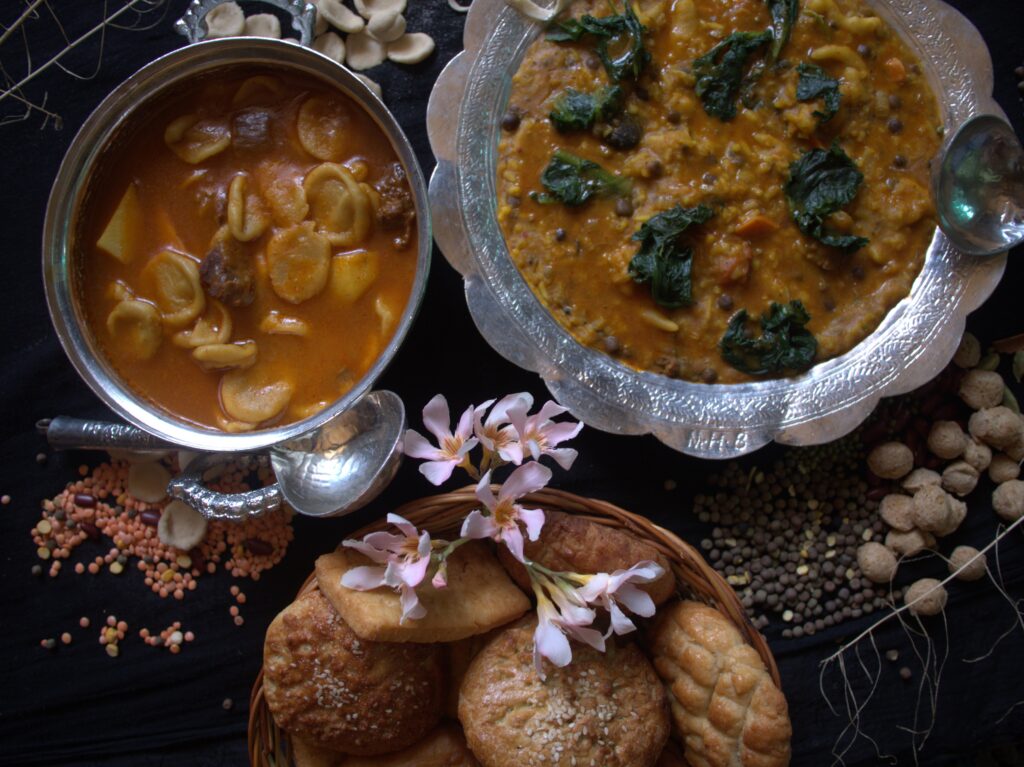
foodways, while Marzan, the heritage
food, is prepared and kept in a corner at
weddings, sometimes only tasted to keep
the tradition alive.
While documenting Kargili culture and food, Saxena was
conscious of his role as an outsider and deliberately resisted
making the book an encyclopaedic account. He wanted to
bring Kargil closer to Indians while allowing its food to remain
tied to the place that produced it. It is okay for these recipes to
not translate elsewhere, he says. It is okay for this cuisine not
to travel, and to let it be. For those wanting to travel there and
get to know the land beyond the book, he suggests staying
at homestays and seeking out local food experiences such as
those offered by Sarai.
But who is making the journey to Kargil today? Saxena
says most visitors are adventure travellers: mountain climbers,
bikers and snowboarders, while some older travellers come
for the wildlife of Drass or to see the old Buddhist statues
that predate Leh’s Buddhist heritage. For many, however,
engaging with the region remains difficult. When one comes
to Kargil and visits the market, there is nothing to do, he
shares. Unlike Leh, there is little local food or distinctly Kargili
architecture readily accessible to visitors. He suggests Roots
Ladakh, founded by Kargil natives Muzammil Hussain and
his brother Tafazzul, as a starting point. The organisation
works across heritage conservation and responsible travel,
offering village homestays, camps, heritage trails and wildlife
expeditions. Travel to Kargil has become comparatively
easier, Saxena shares, and the upcoming Zoji La tunnel is
eagerly awaited by many older residents who hope to see it in
use in their lifetime. But Saxena also sees the changes it could
bring: greater exposure for the younger generation, more tourists, and potentially rampant construction. I hope that is
factored in, he says with concern, as Kargil could usher into a new and very different era.
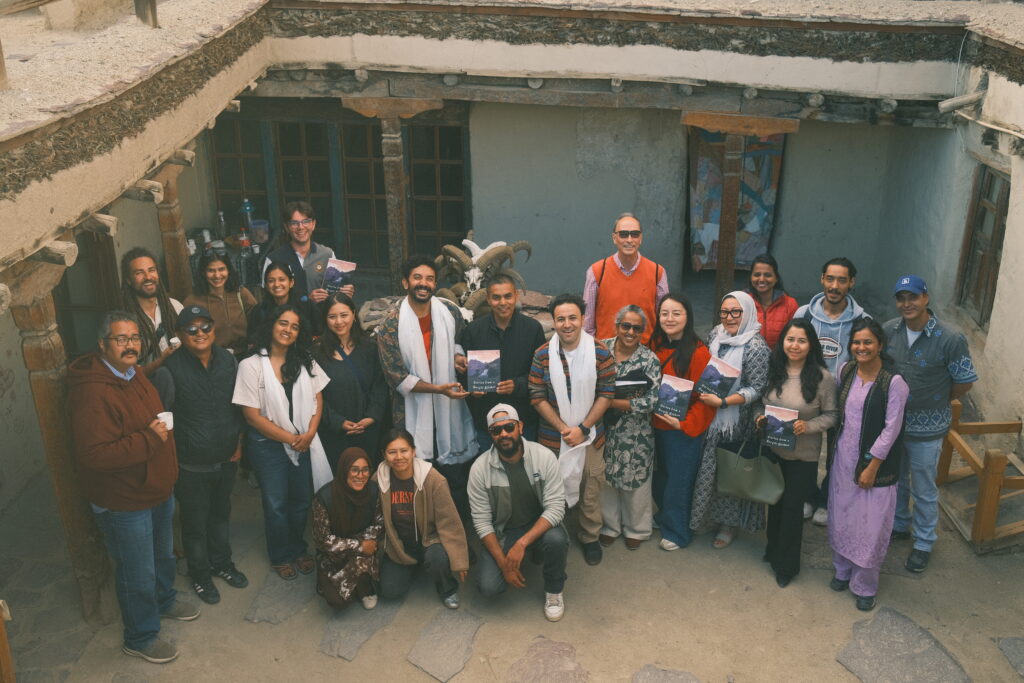
Stories from a Kargili Kitchen showcases how much of
the region’s everyday life remained outside the larger Indian
narrative. It is a beautifully conceptualised and tactfully executed book that makes you want to know more about Kargil.
Publisher: Penguin Random House India
Price: INR 999
Tip: Watch out for the audiobook. Out soon.