A new Indie restaurant boom, led by female founders, is changing how India eats out

They are not owned by the big chains or boys, and they are off-radar for most awards, lists, cliques and funds (till now). Yet, a burst of independent restaurants helmed by women are seemingly thriving, transitioning from Pandemic-born small businesses. On the menu are micro-regionality, family and community foods, and a global aesthetic-meets-India vibe. The next wave of eating-out is here.
By Anoothi Vishal
What makes Mumbai a crucible for women helming independent passion-led restaurants?
I ponder this, on my way back from Masque’s stupendously avant-garde celebration. India’s most famous and most successful champion of indigenous ingredients and experimentation-on-the-plate has turned 10; its journey synonymous with a redefining of Indian fine-dining since 2016, with the au courant democratisation of tasting menus, technique-bedazzling dishes, hyper-regional ingredients and front-footing of fermentation that is pervasive across emulating-restaurants in Delhi, Mumbai and even Hyderabad, Jaipur, Lucknow, a nod to Masque’s huge influence.
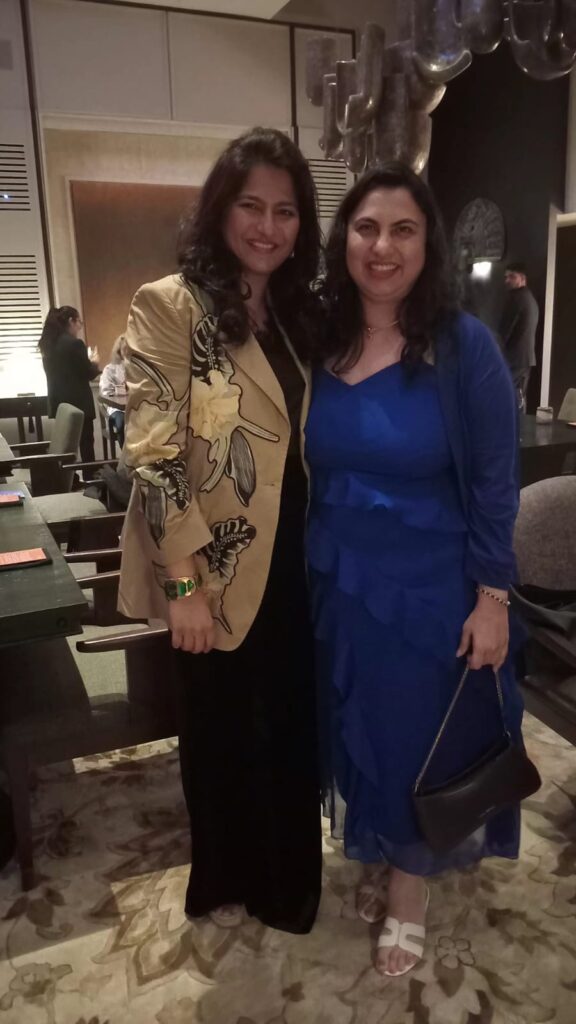
The celebration marking the decade fittingly breaks new-ground. If “collabs” are another current fashion cluttering high-end restaurant experiences in the big metros, with global top chefs flying down to plate up Rs 10,000-plus menus and such, Masque shows how it can still be upped, by pulling off an extraordinary 24-hands, by-invite-only dinner, wrought by 12 of Asia’s top chefs, with 12 courses in their signature styles but each also inspired by their idea of India. It is peak fine-dining, uber exclusive, but conducted in the restaurant’s trademark style of hospitality that is difficult to copy: warm, seemingly unrehearsed, with confident cosmopolitanism that makes you, the diner, feel rather special. What else is luxury?
If Aditi Dugar, co-founder and Masque’s tour de force has reshaped Indian fine-dining post pandemic in particular by making all these things trendy, including tasting menus with tropes by chef Varun Totlani such as toor pods, koji ferments, corn textures, seabuckthorn (which has come a long way from the DRDO-researched “Leh Berry” of the early 2000s, whose bottled juice was given to the jawans at high altitudes because it didn’t freeze) now among the most copied, her influence actually goes beyond individual success.
In 2016, there were just two or three women driving upscale eating-out in India. Along with Dugar, I can think of just The Table’s Gauri Devidayal, and the gutsy Seefah of her eponymous restaurant, who were visibly driving restaurants they believed in with their distinct individual sensibilities, instead of taking a cookie-cutter approach. Their success especially in these last five years has now paved the way for more women dabbling in restaurants, a business that is notoriously challenging, and has typically been dominated since the 2000s by high-profile chefs, entreprenuers, big restaurant companies, big PR and investors with deep pockets.
The new indie restaurants of 2026 are breaking this mould. One, they seem to be feeding the large gap in the market between the uber fine dines and the very mass restaurants; a middle India that continues to spend on and aspire to better and unique food experiences. Two, the chefs/owners are mostly women who started some sort of a creative food business during the pandemic from their homes, often as a side hustle. They don’t have huge backing. Some have quit corporate and tech careers as a way to change their lives and do something they enjoy. And while without a sound financial plan, rents alone could end this creative surge, surprisingly, many of these enterprises are successful neighbourhood, upscale, but not too-fine restaurants.
With Gen Z pushing back against old hegemonies, seeking more authenticity, and engaged by a sense of community, the small model has takers, even as bigger chains and companies struggle to understand the new emerging customer. The new neighbourhood restaurants are spotlighting culinary heritage, skills of their chefs/owners sometimes picked up via K dramas, sourdough baking and Japanese pop culture, and a lot of storytelling around the food of their regions and communities. They seem to know their audience already because they had engaged with it online and offline while running pop-ups and occasional caterings before graduating to the full-scale models. And the new word of mouth is not just Instagram but neighbourhood or foodie whatsapp groups.
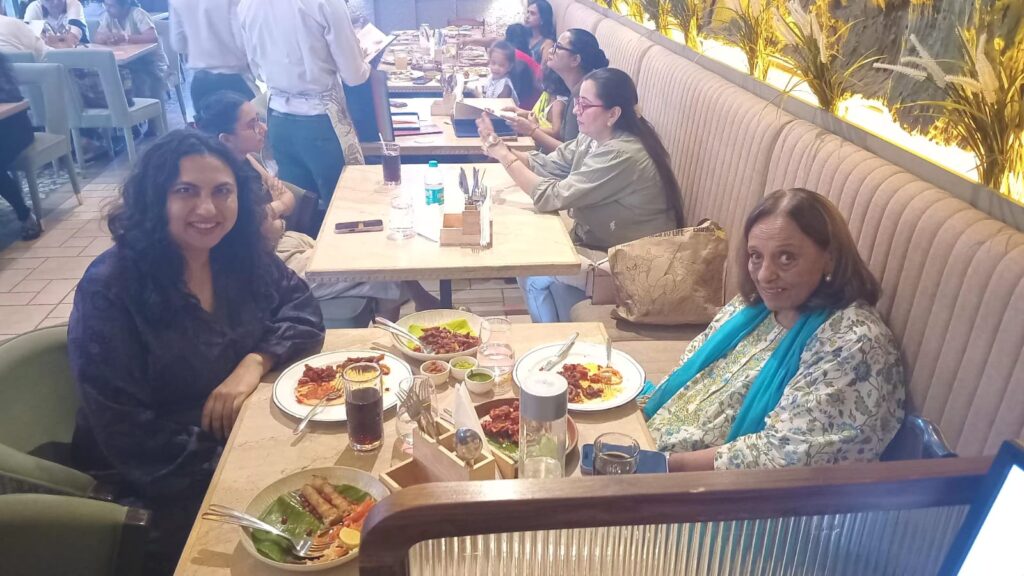
I meet Camellia Panjabi, the grand dame of Indian restaurants in London (MW Eat, the company with Veeraswamy, Amaya and Chutney Mary, owned by Panjabi’s sister Namita and brother-in-law Ranjith has just been acquired by Canada-headquartered Fairfax Financial Holdings), for lunch at a Dadar seafood restaurant called Coast and Bloom on a Sunday. The restaurant is full, with a queue outside. Most people seem to be middle-class and Maharashtrian, a community traditionally averse to “wasteful” expenditure. But this is a younger age group, and as Camellia very perceptively analyses, “the internet continues to add new customers”. Camellia has booked in advance, so we manage a table, and sit down to a meal of tender coconut chilli fry, rava-fried bombil, puran-stuffed rolls, and Malvani fish with ghavne.
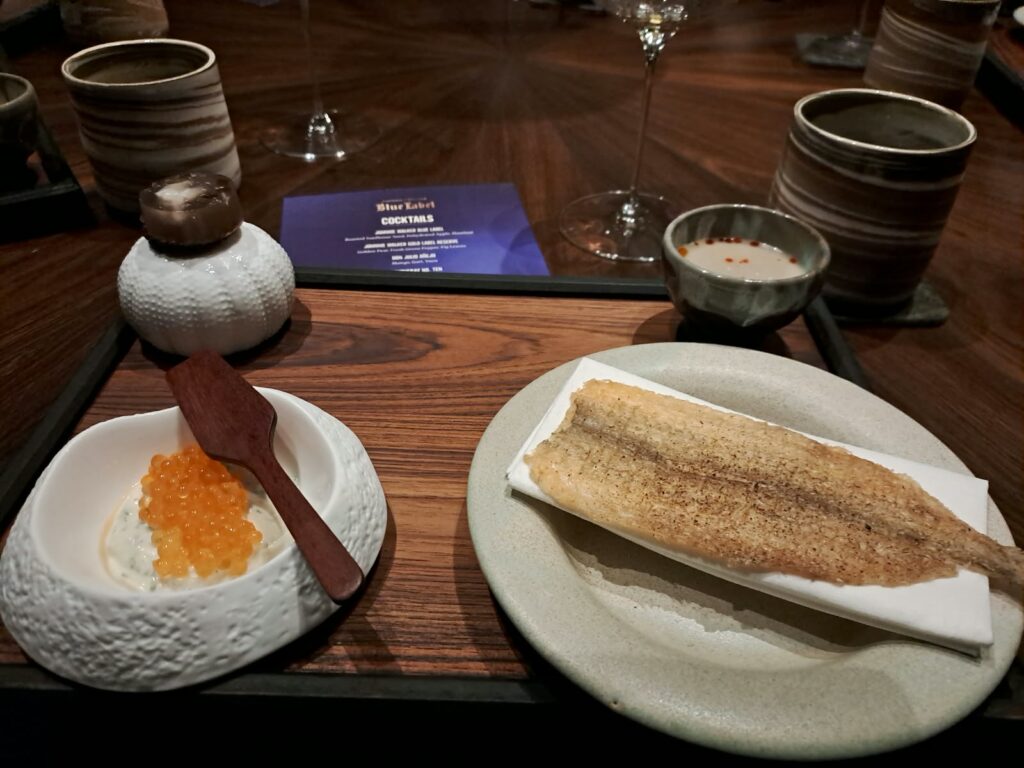
The restaurant is the newest addition to the popular Chaitanya and Nav Chaitanya Malvani eateries that reputedly serve 1200 thalis a day across three establishments, founded by the now 65-year-old Surekha Walke after coming to Mumbai from Malvan in the mid 2000s. Chaitanya has been a popular Maharashtrian favourite for those in the know, though most people outside Mumbai don’t know about it. This is what a middle-class Trishna and other Mangalorean lunch homes may have been three decades ago. Coast and Bloom is the most recent addition that takes off from the old recipes, but presents them to a perhaps younger and more aspirational audience. “These restaurants are getting very popular on whatsapp groups, and they are very different from Mumbai’s better-known luxury ones. Many of these are owned or co-owned by women who started off as home chefs and caterers,” Camellia, always with her ear to the ground, tells me.
Around Kala Ghoda itself, a slew of openings since the last 2-3 years, are structured around community cuisines but relevant to a modern diner of today. Malido café and Apero by the mother-son duo Kermeen and Neville Bose opened in 2023 and is well-known in its circles for home-style Parsi and Conti dishes that are homey but stylish. Think akuri on sourdough toast. Portal by Punam H Singh (who co-owned Mustard that has closed in Mumbai), serves “borderless” cuisine with creative cocktails with names like “Art School Dropout”. It has styled itself as a cosmopolitan neighbourhood space for a community of regulars. Across, co-owned by Prakriti Lama Patelm, does modern Himalayan food, with a changing menu that adapts according to the seasonal availability of ingredients from the mountains, and therefore tries to recreate a sense of that rhythm. And at Folk, “once a home chef” Jasleen Marwah is trying to weave stories around a broad range of regional Indian food with its thalis, sadyas and pop ups.
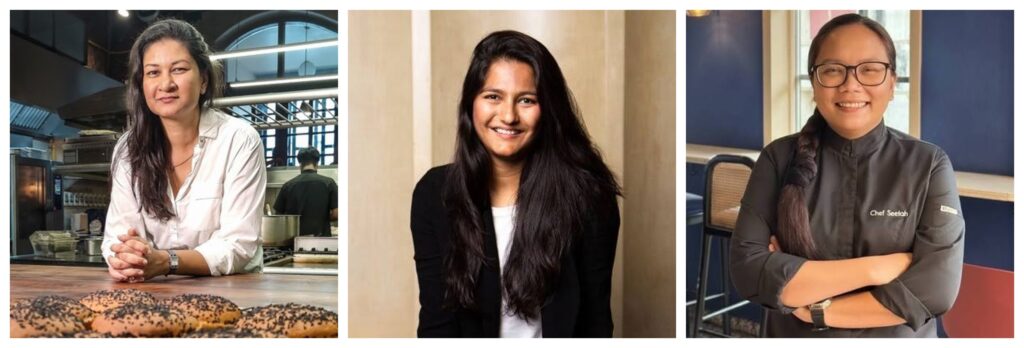
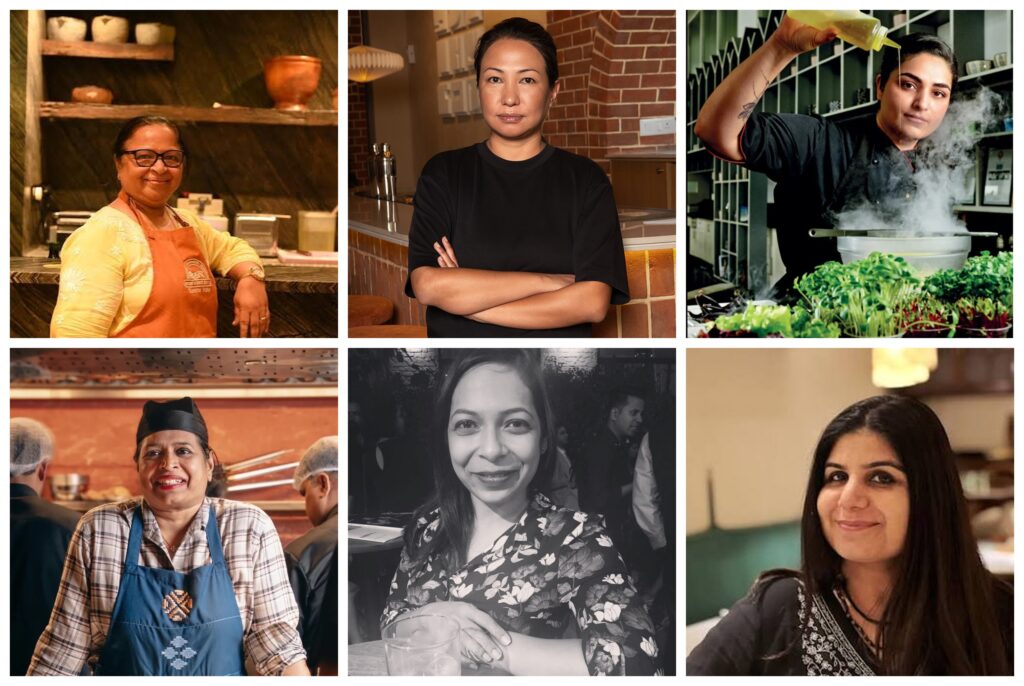
From L to R: Gauri Devidayal of The Table, Aditi Dugar of Masque and Chef Seefah Ketchaiyo of Seefah
“One of the reasons why so many of these independent restaurants have opened in Mumbai is because supply matches demand there. People, during the pandemic, got used to diverse tastes and to ordering from home cooks and caterers,” says Chef Shri Bala, (unlike in Delhi where people do cook at home; and homes are larger with more staff), “after, the pandemic, they now want to eat these things in restaurants,” she points out, when I call her to talk about the ecosystem.
Shri Bala, a CA turned south Indian food researcher and anthropologist, turned chef started with a small tuck shop in Chennai serving home style food, and then began doing pop ups at hotels. This year, she finally took the plunge of helming a full-fledged restaurant, tying up with well-known restaurateur Sahil Sambi to open Nadoo in Delhi and Gurgaon. In the process, she has relocated from Chennai to Delhi. Working with a big restaurant company, she says, is advantageous as they can handle operations that can be challenging for individual owners. “You may put your blood and tears into the cooking, but you may find, your staff coming drunk, for instance,” she points out.
Despite such issues, women employed in tech or the corporate world, increasingly seem to be taking a measured creative plunge. Journalist Sharmistha Mukherjee, who continues to work at The Economic Times, opened Shokupan, a small Japanese sando place, with her husband, and then a quaint bar behind it, encouraged by how Delhiites were taking to Japanese food and bread. Mukherjee had started a small home delivery during the pandemic, which has now evolved to this chic, simple sort of hidden space, with its own following.
The most prominent example of this evolving creative model is in Bangalore, a market that encourages individual experimentation as it can be more forgiving for first-time entreprenuers than Delhi and Mumbai and has a more cohesive tribe of middle-class professionals open to dining. Pallavi Menon and Kanishka Sharma who cofounded The Navu Project, first as weekend delivery service during the pandemic, then as a pop up, before transitioning to permanent spaces, now have a cult following. Navu 3.0 on MG Road opened this year as a sophisticated fine dine and has evolved to get into a bigger league.
As global tastes change towards restaurant food that is authentic, inclusive, and with a point of view around our post-modern, post-AI world, independent restaurants that are able to nurture communities around this food culture are coming of age. Despite the tricky biz, I do see them as having a big impact on how middle India eats out.