Bangkok diary

One restaurant and one not-a-restaurant you must eat at in Bangkok
By Anoothi Vishal
Contrary to its image of a cheap holiday destination, Bangkok is choc-a-bloc with luxury restaurants offering high-quality dining that can be several miles ahead of what we have in India. So, even though you can eat quite well cheaply there, the ambitious foodie must go beyond pad thai, and green “curry” (a reductive term for kaeng, a complex set of dishes with regional nuance and depth).
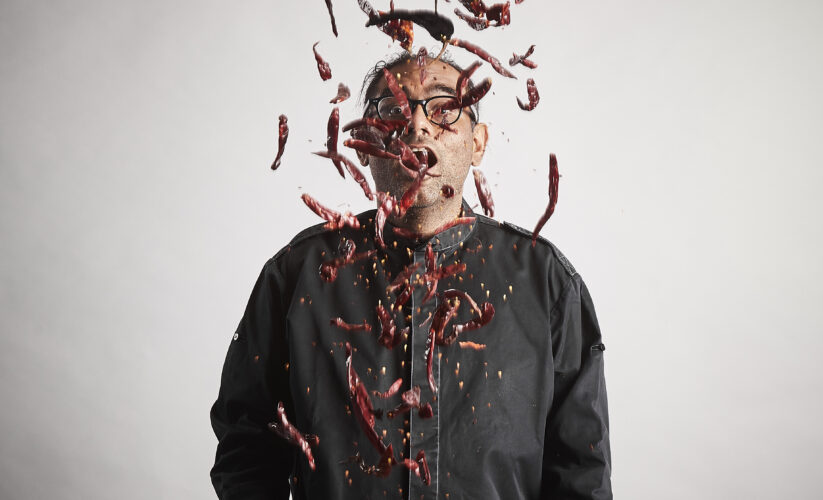
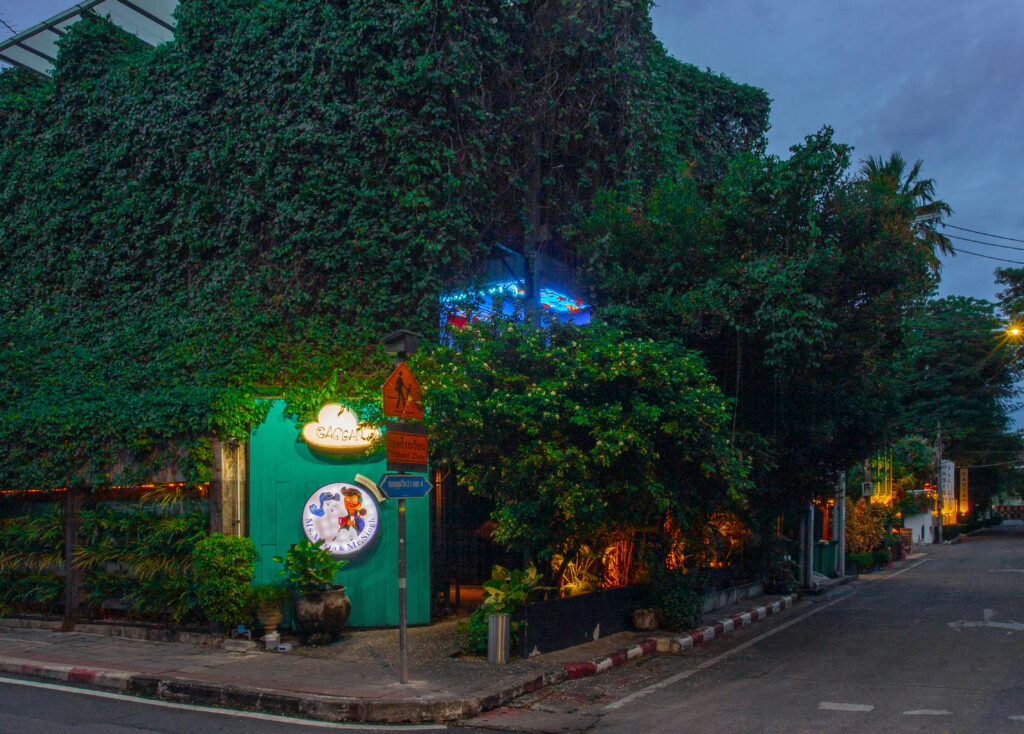
I was in the city for the second time in six months to eat at Gaggan, the eponymous restaurant, owned by the most famous Indian chef of our times, Gaggan Anand.
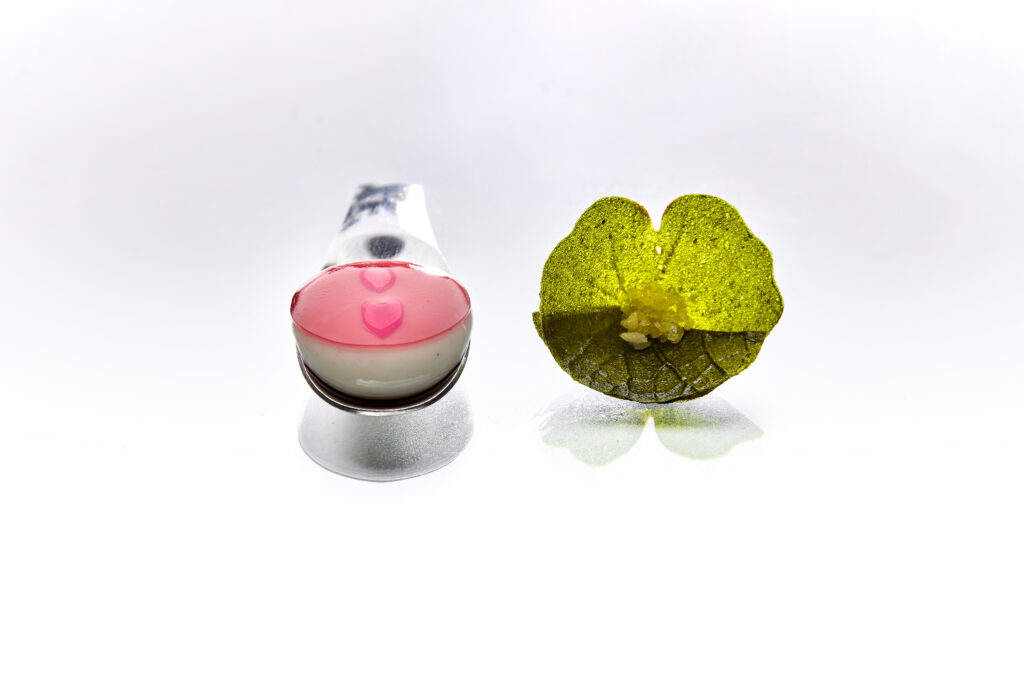
When I was there earlier in April, I had written about how the point of splurging on a Rs 40,000 or such per head meal at Gaggan, is not just the food – even though Gaggan’s oldest, legendary dishes that have seen many iterations and evolutions over a decade or so such as the yoghurt speherification or the pani inside a chocolate shell continue to pop eyes (and palates) on Instagram.
There’s even more sophisticated and technically avant garde food that may leave you impressed, but it really is Gaggan’s unique theatre, where the chef is the main protagonist, that I would visit Gaggan for. It is an immersive experience that goes far beyond titillating form, into a meal with a point of view laced with authenticity, dark humour, and politics that uplifts it to art, not just craft. Just like tailoring is not fashion design, painting is not visual art, and rock music is not just any one playing the guitar, at the heart of Gaggan’s food is not just a flourless cookie or the flower that tastes of som tum, whose petals took 12 hours to contrive.
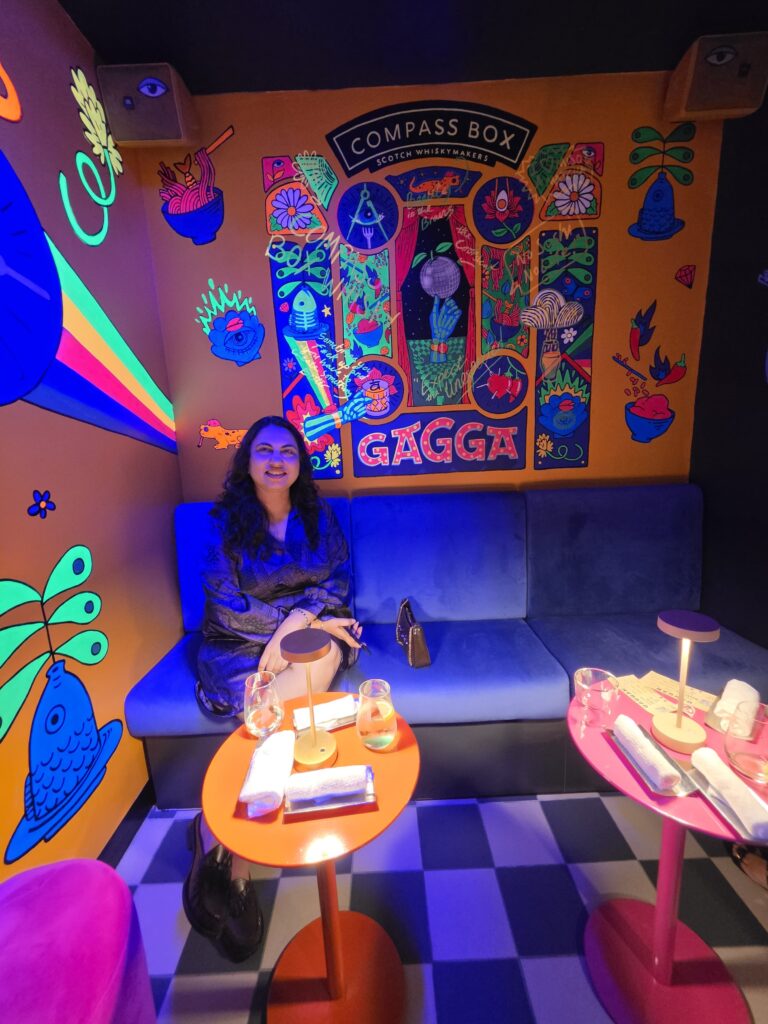 The medium is the message
This time, when I ate at Gaggan again last week, I found his theatre to have become even more immersive.
There’s a new menu in place, now divided into four acts, making up 28 dishes/courses, of which I think the strongest is Act One in terms of taste alone. It takes you back to the chef’s memories of Calcutta and his formative years. The Indian referencing is more emotive and flavours truer than ever before, so that when you eat a star inspired by a kachori, filled with cholar daal, wholesome, niraamish (sans onion-garlic), cloves and nariyal in place, a tad sweet, as at a mellow Bengali lunch, it tugs at your heart.
The jalebi batter with activated charcoal as a khol or cover for a roll is genius and my favourite. This is a dish I have seen many versions of since 2014, when I first encountered Gaggan and his food. It now lands at its peak: a quintessential Indian technique, usually relegated to what halwais do who are hardly respected in the pantheon of Indian chef kitchen ranks, here perfected, referencing beloved Indian taste and memory, using utterly judiciously the deliciousness of small, local Thai crab, sweet, and overlooked by pompous diners who judge by size.
It is “fusion”, precision, texture, nostalgia, ingredient, and discourse about the vanities and hypocrisies of the world fittingly presented in a dark dumpling-ish, unpretty bite which is deliciously perfect. It is incredibly hard to achieve this sort of cooking, as we see from the hundreds of half-baked Gaggan inspired “modern Indian food” at countless copycat restaurants in India.
This is not to say that I agree with all of Gaggan’s dishes — in terms of taste. The “raita” in a nori sheet, laboured as it is, doesn’t quite though perhaps it is meant to break the courses via temperature. In a long tasting menu, unless you are going in with a firm conviction be dazzled, it is not unexpected to disagree.
The real genius of Gaggan, however, lies in how raw and truthful his way of looking at the world is, and how it conveyed to us via both his food and his act, as the audience sits at a custom-made bar from Japan (that one must not scratch inadvertently), with spotlights and an entire lighting design done by the chef himself, the kitchen as the stage, a sound system that cost apparently Rs 5 crore on which Gaggan plays his list of Rock and Bappi Lahiri, with the fourth wall demolished, and the audience a part of this very performance where food with a point of view will sail out.
You are no longer allowed to take any pictures of this theatre. This is Gaggan’s rebellion against the influencer culture and how food is being consumed by and on social media. It is also part of an entire way of looking at the world — anti status quo, puncturing the many hypocrisies and vanities of the world, rebellious and egalitarian, a take down of class hierarchies, politics of immigration, colonisation, faux sustainability, and even fine dining as a rich man’s pastime.
It’s the perfect roast! And in fact, the restaurant is not a restaurant.
Instead, the 3 hours performative space where a modern-day, gourmet version of Vanity Fair plays out is unique culinary theatre married to social satire.
This sort of “gastronomy of ideas” is so novel that perhaps just 3-4 chefs in the world dabble in it. Challenging diners to think beyond the plate. Like his fellow flagbearer of avant garde molecular gastronomy dabbling in ideas via food, Mugartitz’s chef Andoni Luis Aduriz, Gaggan should also now declare his “not a restaurant”.
I am not sure, how much Gaggan’s audience, the HNI Indians who come here having lived within their safety nets all their lives and towed the correct, acceptable line all their lives get this art.
Which is why, you find so many people gushing only about the form of the dishes: about “lick me up”, for instance, reduced to a photo op (now, thankfully not allowed) even though it was meant to be satire on a culture of sucking up to power!
When people talk of chefs as artists—they mean plating usually. A “dinner of ideas” is a genre no Indian chef has attempted before Gaggan. In being able to do it so successfully and so entertainingly, Gaggan shows both his originality and genius.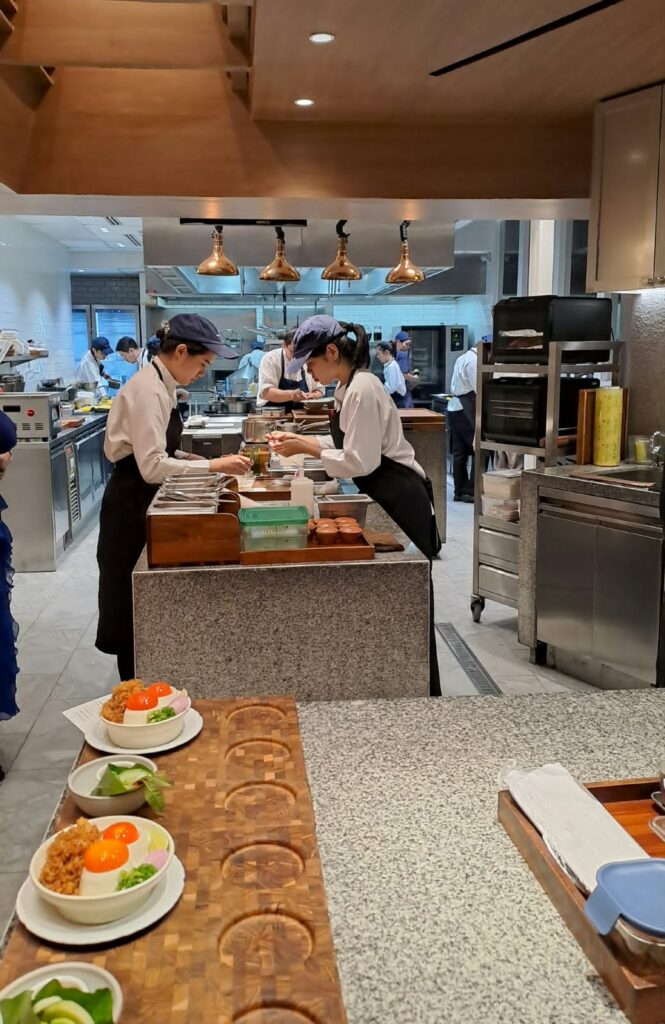
Which is why, to get and enjoy Gaggan, you have to eat only in Bangkok. Only with him. For all those, who have asked me, Raga in Delhi is a completely different restaurant. I have not eaten there, but obviously, it is not, and cannot be Gaggan.
The chef as an artist—and an entreprenuer
Apart from being a chef who has no parallel perhaps in the world, not just India, Gaggan is strangely enough also quite the entrepreneur. It’s rare, they say in India, for Saraswati and Lakshmi to meet, but perhaps they do here.
Bangkok is now a fertile ground for Asia’s top talents, each of who is doing some stellar work, whether it is chef Pam, as everyone call her, of Potong, chef Ton of Nusara and Le Du, the genius-with-desserts chef Dej Kewkacha to name some of the stars who have transformed modern Thai food with their innovations. Gaggan sits in this firmament at the centre, collaborating with many, a focal point for talent to come together and create new and exciting expressions of creativity.
He has mentored a few like Rydo, his friend, and long-time collaborator, and invested together with a few others in restaurants to create a restaurateuring empire in Bangkok. Sato, his izakaya with food from Isaan, the north-eastern region of Thailand, is a buzzing place, a collaboration with one of the most talented chefs transforming Thai food even as they reclaim its complexity, diversity and roots, chef Chalee Kader. 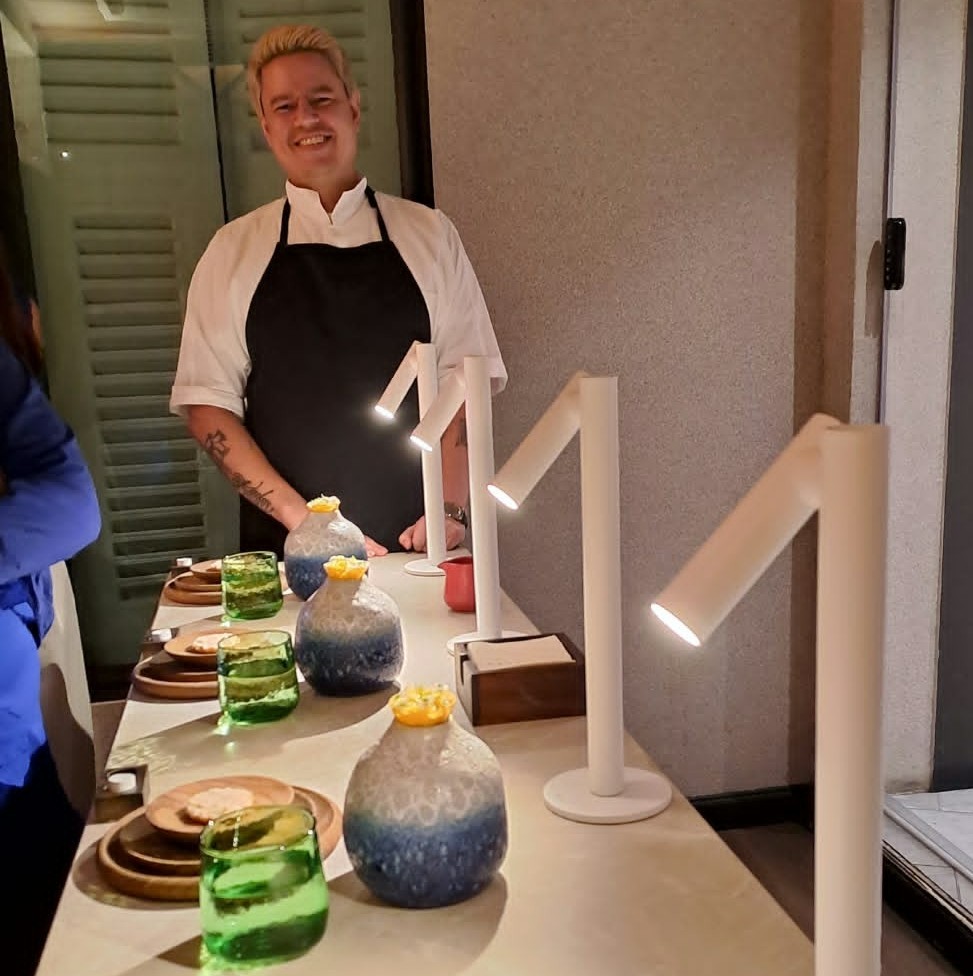
My first dinner in Bangkok this time was at the acclaimed Wana Yook, also by chef Chalee, across from Sato. It is a Thai restaurant that elevates Siam’s “rice and curry” culture to something extraordinary. Wana Yook, meaning time and age, is a magical place indeed that takes you back in time but also forward. Set in an old 70-80 year-old colonial bungalow, it serves a tasting menu that is sophisticated, inventive, while still maintaining the regional nuances of Thai food scrupulously.
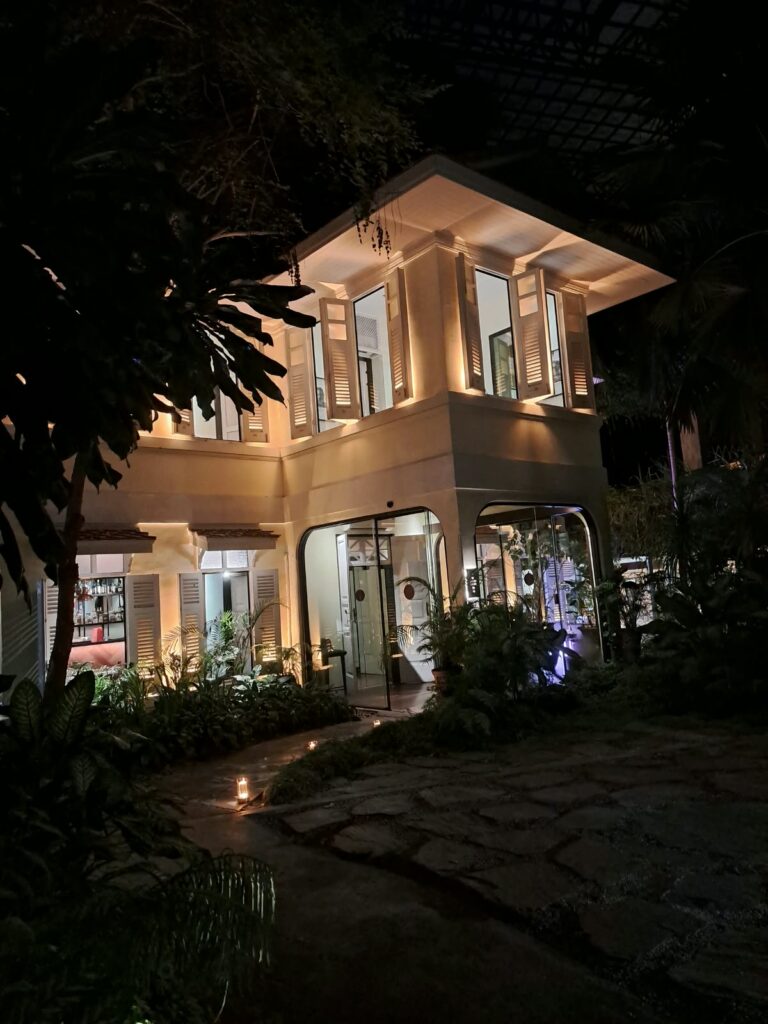
Chef Chalee, whose father is Indian-origin and came from the south, and whose mother is Thai is known for his work with lesser-known Thai ingredients too, building networks to encourage farmers to revive many of these.
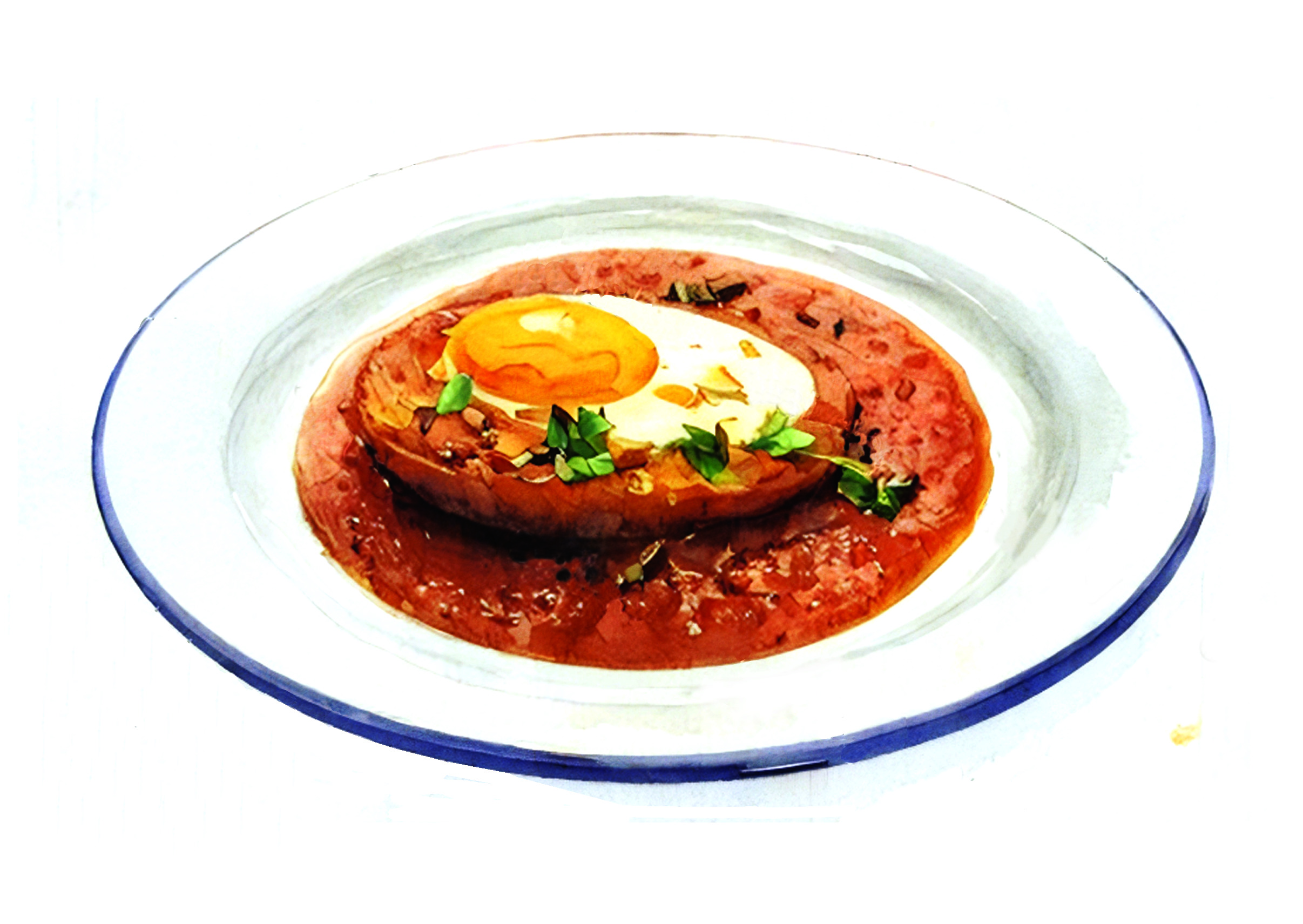
Dishes like his 10-day aged duck in red curry and soured with fruit in season, fried gourami fish, green curry which is extremely nuanced, fried duck egg, southern style curries, the khao soi from the north, a dish that most Indian’s associate with a Burmese invention (that Chalee told me was traditionally thickened with cow milk, not coconut milk) all can trace the histories of Thailand’s trade and political routes, the influences of ancient ties with India and China, and even the Ahom/Siam culture that ties it with north-eastern India.
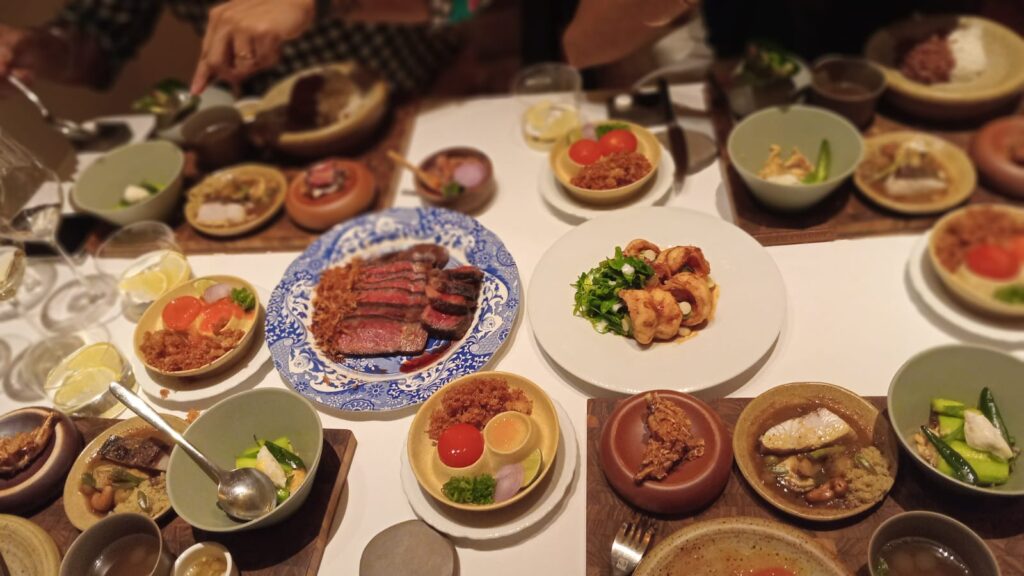
Chalee also brings to fore old varieties of rice beyond Jasmine, and perfect cuts of meat and local fish but cooks them in decadent, excellent ways. The steak that arrives at the end of our meal is testimony to that.
This is exceptional cooking with depth, meriting more than the current one Michelin star Wana Yook has. It is a hidden gem as yet, and at Bhat 2000 plus quite a steal given the amount of stellar food they feed you. I enjoyed the wines too, which like at Gaggan’s are offbeat, lesser known but impeccably chosen, including here at Wana Yook a Thai white which surprised me.
Because Wana Yook classic dishes with flair and inventiveness, looking both to the past and to the future, not letting to of the heritage of Thai food that is as complex as India’s while innovating and making it sophisticated, I think it is an excellent study for “modern Indian” restaurants in how to remain nuanced, rooted and recognisable to their communities while still being trendy. You must dine here, the next time you are in Bangkok. Unarguably, my favourite recco.