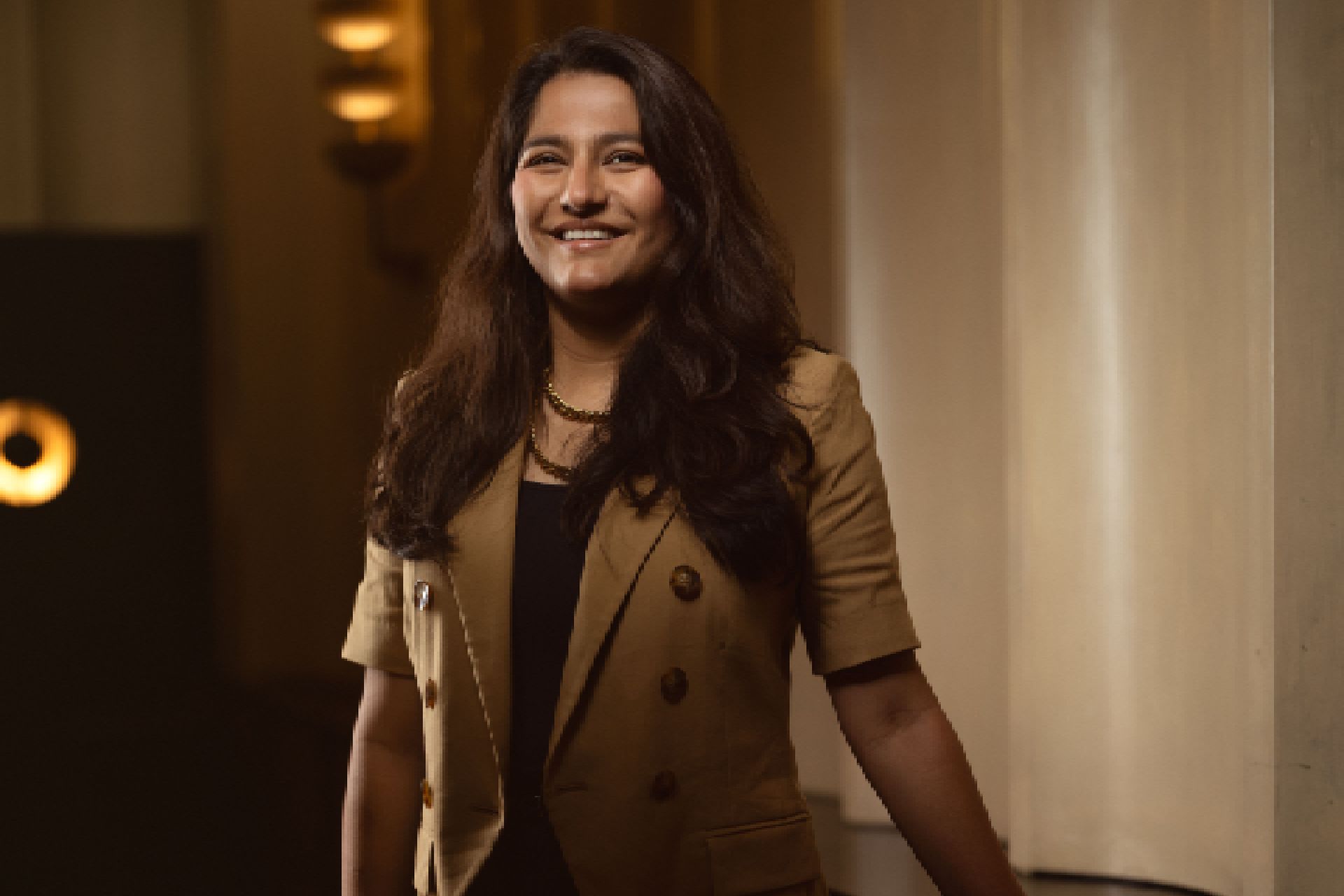
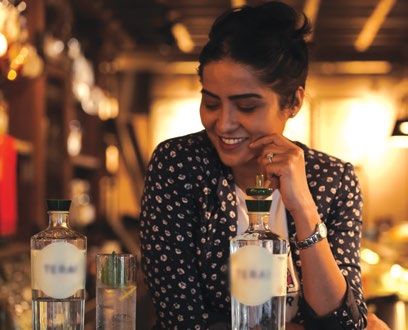

India’s leading barprenuer Minakshi Singh
checks out India’s most experimental bars
for a taste of culture (and native spirits).
Bookmark her reccos
By Minakshi Singh
When I spoke to Anoothi some time ago, and she
asked me to write this piece, my first instinct
was “hell, yeah”! I had just got off the plane from
the annual National Restaurant Association of
India meet in Goa, and it struck me then: There is massive
enthusiasm on what’s happening in the
alco bev space overall in India— and
because of that platforms that built up
chefs and restaurants are finally inviting
us bar peeps for discussions, seminars,
talks, and well, to write! Looks like
we’ve finally arrived!
Not only have we arrived but we
are slowly but surely finding our voice.
An Indian identity in the bar space
has always been a complex one to
crack. Culturally, “drinking out” was a
western concept in India, thanks to our
Colonial past. Bars in hotels and private clubs were mostly for
the well-heeled (and dominated by men). Then, in the early
2000s, we saw pubs/bars in Bangalore, Goa, Bombay and
Delhi come up that were friendly and younger, and yet they
were playing western tunes, serving western style drinks
and grub. And then slowly something shifted. The first I
heard of an “Indian” bar was AD Singh’s Ek Bar in Delhi,
showcasing Indian indigenous ingredients like turmeric,
tamarind and curry leaves in cocktails– right from prep
to presentation, with artwork, storytelling and inspiration
from an Indian lens for the Indian consumer. Post that we
saw other bars and bartenders experiment and make many
incredible cocktails heroes, highlight Indian ingredients, and
provenance. But we still didn’t see many bars that proudly owned their Indian identity.
Going back to roots is
now a movement. Indian
ingredients, native
stories, but also cultural
narratives are taking the
spotlight all across
At my bar, Sidecar, and Speaks before
that, we made quite a lot of noise globally
when we announced our first collaboration
with Makaibari tea in 2021, showcasing a
rare Summer Solstice tea, only harvested
on the day of the solstice (June 21). This was
used in cocktails that moved the narrative
towards our heritage and our story. The
next year, we went bolder with our menu
“Dear Delhi” dedicated entirely to Delhi,
its locations, and its heritage in a modern context of cocktails.
That year when we featured on the World’s 50 Best Bars list,
and went to Barcelona, there were many conversations on
Indian ingredients in cocktails, and showcasing our heritage.
Going back to roots is now a movement in Indian
bartending. We are seeing native spirits like feni and now
mahua being used in modern mixology. Brand owners like
Hansel Vaz of Cazulo have been working tirelessly with
mixologists to create experiential modern cocktails. This time,
in Goa, I got to taste some delicious cocktails using native
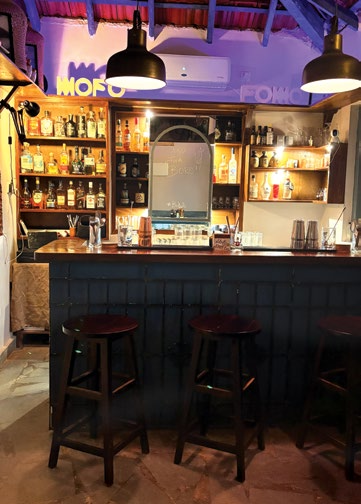
spirits at bars like MoFo. What’s special about MoFo is that
its owner and bartender Tobais Carvalho, who has worked
in Bombay, Dubai and then Delhi, has gone back to his Goan
way of life and opened a bar in his own home! He runs it like a classic taverna, with all the works: small bites along with an
elevated cocktail programme.
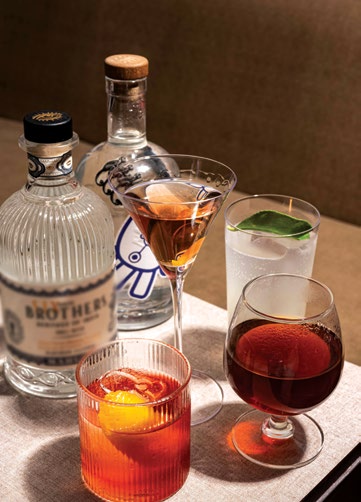
I also got to try some top-notch cocktails at the newlyopened Quinta Cantina, run by Pankaj Balachandran,
another ace mixologist, who has brought some great research
together to present a bunch of Feni cocktails in a menu that
also has great storytelling. The menu features a new feni
every few weeks, and the bar offers a guided tasting when
you drop in, highlighting the terroir and the village the feni
comes from. This draws you into hundreds of years of making
feni in Goa using a traditional method, and all its nuances.
Last year, I visited a bar called the Bombay Daak, run
by the talented Chef Niyati Rao, which proudly wears
the batch of a “daaru and chakna bar”, and captures the
vibe of a local, presented in a young contemporary cool
way. Similarly, ‘Permit Room” takes inspiration from the
Bombay permit rooms, and does a wonderful job of bringing
alive nostalgia. Another ace bar that brings the Bombay
spirit alive is Bandra Born, drawing from its chef-owner’s
Bandra roots. Gresham Fernandes, has played with bold
flavours and I, for one, was delighted to see a dedicated
mahua cocktail listing, with drinks that only exceptionally
confident operators can pull off.
Closer to home, at my own bar The Brook, in Gurgaon,
we play with “escapism” as an idea. The entire look and feel is
of a log cabin, and the entire food and beverage programme is
designed around the Indian Himalayan belt, paying homage
to the 13 states that touch the majestic mountains with a hat
tip (or should I say Dhaka topi tip) to the produce, techniques,
culture, artwork and music of the belt.
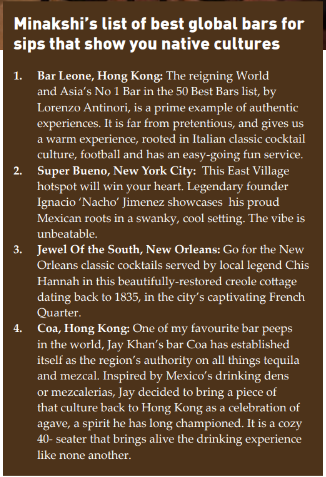
In conclusion, I hope to experience many more fun bars
rooted in the Indian heritage and hope these own the room
globally.