Is Legacy luxury’s hottest (new) bite?

By Anoothi Vishal
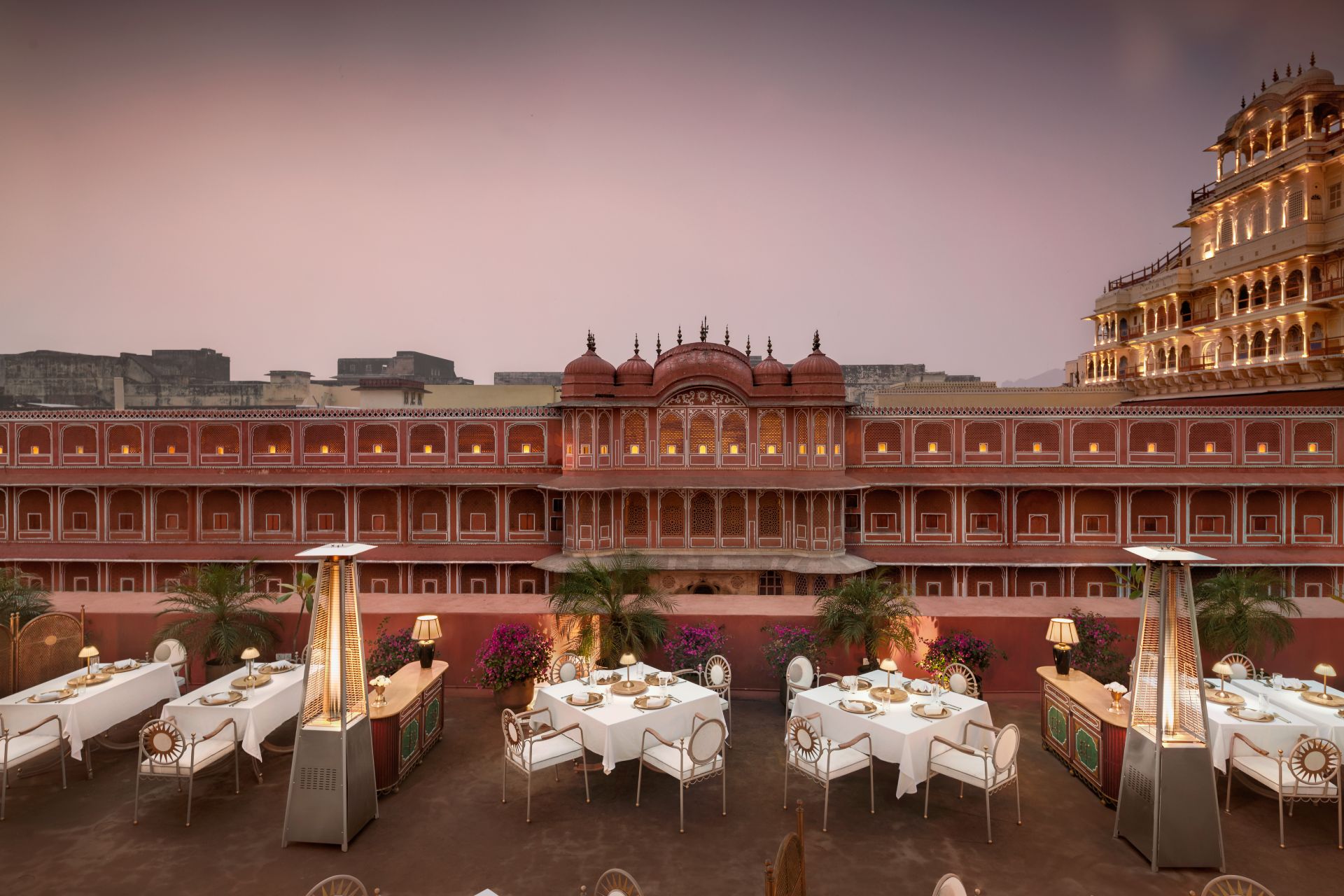
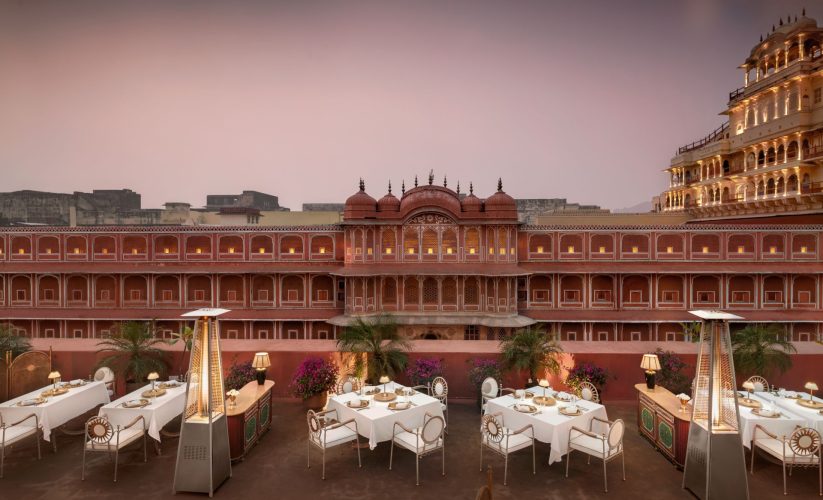
The Sarvato is one of India’s hottest, albeit as yet under-the-radar, new restaurants of 2025. Perched atop the all-important Diwan-i-khas at Jaipur’s historic City Palace, built between 1729 and 1732, home to its titular royal family, the restaurant is a way to keep legacy not just alive — but relevant, three centuries down the line.
The Kachwaha Rajput clan traces its origins to the solar dynasty; an ancestry dating back at least to the 11th century CE. All through the medieval ages, the family ruled Rajasthan’s Amer region; tales of valour of its kings and queens part of the larger Indian fabric of myth and cultural mystique. In 1727, Sawai Jai Singh II of this long line of kings shifted his capital from Amer to Jaipur, beginning a process of building one of modern India’s most beautiful cities and a tourism magnate today.
The pink city, as it is called after the pink sandstone of its magnificent palaces and bazaars, jharokas, and clocktowers, blending architectural influences from Rajput to Mughal to European of the 18th and 19th centuries, is today of one India’s younger metros, transformed from the parochial to the cosmopolitan.
Till even a decade ago, Jaipur was seen as the home of mostly retired bureaucrats, old aristocratic families, moneyed elite of jewellers and Marwari businessmen. Post covid, you sense a fresh young energy and internationalism in the local, laidback charm. Writers and artists, urban migrants from other crowded megapolises in search of better lifestyles often running lifestyle businesses themselves, travellers, and those who come by from Delhi every winter form a new social emerging set; many of the younger gen are educated abroad or have worked abroad, but are now back to be in touch with their roots even as opportunities for business multiply in a city that has also become one of India’s most attractive investment hubs —as evidenced by the starry line up of international luxury hospitality majors opening their marquee properties here in the next few years—from Raffles to Anantara Jewel Bagh that opened in 2024.
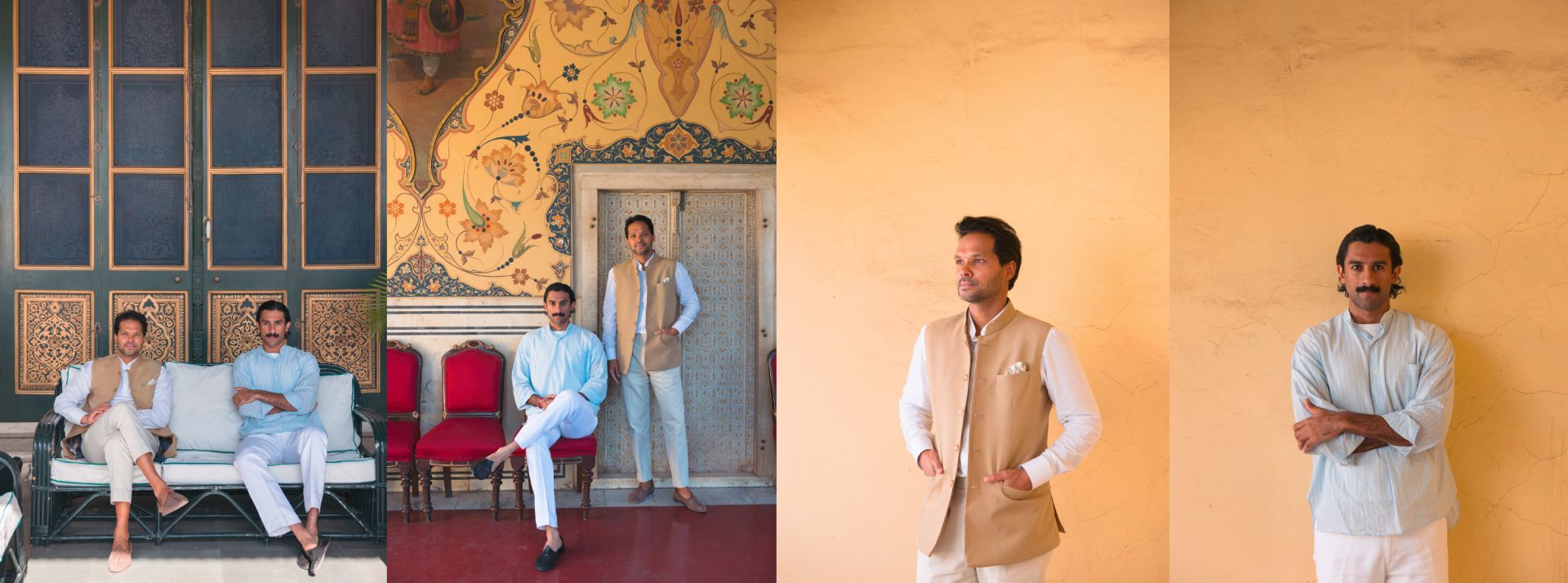
Amid all this, Jaipur’s dashing Sawai Padmanabh Singh, scion and current head of the royal family, is pretty much headlining this new social set too. He has won laurels on the polo field, been the face of Indian luxury brands, and has now turned in another direction, to restaurants, to preserve and rework a legacy of incomparable mystique and opulence.
Along with restaurateur Abhishek Honawar, whose The Johri, a boutique hotel in an alley of one of Jaipur’s most colourful bazaars, substantively changed the landscape for food and hospitality in the pink city a few years ago by bringing in a breath of chic internationalism, Singh has opened The Sarvato, a restaurant that offers a stylish (and expensive) tasting menu-only dining experience, with recipes from the royal family’s oeuvre presented with an eye to the contemporary, young and aspirational Indian (or international) diner.
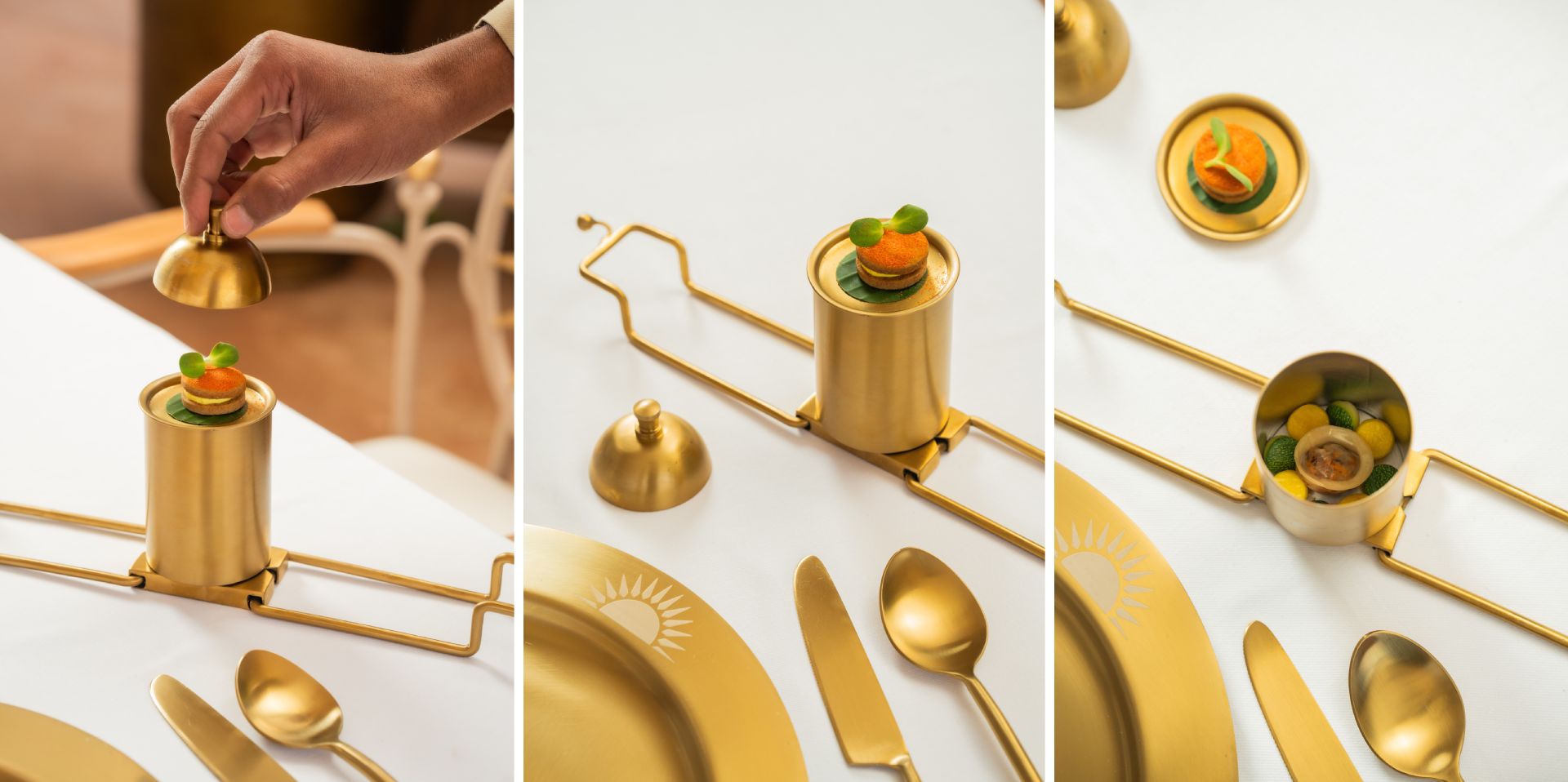
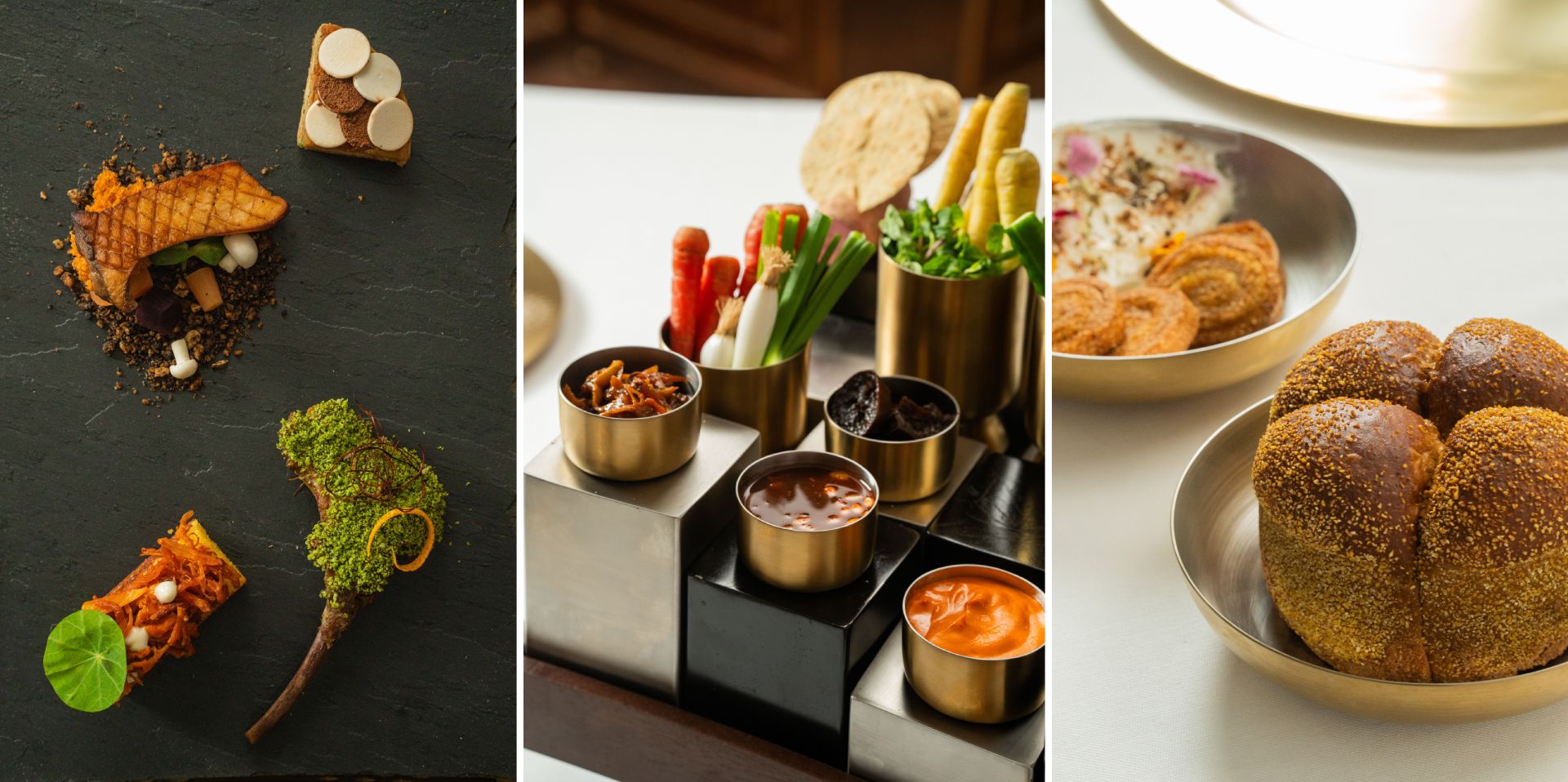
“The dishes are being cooked in the same way as we have learnt of them, but we are showcasing them in a way that is relevant to today’s diners”, explains Honawar, as he talks about the treatement heritage recipes such as safed maas or chandani paneer, bejar ka kofta, deg laal maas, have received so that “people understand the depth of flavours but are still able to eat these in a way that is comfortable to them. That is the fine balance in the approach we are taking”.
Quintessential Rajasthani techniques of drying, fermentation, salting and other ways of preserving scanty ingredients in an arid region are of particular interest to Honawar and his team of chefs. But “people do not live in the same conditions as centuries ago, if the summer is harsh, we can always sit in an air- conditioned room”, he points out, so some nuances, overt reliance on only one ingredient (such as red chillies in some dishes), that were adaptations to those conditions now need to be showcased in a softer way— “though that does not mean we dial down the flavours or spices,” Honawar says.
The six course introductory menu will give way to a more elaborate winter menu, when the seasonal restaurant reopens in October in time for salubrious weather, festivities and gourmand trails…
Consuming culture, not just “third culture”
All across India, as a new generation of diners looks to engage with the country’s cultural prowess in myriads of ways, legacy dining is coming back in fashion. But with a twist.
Heritage recipes and passionate story telling with nuggets of history, mythology and even spirituality are coalescing to form a new kind of luxury dining where culture is consumed alongside local ingredients and spices.
If globally, one of the biggest gastronomy trends is an engagement with “third culture cuisines”— where migrant communities cooking local flavours to reflect their mixed heritage has taken fusion beyond the facile, in India, the interplay between community heritage and cosmopolitan upbringings is creating a distinct genre of food experiences within restaurants, where stories are just as important as ingredients and techniques.
In the last 15 years, “modern Indian” has seen a couple of avatars. The first moment arrived when chefs such as Gaggan Anand or Manish Mehrotra started pushing the boundaries of well-loved street or classic dishes with quirky presentations and layering of flavours and ideas arrived at by using modern European techniques.
Then, a few years ago, with the arrival of Masque and Prateek Sadhu followed by a host of ex-Noma or Eleven Madison Park alums, a focus on hyper local ingredients came to the fore, with ambitious chefs assembling individualistic dishes, forefronting foraging and fermentation, often creating dishes that had little cultural memory but was certainly fresh and arty (even contrived).
Now, in this distinct third wave, we see a “new” attempt at Indian gastronomy, where the function of food as a living culture is prized, and story-telling around heritage and nuances of the past accompanies legacy flavours that may or may not be presented with a twist.
How to make legacy relevant to a new diner seeking both the exotic and the chic is something that many Indian chefs and custodians of culture are engaging with — with rigour. At Jaipur’s Raffles hotel, designed like an intimate queen’s palace (as opposed to an overt masculine and flamboyant “king’s palace”), the restaurant Arkaa focuses on plant-forward fare with local grains, spices, berries and ghee produced at local farms often by young entrepreneurs focussed on au courant artisanal and holistic post-covid foods.
At Arkaa, these plant-based if not vegan foods, local and seasonal, are crafted into vegetarian dishes referencing heritage meals of the zenana, or the women’s section of medieval Indian royalty, where many women were vegetarian unlike the men in the households who hunted and ate meat, traditionally seen as “tamasic” or inducing heat and passion in Ayurveda and the Greek-inspired Yunani systems of medicines. In 2025, the queen’s vegetarian fare translates into dishes such as a delicate, piquant tamatari chaat with Rajasthan’s quintessential doongar, or smoking technique with ghee and cloves, usually employed to flavour game meats.
In Mumbai, at the year-old Avatara, chef Rahul Rana and his deputies have been creating similarly layered plant-forward dishes that reference Ayurveda as well as Rana’s Uttarakhandi heritage in a very indepth way.
The restaurant, like eateries in many temple towns, including in the hills around Rishikesh and Haridwar, does not use onion or garlic, also regarded as “tamasic” in Ayurveda. But unlike the simple, fresh cooking of the street vendors, Rana’s food is highly complex and stylised; a sophisticated luxe tasting menu. The bal mithai, a sweet that is the speciality of Uttarakhand, may taste exactly the same as at the neighbourhood halwai’s in Garhwal, a region of the Himalayas, but it is elevated with elements including a chocolate rosette and buransh ras, the extract of rhododendron flowers, a local summer favourite.
This layering or construction is not fusion as we know it. Instead, it is a deep dive into a specific cultural context. Dishes that emerge therefore are far more nuanced than attempts at bunging in disparate elements together without a connecting philosophy—“the face of a horse, body of an elephant”, as food writer and hospitality veteran Camellia Panjabi had once remarked about inexpert fusion.
As a new culturally-proud India looks back at its roots, legacy is being reworked in authentic ways and is perhaps luxury’s hottest “trend”. As per a recent Deloitte India-Retailers Association of India report on India’s discretionary spend evolution, private consumption has surged from USD 1 trillion in 2013 to USD 2.1 trillion in 2024 at 7.2 CAGR, outpacing US, China and Germany. By 2030, this consumption will contribute as much as 60 per cent to economy, and the discretionary spends go towards “experiences” which celebrate and tell stories of cultural significance even as we grapple with a more uncertain global order and AI dominated worlds.
Legacy is what gives us surety in our humanity.
Yarkandi pulao, Silk Route stories
Stories of legacy are important. If food has a relevance beyond its consumption and mere entertainment, it is because it defines a particular cultural, historic milieu. Recipes show us how politics, trade, religion and more have impacted civilisations. Their evolution is the story of human connections.
As various custodians of culture walk the tightrope of plating up their heritage in a way that it is accessible and relevant to the modern Indian diner, these stories and histories are finding a wider audience. I meet Stanzin Jigmed Namgyal, the scion of the Ladakh’s Namgyal dynasty at Chor Bizarre, a pan Indian restaurant located at the intersection of the Mughal old Delhi and Lutyens’ new Delhi. Namgyal has been invited by restaurateur Rohit Khattar, who owns Chor Bizarre and has turned it from a simple pan Indian restaurant into a restaurant that is a platform for showcasing disparate culinary cultures and their stories, to present a pop up of his royal family’s food with cooks and recipes brought in from their 200-year-old home in Leh, the stunning Stok Palace, overlooking the mighty Indus.
Quite belying the stereotype of a prince, Stanzin has studied hospitality management in Paris, at Le Cordon Bleu and worked as a trainee at the India Habitat Centre restaurant, Deck, where he says he made pasta! But now, back in Leh as a guardian of his lineage, he and a cousin, chef and historian Kunzes Angmo have been trying to take Ladakhi food to the world. Together and separately they present dining experiences at the Stok Place and at pop ups across Delhi, Mumbai, Bangalore and more.
Thanks to some of these activations, a dish like the Yarkandi Pulao that none of the biryani-loving champions of Indian food quite knew about, has become fairly visible. Brought by traders along the Silk Route, from Yarkand (in the Xinjiang Uyghur Autonomous Region of China) to Leh, centuries ago, this is food that has been part of diets of richer Leh populace, along with other dishes such as Gyathuk (King’s thukpa) served not just to the royals but even as an offering to Buddhist deities on religious feasts.
Like it is with any dish with deep heritage, there are nuances to the cooking. What kind of meats, what kind of pasta and what kind of spicing. Leh’s Yarkandi pulao is only spiced with the long black cumin, shah zeera, as it was dubbed by Mughal cooks and procured in rich mansions of Delhi from Kashmir. It is a spice that is native to the region, and in fact entered the pan-Indian spice box from the trans Himalayan region bordering central Asia in the wake of Alexander’s march east in the third century BCE, the subsequent establishment of the Indo-Greek kingdoms, and the spread of Buddhism that opened up high mountain passes to travellers—and ingredients. Like coriander, also part of the Indian masalas, cumin is native to the Mediterranean, and its use all across central Asia and India, is a result of ancient dispersal along maritime and trade routes.
The pulao itself bears strong affinity to the Afghan Kabuli pulao, which itself seems to be derived from the Bukharan Pulao of Uzbekistan, a dish famous all over central Asia and the Mediterranean. Like the mild central Asian pilafs with sweet and sour Persian-influenced notes, all these rice dishes, including the Yarkandi pulao contain not just meat and stock but also local vegetables and dried fruit such as carrots and raisins; a far cry from the more robustly spiced, cardamom and black pepper laced biryanis of the subcontinent. But it is a dish that talks about trade connections along a long historic highway where Bukhara and Kabul, Yarkand and Leh were interconnected.
These are stories that are more important to today’s diner that perhaps just how “good” a dish tastes.
Story-telling vs traditional skill
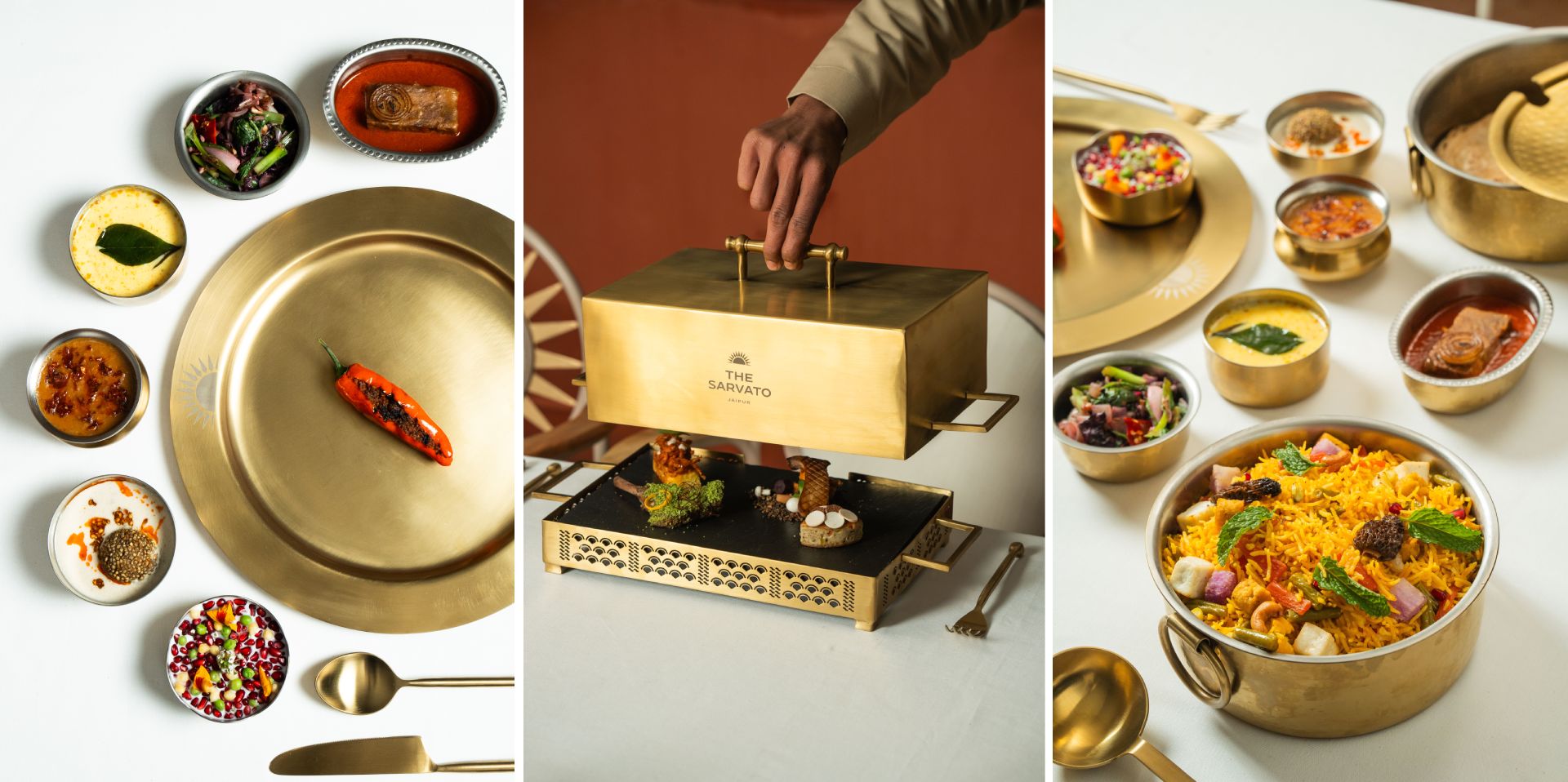
“I surely think there is a loss in traditional cooking skills, the processes that were followed in the past were different and people gave so much time to them, that ability to give time has changed but not just because people are lazy but because the opportunity to do things differently or add catalysts is there… Story telling is an addition by which nuances of the old processes can be shared and in today’s day and age it is playing a vital role in passing on information (of the past),” says Abhishek Honawar, when I ask him about the perception of how flavours of the past may be disappearing as a cultural memory.
There are so many aspects to this debate, including the fact that time-consuming processes – sil batta chutneys and shami kebab, for instance, can not be replicated within modern families because of the huge toll it takes in terms of free and/or cheap labour usually provided by women within Indian family structures, as has been portrayed in films like Mrs or The Great Indian Kitchen.
But is it worth while preserving these in professional restaurant kitchens to preserve flavours as cultural memory? Chefs like Amninder Sandhu, who likes to cook on open fire in a nod to the chulhas and bhattis of the past, are experimenting with these ways of traditional slow cooking in restaurant kitchens. Her dishes at the seasonal restaurant Palaash at Tipai, a wildlife luxury eco-resort in Tipeshwar include the likes Bamboo-smoked jackfruit gravy with Indrayni rice from Maharashtra, while she dishes out meticulous dum biryani and kebab, and silken Avadhi qorma at other restaurants such as Talaabwali (also at Tipai), where food is smoked, dumed and served in traditional utensils, and at Bawrii in Goa and Mumbai that she has co-founded and that serves the likes of Lucknow’s traditional kakori kebab with a legit sil batta chuntney ground on stone.
At Ikk Panjab in Delhi, arguably the most exhaustive restaurant in India serving food from the undivided Punjab—a feat attempted only once before at Singh Sahib, by impresario Jiggs Kalra and Marut Sikka, who has now built a huge catering empire doing exquisite traditional Avadhi khana for the whose who in India, flavours travel from Sindh’s koyla kadahi, a lost dish, to the elusive dohra seekh kebab with both mutton and chicken mince, to Patiala and TarnTaranSahib urban legends. Restaurateur Rajan Sethi and his wife Deepika are reviving the elaborate and meticulous flavours of a land whose cuisine has become –erroneously—a shorthand for lazy tandoori, but is so much more.
There are two approaches that chefs and restaurateurs take when it comes to this revival and recreation—one, to be as close to old processes, ingredients and therefore flavours, two, to imaginatively contemporaries or change these, but avoiding haphazard fusion done only to amuse or startle. Instead, chefs like Gresham Fernandes at Bandra Born and Garima Arora, whose restaurant in Bangkok Gaa is much feted and who has opened the Thai restaurant in Gurugram called Baang, are dabbling in reinvention after a deep dive into tradition.
Fernandes who traces his roots to the Catholic community of Bandra channels tastes of his childhood in highly technical cooking but creates easy to appreciate dishes nevertheless. Arora and her team studied with Thai food scholar Hanuman Aspler who uses ancient manuscripts to teach ancient Siamese cooking at his Three Trees Doi Saket farm, 40 minutes from Chiang Mai. What he teaches are not recipes but the whys behind every traditional dish (and Thai cooking can be every bit as complex as Indian with its flavour combinations, diversity of ingredients and regional nuances). This is what the world’s top chefs such as Garima come to learn, and when you walk into Baang, you realise that despite the nightclub ambience and the deceptively casual style, the dishes themselves reference classic cooking even when they are tweaked or innovated upon by a chef of Garima’s calibre.
This is tricky, because unlike hyper individualistic dishes that you can just create and call “art”, this is legacy as memory of an entire people. But then, as Hanuman will tell you, “The best chefs don’t invent flavours; they highlight what’s already there because flavour is not invented but recognised, shaped by the mind that perceives it…”
To understand this, and create something unique even while it recognises a deep heritage is to plate up true rigorous luxury.