It’s not Just Khichdi and Deprivation


When Ananda opened 26 years ago,
awareness of Ayurvedic food was negligible
outside India. Today, as “modern Ayurvedic
cuisine” pioneered by the wellness resort
gains international recognition, it is time to
realise how easily Ayurvedic principles can
travel, be applied to any cuisine, and be the
lens through which innovation and hypercustomisation is achieved for the ultimate
joyful dining. By
Aashica Khanna
Have you ever thought about the origins of a
thali and why it might exist? A thoughtfully
composed thali could be read as an Ayurvedic
map: sweet grains, salty seasoning, sour pickle,
pungent spice, bitter greens and astringent pulses. Ayurveda
emphasizes that meals must contain all six tastes as each has
a role to play in creating balance. It’s possible that the thali
may never have been meant merely as a presentation style for
an assortment of dishes.
The truth is that there was wisdom in the way our
ancestors lived. Some of that wisdom has filtered through
into our modern lives that we often take for granted and
sometimes we may not even realize why certain things are
the way they are. It’s often woven into our culture and into
the fabric of our lives and communities, and sadly much
more of it has been forgotten and lost in time.
There was an intelligence in our culinary system that
made us healthier and innately live in harmony with nature,
guided by Ayurveda. Food (Ahara) is one part of Ayurveda’s
interconnected lifestyle system. Ayurveda is built around
the science of balance. It’s about identifying the imbalance
in your own constitution and using diet to pacify what may
be aggravated. The knowledge was passed down in the texts and through storytelling, rituals and
communal practices – festivals, seasonal
feasts or fasts and daily habits.
When Ananda opened its doors 26 years ago, Ayurveda was unknown outside of India, and so was yoga. At home there were pockets of awareness
but somehow very little knowledge or
belief in its benefits. There were passeddown rituals and habits which were
lived religiously every single day, but
they were not labelled as Ayurveda and
so people were unaware. Ananda’s journey has been about
going deep into our ancient systems to revive this knowledge,
spreading its awareness worldwide, and making it relevant
in today’s world.
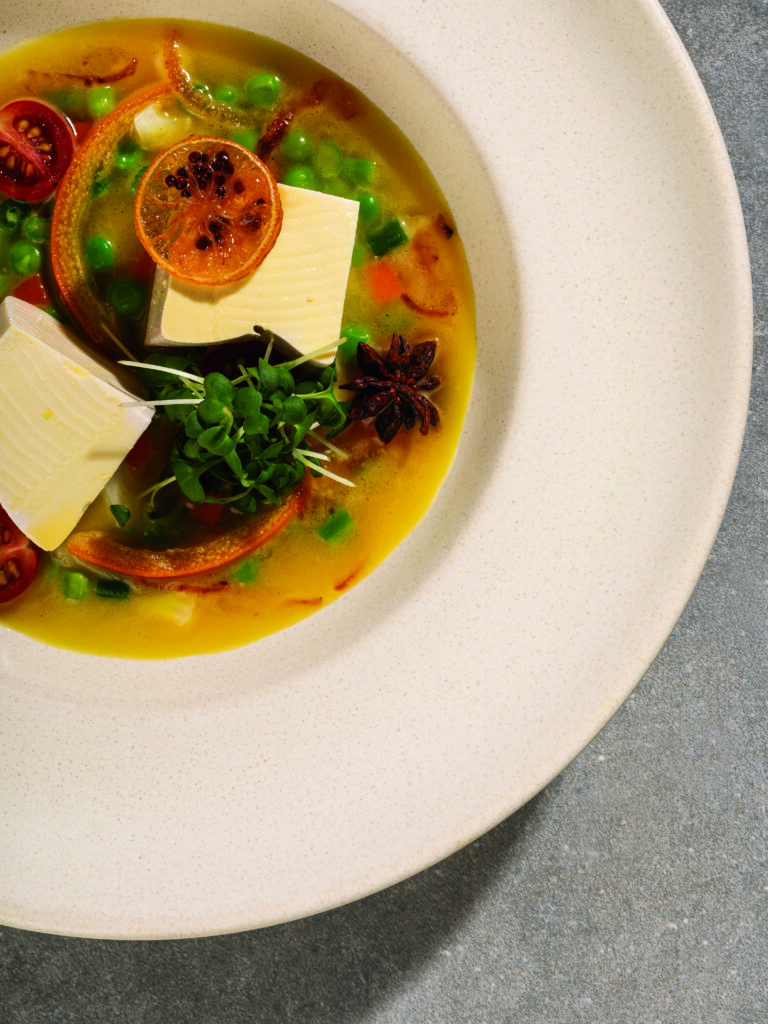
I learned very early on that Ayurvedic principles of
cooking and eating need not be restricted to Indian cuisine but that it works as well with other cuisines too. This opened
up the floodgates for innovation and today Ananda is a
pioneer in this field of Ayurvedic modern cooking.
Hotels have always prided themselves on customization
and creating bespoke menus for guests. What we had was the
opportunity to hyper-customise through an Ayurvedic lens.
To cook something for what this person’s body needs, on this
day, in this season, with his/her particular constitution. To do
so in a way that brings joy through its
flavours, and to be able to cook in a way
that’s completely in sync with nature.
What a privilege!
To this day many believe that
healthy food is about deprivation, but
the beauty of an Ayurvedic diet is that
it fundamentally believes in the joy and
pleasure of eating. Many believe that
Ayurvedic food is a set of restrictions
and rules, but Ayurvedic texts reveal
that the state of sukha (happiness) and
the sheer enjoyment of a meal are as vital to physical health.
Awareness of our ancient systems is now stronger than ever before and it has been a catalyst of many trends and exported
ingredients like Brahmi, Turmeric and Ashwagandha. But
when removed from the larger interconnectedness of our lifestyle sciences, they unfortunately do not work. The system guides who should consume these, when and how
they should be taken and in which environment they make sense. Essentially, it can not be taken out of context.
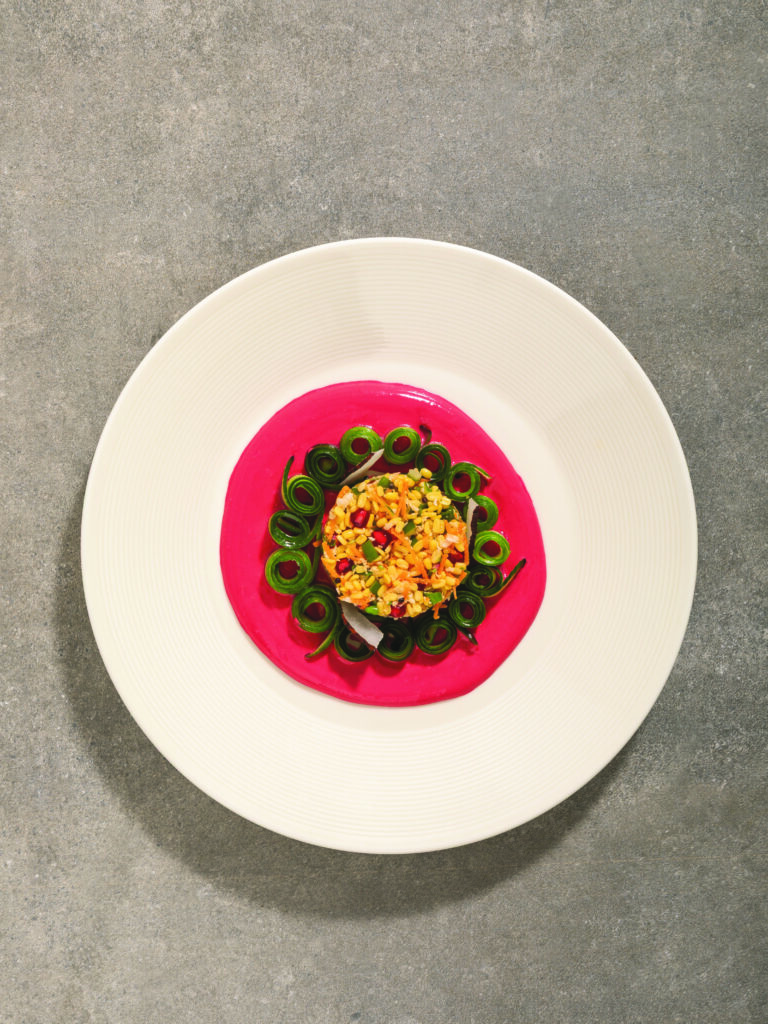
If we look closely, we can see all this knowledge still being
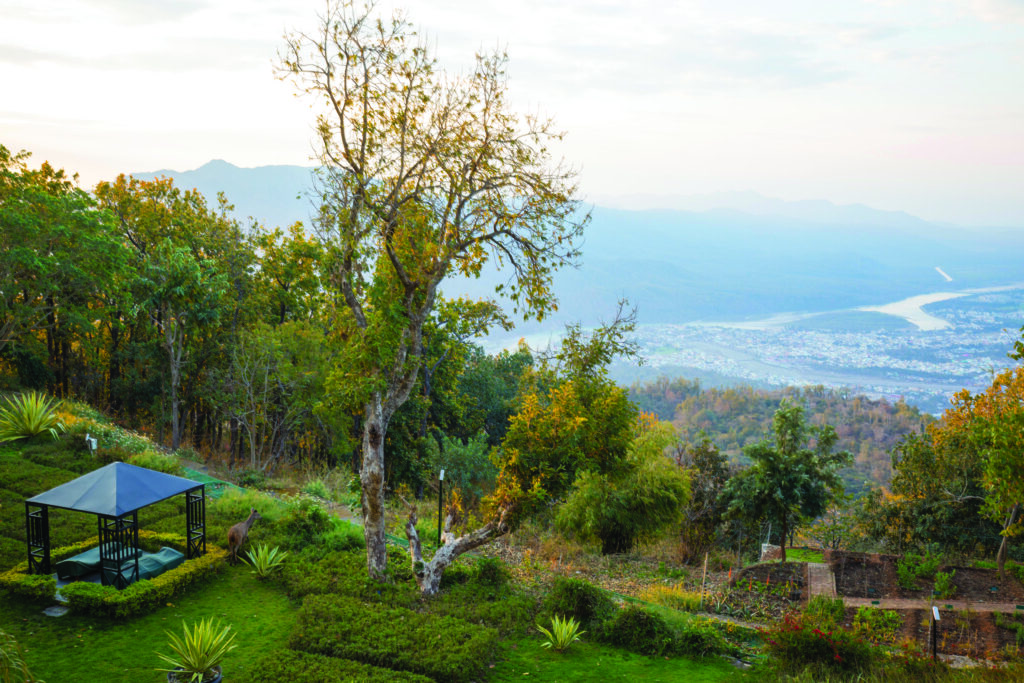
lived around us. As a result of Ananda’s location, I have had the opportunity to explore the food of Uttarakhand more
closely. Traversing the mountains, visiting local villages and
seeing how the people live. Their meals were not introduced to us as “wellness cuisine,” nor did
anyone describe them as Ayurvedic. They
were simply the food of the mountains,
developed over generations in response
to a particular landscape and way of life.
The ingredients told the story of that
landscape: mandua, jakhiya, jhangora,
bhutwa, seasonal greens, local spices and
preparations designed to nourish people
living and working in mountainous
terrain. These are not fashionable
superfoods. They belonged to the soil,
climate and lives of the communities that
cooked with them.
I would hesitate to call all Uttarakhandi food Ayurvedic,
because that would impose a label upon a regional tradition
that has its own distinct history and identity. Yet I recognised
within it an intelligence that Ayurveda also articulates – food
cannot be separated from place, season, occupation or the
person eating it. What sustains someone through a cold
mountain winter may not be what the same person needs
during the heat of summer. The needs of someone engaged
in physical labour will be different from those of someone
whose life is largely sedentary. There is no single ideal diet
detached from context.
This understanding was once embedded in the cycles
of our Indian kitchens. Recipes changed with the weather.
Winter brought sesame, jaggery,
warming spices and foods that were
slower-cooked and more nourishing.
Summer called for lighter preparations
and ingredients traditionally considered
cooling. The kitchen responded naturally
to the world outside it, long before
“seasonal eating” became a worldwide
movement.
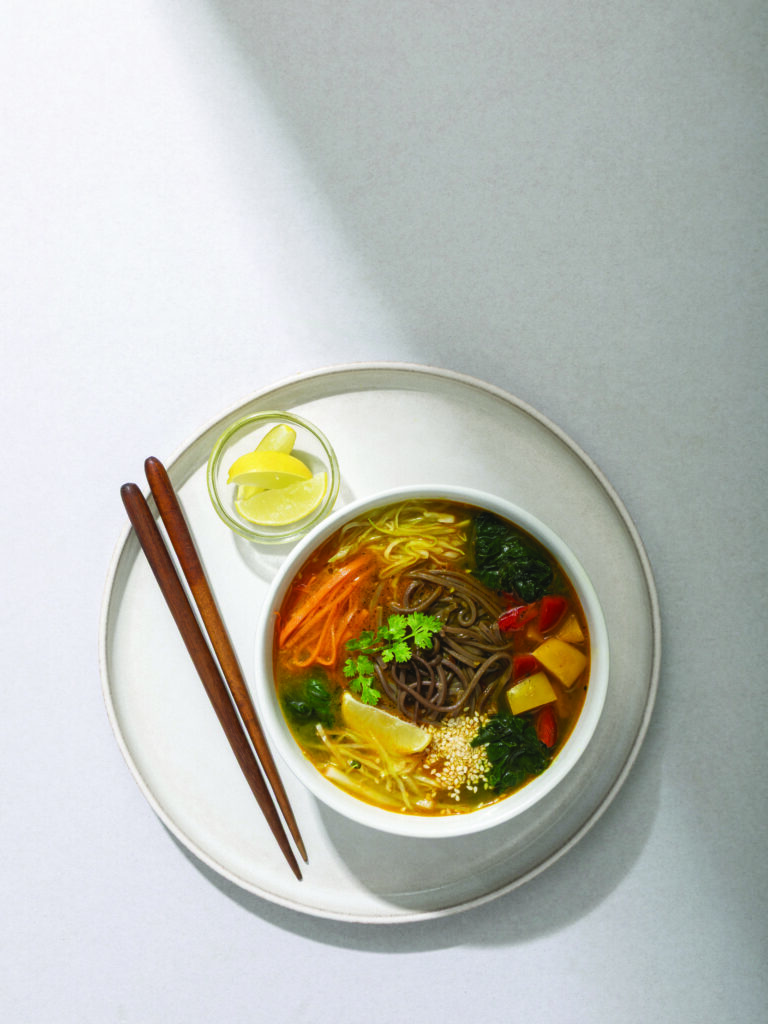
Equally important is the state of mind
in which the food is eaten. Ayurvedic
texts advise us to sit, pay attention and
eat neither hurriedly nor excessively
slowly. They caution against eating while distracted by too
much conversation or activity. Today, we might call this
mindful eating, but the principle is an old one: attention
plays a part in nourishment. We have become accustomed
to eating at our desks, in cars, between telephone calls or in
front of screens, often barely registering the flavour of what
we have consumed. Ayurveda asks us to return, at least for
the duration of a meal, to the body and the senses. This does
not mean that every meal must be eaten in silence. Food is
also conversation, celebration and community. The point is
that our awareness should not be entirely absent from the
act.
There is another lesson in the traditional insistence on freshly prepared, warm food. Freshness was not a marketing claim; it was that freshly made food carried the highest levels
of prana (life force). Food was not reduced to its ingredients
or nutritional components. Temperature, texture, aroma,
appetite, freshness and pleasure all mattered. Even some of
our smallest food rituals reveal this thoughtfulness. A slice
of fresh ginger with a sprinkle of rock salt was traditionally
eaten before a meal to awaken agni, or digestive capacity.
It was a tiny gesture, often passed from one generation to
another without being identified as Ayurveda.
This is also why I believe Ayurveda can travel beyond
the boundaries of Indian cuisine without losing its integrity.
Its principles do not require every guest to eat khichdi or
follow an identical “Ayurvedic menu.” A soup, a salad,
a Mediterranean dish or familiar comfort food can all be
approached through the same questions. Who is eating
it? What is their digestive capacity? What is the season?
Is it fresh? And how can the meal bring both balance and
pleasure?
At Ananda, this has allowed us to think about nutrition
in a more profound way. It asks us to understand what
may genuinely support that individual at that moment.
An ingredient does not become universally beneficial
just because it’s perceived to be healthy. This philosophy
eventually found its way into The Healing Plate, Ananda’s
first cookbook. For me this represents a book of possibilities –
25 years of experience translated into something that can live
beyond Ananda and become useful in everyday kitchens.
I believe that ancient knowledge remains alive when it can
enter contemporary life without losing its integrity or its
wisdom.
Perhaps that is what India’s Ayurvedic culinary heritage
offers us today: not another restrictive diet or a collection of
miraculous ingredients. It asks us to notice the season, the
landscape, the appetite and the person. It reminds us that food can nourish differently on different days, and that
wellbeing cannot be produced through a universal formula.
(The writer is executive director, Ananda In The Himalayas)