
Meet India’s ‘Botanist’ Chefs

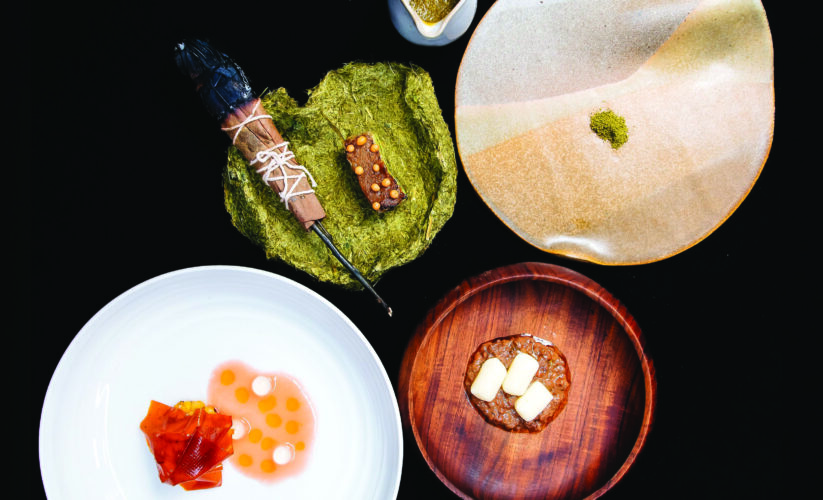
As diners tire of the now trite “farm-to-table” trope, a few Indian chefs are deepening their engagement with herbology — bringing whole-plant cooking, shifting seasonality and traceability to the fore. This means not only does hyperlocal flora find a place on luxury restaurant menus, but also that even a simple vegetable such as radish that can be completely traced to the patch of earth it comes from, can be your new caviar.
By Taniya Sahni
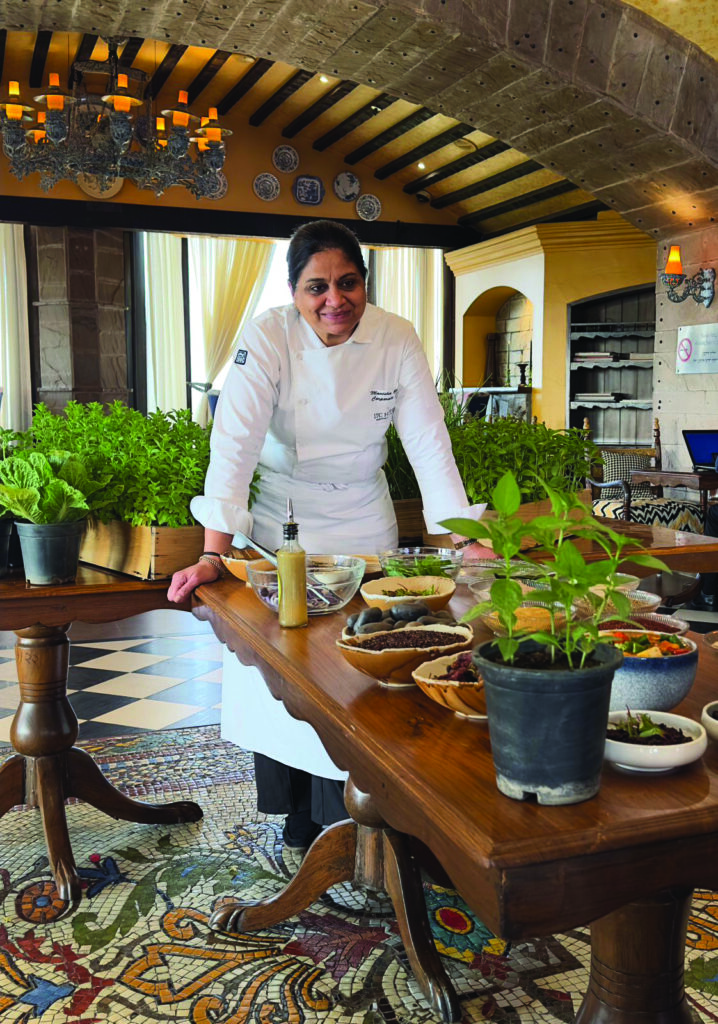
For botanist chefs, plants are complex flavour systems, with every part — leaves, flowers, stems and seeds — having the potential to contribute distinct textures and flavours in or the modern Indian restaurant kitchen. Chef Manisha Bhasin, Corporate Chef ITC Hotels, describes this idea through her experience of working with Nasturtium. The plant, she explains, reveals how a single ingredient can produce multiple flavours and textures: from leaves and flowers to peppery seed pods often compared to capers. Her experience with discovering flora as entire systems rather than “just a vegetable” has shifted her cooking philosophy toward whole-plant use. Before ‘ingredient-forward’ became dining-room vocabulary, cooking with plants and following seasons were neither a trend nor a thesis, just everyday culinary life. Now, chefs like Bhasin, one of India’s seniormost helming the operations of a major hospitality chain, are putting back the intuitive wisdom of the earth on luxury plates in restaurants in a far deeper way than what “farm to plate” has come to connote. “Authentic botanical dining requires a menu that is vulnerable to the seasons. If a restaurant claims ‘farm-to-table’ yet serves asparagus from New Zealand or Peru and strawberries in August, it definitely is not ‘farm-to-table’,” as Bhasin puts it.
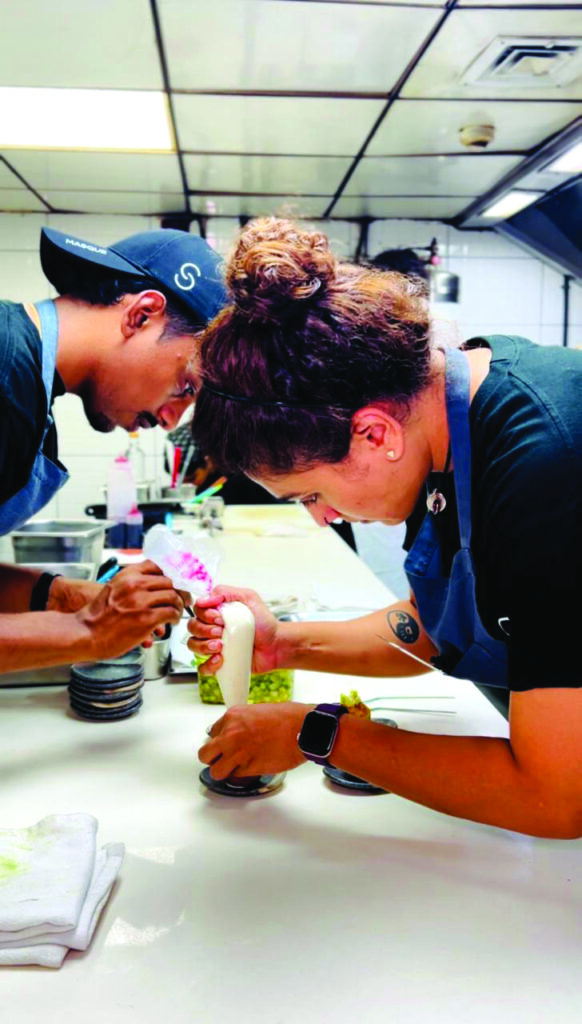
In Mumbai, Chef Mythrayie Iyer, who heads R&D at the award-winning Masque in Mumbai, is diving deeper into local herbology. A fennel flower, she points out, “tastes completely different raw, pickled or charred. Charring deepens sweetness while brining shifts the focus to texture. Even within a single plant, each part plays a role; the stem for boldness, the leaf or flower for delicacy, and the root for earthiness.” While Ayurveda, which forms the underpinning for many Indian cuisines, has always underscored the idea of any ingredient’s “guna” or properties changing depending on how it is cooked, younger restaurant professionals like Iyer are experimenting first hand with produce to develop knowledge about which part of the plant to use, and how. “This is where the real complexity lies. Understanding plants is only the beginning; the real discipline lies in letting nature dictate ‘if and when’ an ingredient should appear on the menu”, as Iyer points out.

Koyel Roy Nandy, Head Chef at Sienna Calcutta, is another of India’s new emergent “botanist chefs” building a serious relationship with plants. For Nandy, this began with regular ‘bajaar’ visits or the local wet markets. She believes greens carry some of the most complex flavour notes. “In Bengal, when we cook shaak (leafy greens), they are handled in a way that balances their natural grassiness. That comes from understanding how much to cook it, what to pair it with, and how to season it. When you allow an ingredient to express itself, flavour develops meaningfully,” she explains. Chef Tanisha Phanbuh, founder, Tribal Gourmet, points to the Northeast’s deep respect for seasonal rhythms and whole-plant cooking. “ People prefer going to the market and buying fresh produce. Their cooking depends on what’s in season. And in Meghalaya, where I come from, we use everything from roots and leaves to buds, each with its own purpose in the final dish,” says the chef whose first brush with botany was in her mom’s unmanicured garden in Shillong.

Listening to the growers… and seasons For botanist chefs, the relationship with growers is more than just supply; it is a collaboration that often shapes the menu itself. Nandy builds relationships with vendors through regular visits to the bajaar. Conversations with sellers often reveal how ingredients are cooked at home and how supplies are changing. Phanbuh sources ingredients from Shillong for her pop-ups across India, working directly with friends and village growers, eliminating middlemen, and ensuring immediate payment. She often uses hyperlocal produce such as Soh Sang berries, with foragers and farmers sending the harvest directly to her. Letting growers take the lead, Iyer works with whatever ingredient is at its peak. Red tamarind pulp, for instance, comes to her kitchen once a year in bulk; the team then preserves it and builds dishes around it. For her, these relationships shape the kitchen more than any recipe, especially when working with hyper-regional ingredients that appear for barely a week each year. It is through these relationships with growers that chefs often become the first to hear about deeper shifts unfolding in the landscape.
For Bhasin, the most urgent story is unpredictable seasonality. “Farmers can no longer rely on the ‘traditional’ calendar for sowing. The monsoon is now a series of events rather than a season, which makes consistent botanical sourcing a gamble. ITC works with the farmers in many states and supports them by educating them.” Climate change means that these chefs are the first to realise when an ingredient gets rarer, and with it, a taste. Like Iyer says, “My mother often speaks of ridge gourd that once grew three to four feet long. When cut open, it released a distinct aroma. These varieties are rare now, replaced by smaller hybrids, different in taste and missing that fragrance. It’s not even a restaurant ingredient, but when something disappears from a family kitchen or a local market, it signals the gradual erosion of a memory.”
Why a radish may be as costly as caviar
Botanist chefs like Chef Manisha Bhasin are also working towards drawing the attention of their diners towards the “true cost of food”. “Most diners are really paying for service. We rarely account for the degradation of the water table or the loss of biodiversity. If we actually paid the ecological price of something as simple as a monoculture tomato, it would probably be considered a luxury item.” For her, cooking with plants is also a quiet rebellion against the industrial food system. “In a plant-forward kitchen, luxury means traceability. Knowing exactly which patch of earth your radish came from – that’s the new caviar.” At ITC Hotels, she adds, the team has begun working on a carbon-footprint programme that focuses on traceability while ensuring dishes are created with the lowest possible carbon impact.
Koyel Roy Nandy notes that eating out in India is relatively recent; special meals were traditionally made at home. Sienna Calcutta’s approach is the use of familiar local ingredients and flavours, but presenting them in a restaurant context. Over time, diners, especially visitors (to Kolkata), have grown curious about seasonality and lesser-known regional ingredients. But restaurant menus are often skewed towards the exotic because diners tend to seek novelty rather than the everyday local foods they have at home. Phanbuh agrees and adds that despite her attempts to introduce seasonal greens, mushrooms, or pumpkin in multi-course meals, picky diners often push her back to familiar choices like aloo.
Storytelling becomes important in this context because, as Mythrayie says, “balancing a chef’s vision with a diner’s experience is a constant negotiation.”
Bitter is the New Bold
As diners become more open to unfamiliar ingredients, chefs are pushing the palate itself. Manisha Bhasin describes bitterness as a luxury best used in small doses – an acquired, ‘adult’ taste that demands attention. For her, indigenous ingredients like neem flowers and bitter gourd pith exemplify this profile; when tempered with fat such as cultured butter or ghee, bitterness adds a lingering depth of flavour that sweetness or salt cannot match, along with medicinal benefits. For Iyer, “Bitterness signals complexity. Only now are diners ready for it. For her winning dish in the S.Pellegrino Young Chef Academy 2023-24 Africa, Middle East & South Asia Regional Final, built around ridge gourd, she layered bitterness through the vegetable itself, charred aubergine and a fenugreek leaf sauce – bitter, smoky and acidic in balance. Bitter gourd, she adds, remains her ongoing challenge: an underrated ingredient she hopes to bring confidently onto a fine-dining plate.” Phanbuh enjoys working with bitter notes in her menus, and recently expressed them through a salad made with pennywort leaves.
Long before botanical cuisine became fashionable, Indian kitchens were already fluent in it. What these chefs are doing today is not inventing something new, but restoring a language that was always ours – one still growing quietly in forests, markets and home gardens, waiting to return to the plate.