Royal Repast

The most famous Rajput dishes are a result
of steady evolution in the royal kitchens
of Rajasthan, where chefs experimented
with sparse ingredients, recipes brought in via marriages, and guest preferences.
This is food that showcases a life of valour, hospitality and family fealty, says the
cuisine’s foremost exponent By
Akshraj Jodha
When we talk about Rajput or a royal food
of Rajasthan, most people immediately
think of rich curries, fiery meats, desi ghee,
spices and food cooked over open fire. But
Rajput food is much more than a collection of recipes. It
is a story of Rajput families, households, their traditions,
battles, celebrations, marriages and most importantly,
the way people adapted to changing situations.
Rajput food did not develop in one day. It evolved
over hundreds of years. There was no single person
deciding what it should be—recipes developed naturally
according to what was available, where people travelled,
who they met and what their circumstances became.
Rajasthan itself played a very important role in this
evolution. It is a land where water was limited in many
areas, the climate could be extremely harsh and fresh
vegetables were not always available. People therefore
learnt to make the best use of whatever was around
them. Wars and the old hunting traditions (hunting is
banned in modern India) also influenced the food.
One of the best examples is Junglee Maas, which is
today considered a classic associated with Rajasthan.
The traditional story behind the dish is quite interesting.
When the royal hunting parties went into the forests,
they could not carry an entire kitchen with them. There
were limitations on ingredients, spices and equipment.
The cooks had to work with whatever was available.
So, a very simple preparation involved
meat, rock salt, whole red chillies and
ghee to create a dish. There was no long
list of spices or complicated masala. The
flavour came mainly from cooking the
basic ingredients properly over an open
fire. This was a wonderful example of how
limitation can sometimes create something
beautiful.
Today, chefs often try to simplify dishes
deliberately. In the case of Junglee Maas,
simplicity was not necessarily a choice. It
was a necessity. But over time that necessity became tradition.
Apart from being connected with outdoor life and military
skills, hunting in the Rajput kitchen created occasions where
food had to be cooked in unusual circumstances— deploying
open fires, heavy vessels and slow cooking, which part of the
culinary culture.
Another important part of Rajput food is hospitality.
Royal households regularly received guests from different
parts of India and at times, from other countries. Food had to
change according to the occasion and people being served.
One of the interesting stories associated with Safed Maas is
connected with this idea of entertaining foreign guests.
The story goes that when royalty wanted to serve
something to foreign guests, they wanted a dish that would
be more familiar to a foreign palate. Cooks were asked to
create something that was mild and white in appearance,
almost like a meat dish served in a white sauce. The result
was Safed Maas.
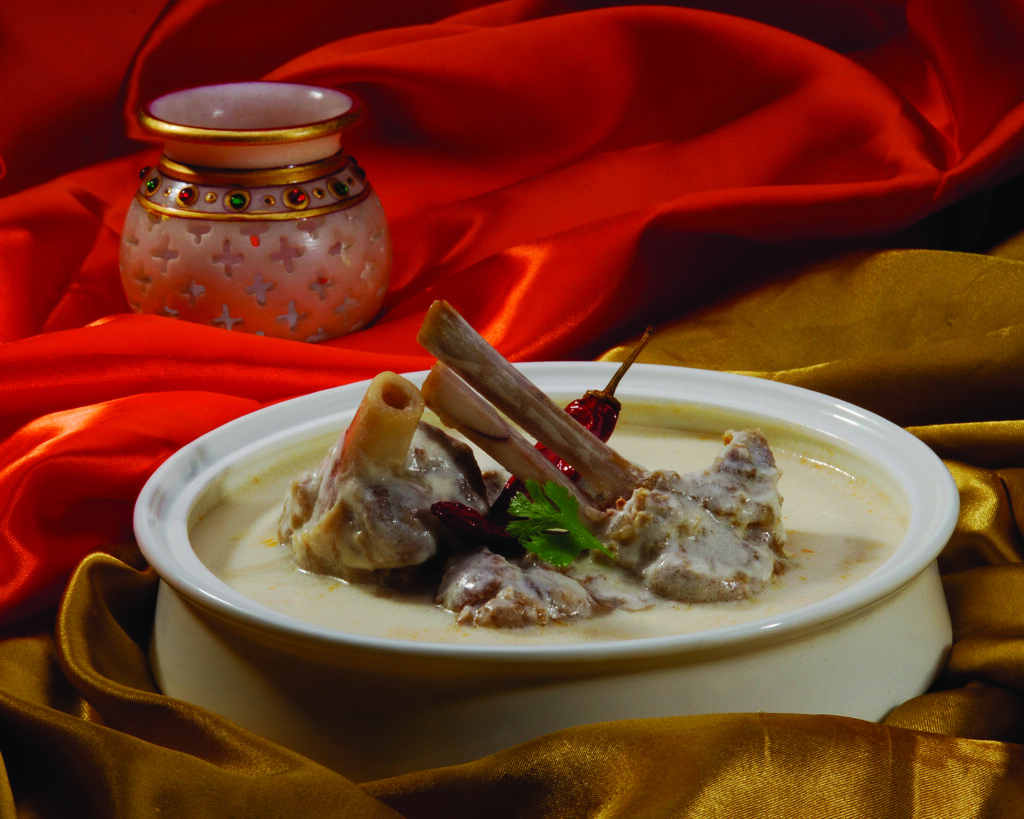
Unlike the fiery red appearance of Laal Maas, Safed Maas has a much softer profile. Yoghurt, onion and other
ingredients are used to create its rich texture and pale colour and occasionally dry fruits like cashew or almonds are used, depending upon availability. It reflects something important
about royal kitchen cooks were expected to innovate
according to their guests.
Another fascinating dish is Chakki Ka Saag. For many
people whole wheat immediately means roti, paratha or
some other bread. But in Chakki Ka Saag, wheat becomes the main component of the dish itself. The traditional
story associated with this preparation says that one of the maharajas wanted to play a little prank on some vegetarian
members of his staff. He asked his cook to create something
that had the appearance and feel of a meat preparation but
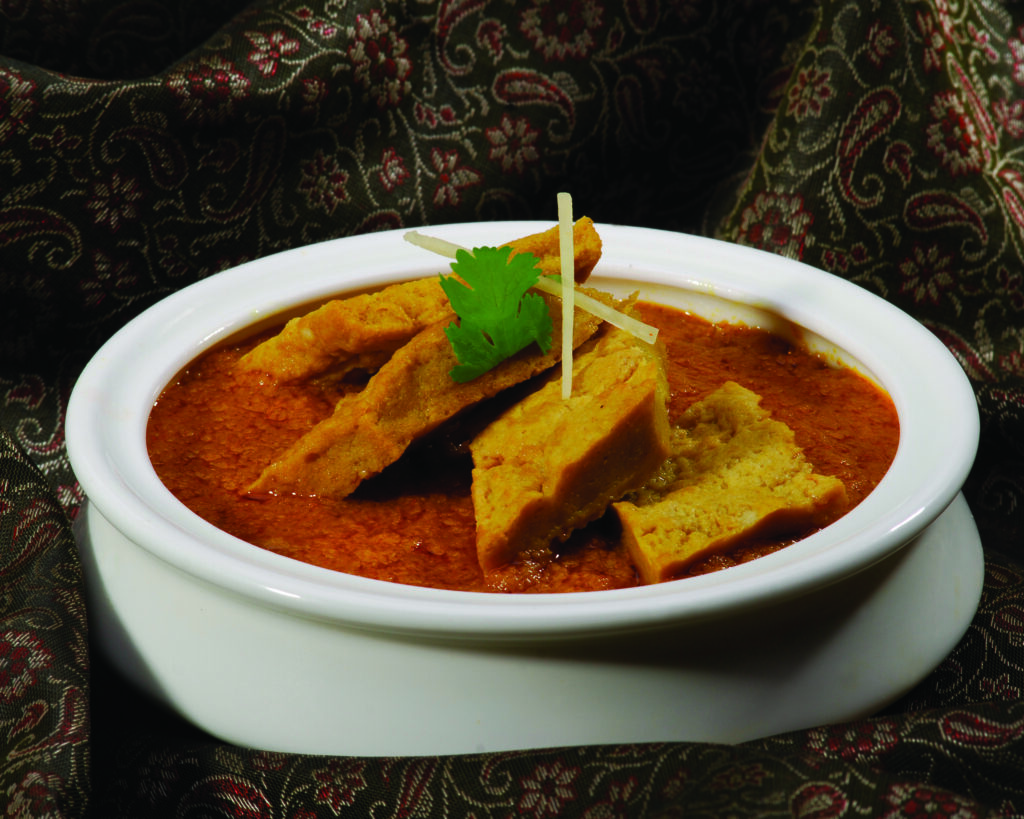
actually be vegetarian. The cook used wheat dough and created pieces that could be cooked in a rich gravy. This
became Chakki Ka Saag.
Again, whether every detail of this story is historically
documented is less important than what it tells us about
the creativity of the royal kitchen. Cooks were not merely
following recipes. They were constantly being challenged
to create something different. And perhaps this is one of the
most fascinating things about old Indian cuisines.
We sometimes imagine traditional food as something that
never changed. In reality, traditional kitchens were places of
experimentation. A maharaja could ask his cook to make
something new for a guest. A hunter could return with meat
and only a few ingredients available. A bride could enter a
new household carrying recipes from her mother’s kitchen.
A guest from another region could introduce a new flavour
or cooking method. All these things slowly became part of
Rajput culinary tradition.
Marriage was perhaps one of the most powerful
influences. Royal and aristocratic marriages connected
different families and regions. A woman
entering a new household brought with
her the food traditions she had learnt from
her mother and grandmother.
She might cook something differently
from the way it was prepared in her
husband’s family. Her children would
grow up eating both versions. Over
generations the two traditions merged.
This is how food travels.
A recipe can travel from one kingdom
to another through a marriage. An
ingredient can travel with a trader. A
cooking technique can be learnt by a cook
who has worked in another royal kitchen. A dish can change
because a guest asks for something different. This continuous
exchange is one of the reasons why Rajput food cannot easily
be put into one fixed category.
There is also a huge difference between everyday food
and food prepared for royalty or special occasions. Everyday
Rajasthani food could be simple and practical bajra roti, dal,
vegetables, dairy and preparations made from ingredients
that could survive the harsh climate. But when there was
a wedding, festival, royal gathering or important guest the
kitchen could become completely different. The royal cook
was expected to understand the occasion, the guest and the
ingredients available.
This is where the skill of the cook became extremely
important. A great cook did not simply know recipes. He
understood people. He knew what a warrior would enjoy
after a long journey, what could be cooked during a hunting
expedition, what would impress an important guest and
what could be prepared for a large celebration.
Today, there are not many restaurants dedicated exclusively to Rajput cuisine. This is perhaps one of the
reasons why many traditional preparations remain relatively
unknown outside Rajasthan and certain royal and aristocratic
families.
However, the cuisine is still being preserved in a different
and very interesting way through private food tables and
intimate dining experiences in family homes.
In Udaipur, for example, food enthusiasts can find
traditional culinary experiences being presented through
homes and family-led food tables. Deolia House in Udaipur,
associated with Rakshita Shaktawat is one such example
where the connection between family, heritage and food
becomes part of the dining experience.
Another example is the food table associated with
Meenakshi Kumari Sheorati from the Udaipur royal family,
where traditional food and family culinary heritage are
brought to the table in a more personal setting.
In Jaipur, Himanshu Singh Rathore has been working
with the cuisine of Nimaj, his domicile, via Pratap Bhavan
food, bringing attention to a regional food tradition that
is often overshadowed by the better-known dishes of
Rajasthan.
These experiences are important because traditional food
does not always need a large restaurant to survive. Sometimes
it survives in a family kitchen. Sometimes it survives in an
old recipe remembered by a grandmother. Sometimes it
survives because someone decides to open their home and
share the food with a small group of people.
This may actually be one of the most authentic ways of
understanding traditional cuisine. In a restaurant food can
sometimes be modified to suit commercial requirements. At
a family food table there is often more space to tell the story
behind a dish, explain where the recipe came from and serve
preparations that may not be commercially viable.
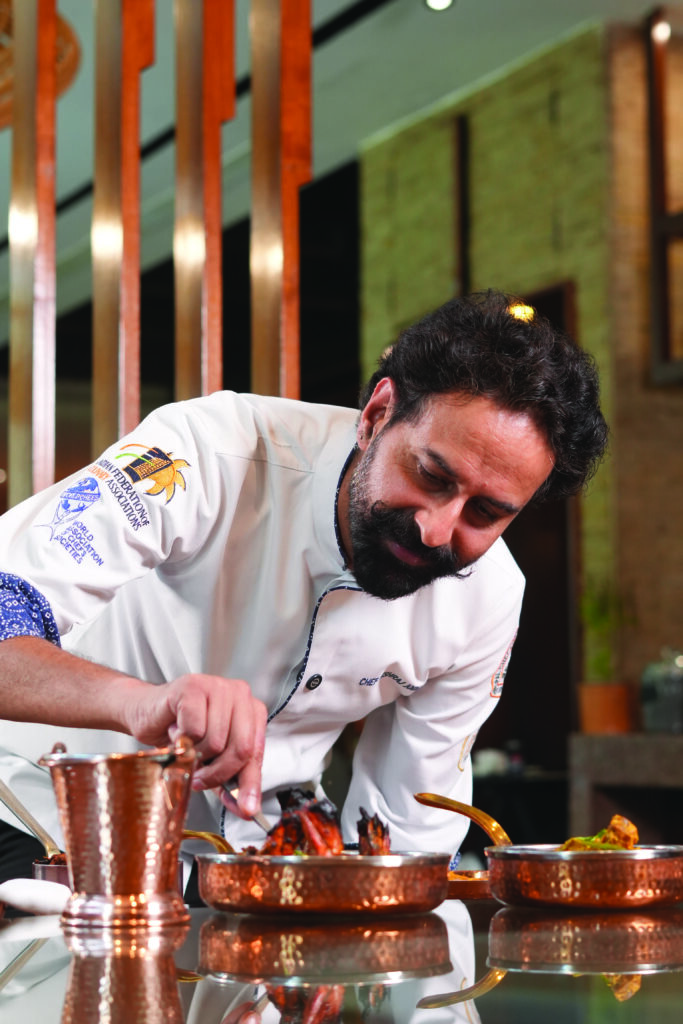
(Chef Akshraj Jodha is the 14th descendant of Rao Akheraj of the
Akeraj Deolia/Ajmer lineage. He has worked with some of the top
hotels in the country as executive chef and now consults and cooks
the historic food of his region and lineage, taking it to different parts
of India and abroad)