The stakes on your Iced Spirulina Spanish Café Latte just got higher!

With India’s best chefs and restaurant companies entering the booming Gen Z coffee market, it is no longer just about social-media trending matchas, iced shakertinis and collagen lattes. Cafes are notching up revenues equalling what bars made three years ago at their peak, and premiumisation by way of gourmet-casual-global food to go with the coffee is hotting up. Will buzz-led Gen Z become loyal?
By Anoothi Vishal
I just spent a few days with a cohort of five Gen Zs to emerge with this insight: cafes may just become the most lucrative restaurant business in the next few years, ahead of bars (though not QSRs). In fact, from what I hear, a few probably are making as much money as bars in their hayday.
Having been a fly on the wall to the conversations of my Gen Z cohort over a full weekend, listening to talk about iced americanos with French fries (!), inexplicable food choice of the young just weened-off McDeez, I dug for further information on how Gen Z is consuming food and drink. And a few things became immediately clear. 1. They are, even in India, consuming less alcohol than the older generations. 2. While they may go “clubbing”, as I was told, on occasion and dress up for that, they prefer casual clothes and formats with quick food and drink. 3. “Meet ups” involve not extended conversations (over drinks in bars or long lunches in restaurants, as we did) but strolls, pictures, gym and cafes before quickly getting back to life online (?). Not all, as I am repeatedly admonished, are the same. But in many ways, the first digital gen fits this profile.
Cafés, fuelled by social media desire-ability, and I suspect Gen Z’s predilection towards rather quick and casual IRL runs and interactions (rather than the aimless human conversations of yore), are clearly doing well. In cities like Delhi (where GK II has the highest concentration of coffee places in the country, and Hauz Khas market has emerged as a new hub), in Gurugram filled with high rises and place after place offering matchless matcha or collagen-rich cold brew, in Mumbai but also Jaipur, Bhopal, Ahmedabad… there are so many new openings that one doesn’t care to count. India’s café (coffee) market was estimated at USD 425 million in 2025, according to IMARC, up from USD 400 million the year before. I have figures from The Knowledge Company showing this as the fastest growing segment, ahead of bars and even QSRs, in the organised restaurants business, with 6,400 cafes in 2025 slated to grow by a CAGR of 22.8 per cent to 17,900 by 2030.
These are just openings. What matters is whether these operations stay long enough to be profitable. And this is what I wanted to know. What has emerged from multiple conversations with those in the business of restaurants, chefs and restaurateur friends has surprised me. Some successful cafes in Delhi and Mumbai are apparently making as much revenue as Rs 1.5-2 lakh a day. About Rs 60 lakh a month: The same level of earning as many food-centric restaurants and even bars where earnings are typically quite high but shelf life low. Unlike full fledged restaurants and bars with higher food costs and large areas, these are smaller formats, with very limited food, staff and average per person spend. So to be able to make so much on coffee, matcha or just something iced and good looking is remarkable, and reflects Gen Z behaviour, as well as the fact that consumption in India, which has the largest Gen Z population in the world, will increasingly be defined by this behaviour. Which makes me say that for however much we tend to dismiss matchas and collagen lattes, it is serious business.
Cafes are the new bars
Anecdotally, Gen Z and younger millennials in metros like Delhi and Mumbai, are drinking alcohol much lesser than earlier generations, and going to bars is becoming increasingly occasion-led, which also explains why more luxury bars are coming up—but still doesn’t explain why so many bars are coming up in crowded markets. Regardless, the point to note is that bars or at least neighbourhood which were socialising hubs for an earlier generation, its “third spaces”, are clearly now going to be redefined or not exist. “Instead of saying let’s meet for a drink, people now want to meet for breakfast or coffee”, says Sahil Mehta, food consultant and chef who runs Paris My Love bakery in Delhi, one of India’s best. In my own experience too, it has become more fashionable to host and attend birthday parties held over gourmet high tea experiences, for instance, instead of bars.
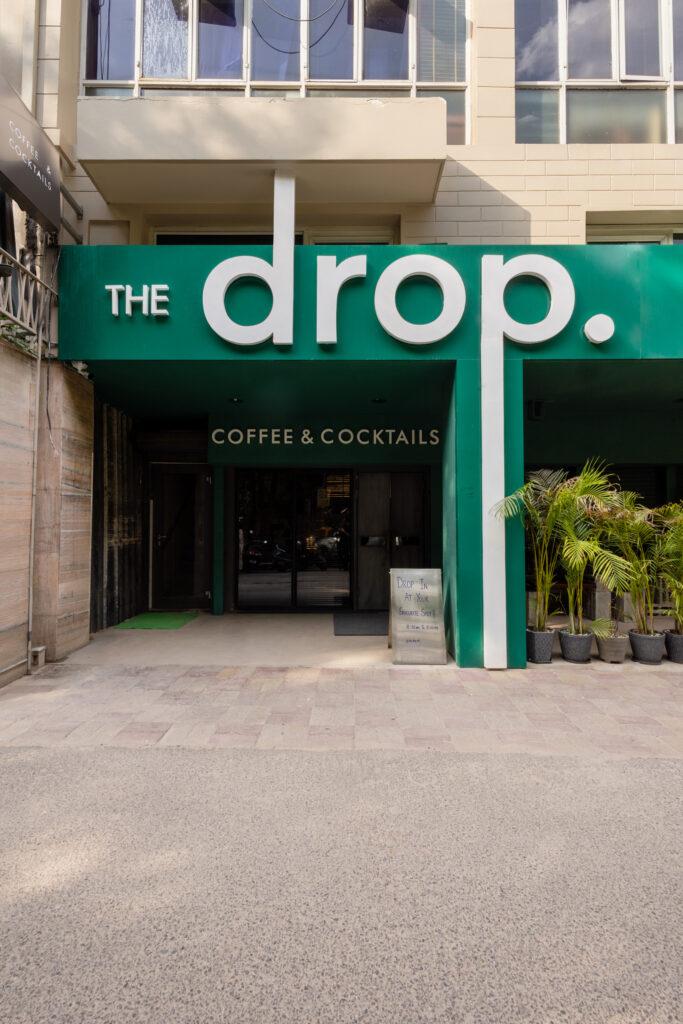
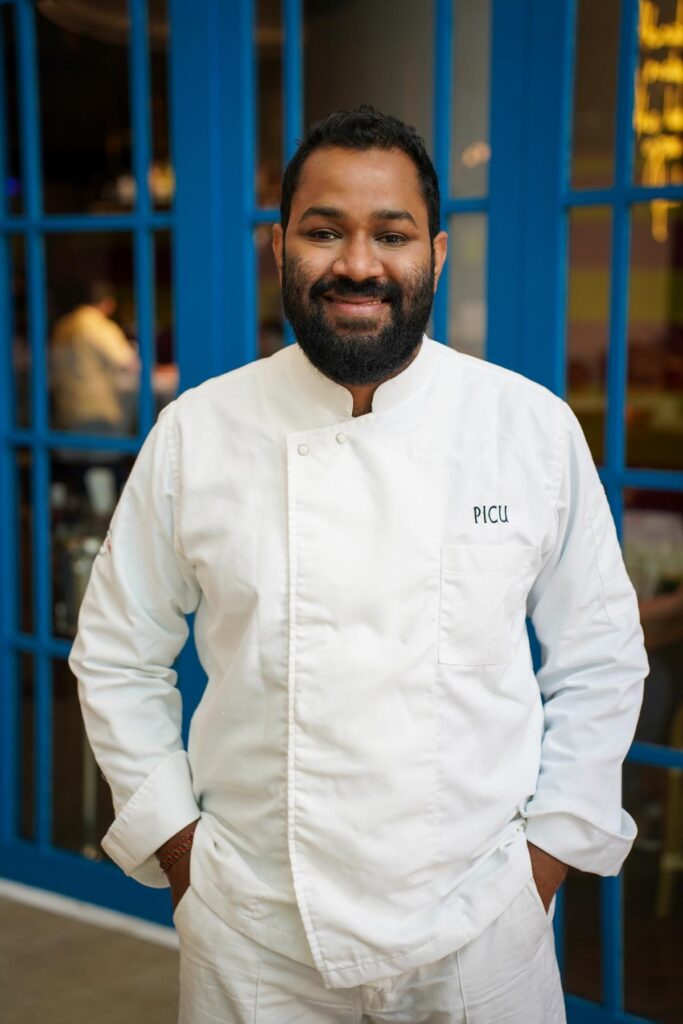
Cafes meanwhile is the emerging Gen Z hub. Otherwise denizens of the digital world, here they can go for some quick socialising, or as an every day ritualistic “third space” post gym, or for a routine between errands pick-me-up. “Everyone is coming from the gym, or is in gym clothes and every one looks good”, quips chef Rahul Gomes Pereira aka Picu, who has done the food at the new Drop café in Hauz Khas that has got at least a certain Delhi talking about it.
Most of my Gen Z cohort said they do not want to spend too much time in one place eating and drinking, and prefer cafes for reasons entirely different from how older generations carefully choose restaurants. “Most of my friends like cafes instead of going to full-fledged restaurants because it is quick, they don’t have to spend too much time sitting down, they can get something, and get on to whatever they want to do— like walking around a complex (or taking pictures),” says one. “We generally go to any convenient location and pick up any iced coffee or iced drink. No one is doing matcha any more because it wasn’t about health just a trend,” says another 17-year-old, “and even if we have a ‘meet up’ (two or more friends meeting), it is over very little food, probably one shared pastry,” she adds.
If cafes are the new “third spaces”, albeit quick stop overs IRL, the “third wave” speciality coffee culture is changing too.
Players like Blue Tokai, Subko, non-chain cults like Perch, and entreprenuers like Krittivas Dalmia (founder of the artisanal coffee brand Kaffa Cerado) were instrumental in shaping interest in speciality coffee that took baby steps towards cool from 2015-2019, and then exploded post-covid thanks to the number of videos and reels people ostensibly consumed. I had featured many of these first movers in my Economics Times columns. But even till 2019, many people within the Indian restaurantscape and hotels were of the opinion that speciality coffee will never go truly mainstream in a country, where as a veteran hotelier in Bangalore put it, “people like milk and just something hot, strong and sweet” (filter coffee).
The pandemic swept that argument away. Coffee is a thing in India today. Within homes, as younger millennials choose single origin beans, light and dark roasts, robusta vs arabica, and geek over how much to boil water, how to extract, pour overs versus French Press, nitro coffee, and Indian heritage— meaning not so much filter coffee as the Monsoon Malabar, a style of processing and flavour profile said to have accidentally been discovered in the 19th century when south Indian coffee beans were transported to Europe in ships, aided by the monsoon winds to shorten the journey. The sea air resulted in the beans maturing and losing their greenness and acidity; Indian coffee has long been exported to Europe, where many Italian espressos in fact use Indian robusta. But when it comes to Gen Z, the café culture is driven not so much as a passion for and interest in this third-wave speciality coffee (available in many well-to-do homes) but in insta trends that are imported.
Every generation has had its café culture: In the 1950s-80s, it was the coffee house as an intellectual hub. In the 1990s-2010, India discovered the cappuccino. And then from around 2010-2022, we were slowly brewing speciality coffee, as cafes and bars became co-working spaces. Now, as life is lived online, the café culture comes via Americanisms, including K pop or Japanese kawaii aesthetics, coffee raves et al. Given how fast trends fade, the question then is: can customer loyalty in this booming space be ensured. Creating premium cafes that are distinct and chef led is one way in which major restaurant companies and well-known chef and restaurateurs are attempting this.
From imported aesthetic to gourmet and rooted
While countless cafes with trendy coffee (and other drinks) programmes have been opening, how many do you remember? And how many would you or the Gen Z in your home consciously choose to go back to? While Gen Z clearly shows a preference to following “trends”, and casual but quick getaways, less matcha moments need not be condemned to oblivion after one second. Serious chefs and some of the biggest restaurant companies in India are now looking at cafes to scale but with enough gourmetisation to attract repeat customers and ensure loyalty. This is the exact strategy, bars used 10 years ago (and continue) to become more premium experiences. People came to drink but stayed and paid more for the food.
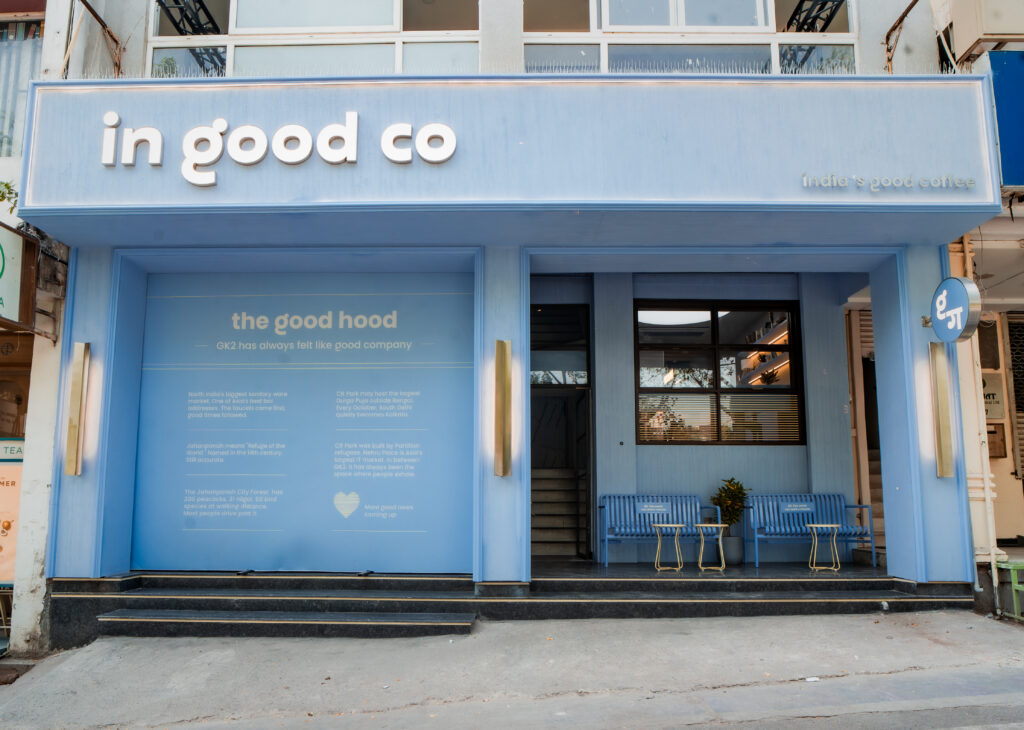
I went to the launch of In Good Co by the Aditya Birla New Age Hospitality Group (ABNAH), in GK II, M Block, with perhaps the highest concentration of cafes in the country. In Good Co is a vibrant, obviously Gen Z space, that lifts you up as soon as you enter its pretty powder blue-hued interiors. Hanging out with Udai Pinali, the group’s CEO (Udai is an IIM Bangalore alumnus and was a part of completely different businesses before being asked to oversee the hospitality arm), I discovered that ABNAH has in fact spent two years studying Gen Z lifestyle. Many of these are evident at In Good Co. These also coincide with my own informal findings.
For instance, amongst the “coolest” drinks I sipped on that afternoon was not coffee at all (though there is a full-fledged coffee programme in place with the likes of the iced Toffee Nut coffee) and not even the Coconut Cloud Matcha. Instead, it was a pretty lilac shaded blue pea flower infused refresher that invited compliments from the next table! My Gen Z cohort too says that what they want is not necessarily coffee (or matcha) but anything attractive and well cold, and natural! But Udai also exhorted me to try the chai. Considerable thought was given to how to make this: Whether it should be just ginger, or ginger-cardamom, how much milk et al. The thought is that since this is a café for the contemporary, global Indian, it must reflect not just imported ideas but local tastes that coexist in the way we eat and drink. If Gen Z patronises tapris, there is no reason why they may not drink it in a café! The bakes are fresh, croissants, sourdough toasts with avocado but also Indianish flavour, and the staff is told to be themselves and speak in either English or Hindi, whatever comes naturally. The effort very much is to reflect a contemporary Indian youth culture, including in the food, and thus cut through the clutter of generic cafes all around us.
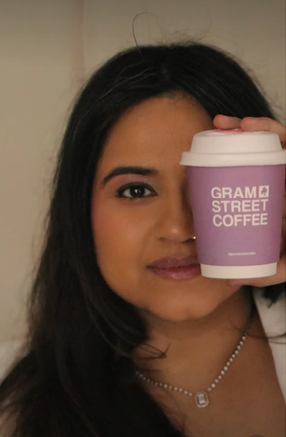
At Rakshay Dhariwal-owned Drop (Rakshay started PCO, and kickstarted the modern cocktail culture in Delhi about a decade ago), the launch menu is limited but high quality by a chef of Picu’s calibre (Picu has been a TFTA Trailblazer and one of the best chefs in India). The pizzas are creating a stir and Picu says the demand for food is such that they are planning to add more items to the menu and a breakfast menu too. Quality sourcing, clever inventiveness and a layering of indulgence and comfort is what Picu says he is attempting. This casual-gourmetisation is again what luxury bars in India are now attempting but for a different profile of older customers who are discerning. Another of the NCR’s much-talked about recent café launches is by a star chef. Vanshika Bhatia has opened Gram Street in Gurugram — with cute K Pop aesthetics, a compact space with limited seating, but food that is gourmet yet easy. Sandos with home-made sausage, spreads, and “farm-to-table” veggies. In Mumbai, Aditi and Aditya Dugar’s artisan bakery Twenty Seven Bakehouse was hiring baristas earlier this year, perhaps to target the same Gen Z café-going set, and their high-quality bakes and pizzas can be had at Blue Tokai in Mumbai. And consultant chef Sahil Mehta, arguably India’s number one baker, tells me about how café clients from Mumbai to Bhopal are approaching him to do his luxury croissants and European fare. He was brought in by the owners of the Silk Road coffee shop in Mumbai’s Aramnagar all the way from Delhi to deliver his premium croissants and bakes there.
A generation ago, cafes thrived on “modern” chaat and by blurring boundaries between casual restaurants bars and coffee places. With Gen Z, it is “something iced, healthy and instagrammable”. Will cheffy but global food ensure loyalty, post the buzz?