The Unbroken Mithai

 From the Vedic apupa, ancient sesame laddoo, or ghee-laced pucca khana to modern barfi, sandesh and modak, the long journey for Indian mithai is in fact part of a long cultural continuum. How did this unique tradition evolve? And why is mithai so meetha?
By Anoothi Vishal
It is the season for mithai. Modak, mewa– pagi hui, pheni, ghewar, prathaman… all the ghee-, coconut-, milk-, sugar- infused confections that are part of India’s ancient mithai tradition are associated with specific festivals that begin during the monsoon, the most powerful and distinct Indian season, and continue through autumn.
As we savour the ritualistic and celebratory sweets, it is worthwhile to understand how the Subcontinental mithai is not just kuch meetha— deemed too sweet, by many —to be indulged in and entertained by. Instead, mithai is cultural; its deep roots in Ayurveda, that treats ingredients and their combinations as therapeutic, and in Vedic and Pauranic ritual dating back not just centuries but millennia showcase an unbroken civilisational continuum. The reason why traditional mithai, those motichoor laddoos from Kanpur, ghewar from Alwar, peda from Mathura, makhan malai or maliyyo from Benares, khaja from Puri and more have such a strong emotional resonance with most Indians, particularly those more rooted in their communities and cities, is because of this cultural memory. No modern experiments with fusion; confections that bung together individualistic flavours and rely on “western” flavour charts have the same pull of patrons than the most traditional of our sweets – seasonal and hyper regional.

Mithai is the unbroken cultural memory of an entire Indic civilisation, despite the variety that it exhibits through geographies. And any attempt at understanding – forget “bettering” — it is incomplete without a deep dive into the historic, ritualistic and Ayurvedic moorings of its making.
Constant experimentation has added layers to mithai and aided its evolution via the arrival of new ideas and cooking practices in communities, yet a study of ancient or medieval mithais show that while there have been tweaks and changes, many of the “original” forms from even 2000-1000 years ago are still intact. Ayurveda, in which seasonality is important and food is seen as nourishment for the wellbeing of different body types forms the basis of much of this tradition as do rituals of worship and prosperity that govern choice of ingredients, and cooking methods. Indian cooks may intuitively understand some of these practices and flavours, yet how and why mithai evolved is incredibly complex.
From Apupa to vividh mishtan
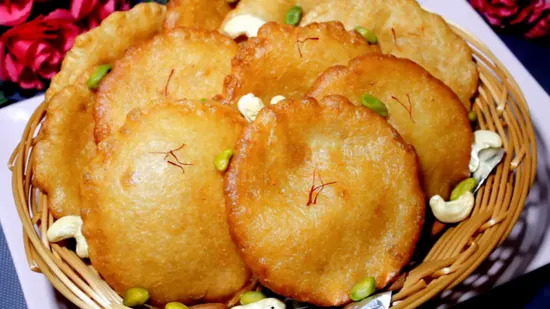
Among the earliest sweets of the Vedic age are the apupa, mentioned in the Rig Veda. These were cakes of barley (a grain mentioned in the Rig Veda as “yava”) boiled or fried and then dipped in honey. Today’s pua, made for the autumn festivals, and malpua, made during monsoon festivals such as Rakshabandhan can be seen as a continuum of this simple item — even though pua and malpua are now made with wheat, which replaced rice and barley as north India’s dominant grain somewhere between the 7th and the 12th centuries. In the 7th century, Vaghabhatt, the Buddhist physician, mentions rice and barley as leading grains, but by the 12th century Manasollasa, wheat has replaced these as the dominant cereal in the north and the west.
Rice pithe of eastern India are also a carrying forward of the ancient apupa, and a throwback to the ancient shali, as rice was called in Mauryan times, a rich man’s grain connoting prosperity and auspiciousness — as it continues even today in almost every ritual and festival in India. That’s why chawal ki kheer is such a pervasive and popular dessert too all across India whether you call it payesh or payasam too. Kheer, the name, borrows from ksheer, the Sanskrit word for milk — a prized complete food in Ayurveda, deemed sweet, heavy and nurturing and used in rituals of worship.
Autumn varieties of rice was considered the best in ancient India, where varieties such as the Mahashali were reserved only for royalty. Echoes of this seasonality can be found in rituals where rice kheer is a speciality on the autumnal Sharad Poornima, when it is cooled under the full moon in early October (in the lunar month of Ashvin, devoted to the twin Ashvins, gods of healing). The 16th century Bengali Shakta work Chandimangala mentions kheer as a prasad for the Pauranic goddess, whose puja is one of the biggesh autumn festivals in India.
But mithai would not have evolved the way it did but for one indigenous ingredient. We have the diverse even too-sweet “vividh” mishtan because crystal cane sugar was an early Indian invention. Sugarcane is indigenous to India. By the time Alexander’s army encountered it in India, crystal sugar was already being made by evaporating the juice. The Greek voyager Nearchos of Crete mentions “reeds that produce honey” (a reference to sugarcane) and “amber coloured rocks” (a reference to unrefined sugar) in his version of Indica. There is also a mention in Buddhist sources of a Chinese delegation visiting Emperor Harsha’s court around the 7th century to study sugar refining.
The Chinese-refined sugar would come back as “chini” to Indian kitchens in subsequent centuries. But both gud and shakkara were prized, worshipped as signifying prosperity or Lakshmi (which is why so much white mithai and toys made with sugar are Diwali offerings), and became instrumental in creating temple offerings in the Vaishnav and Shakta traditions which celebrate material wellbeing. Moulded sugar toys find a medieval mention as Diwali tradition, we see refined white sugar dotting the likes of bal mithai in the sacred sites of Uttarakhand, and misri or bura sprinkled over makkhan in Vrindavan and Kasi on cold winter mornings. Then, there is chashni or sugar syrup used to dip the honeycoombed Ghrtapura (made of wheat and fried in ghee) of Surat mentioned in medieval Jain literature, post Harsha — a mithai which is very obviously a predecessor of the modern day monsoon mithai, ghewar, of Gujarat and Rajasthan. Chashni or sugar syrup is also used to set various seeds, makhana and dessicated coconut on thaals during Janamashtami. It may be a disappearing tradition now found in just a few homes but connoted fertility and the birth or quite literally seeding of life during the festival celebrating Krishna’s birth.
Sesame, coconut, chanaka: The auspicious ingredients
While mithai connoisseurs of different states and cities take pride in the provenance of their distinct mishthaan, a study of ingredients shows a common strain is what were regarded as ritualistically auspicious and thus used to craft the mithai. Sesame laddoo are in fact one of the oldest mithais of India—mentioned in ancient Sutra literature, as per KT Achaya. Indeed, as an oilseed native to the Subcontinent, til or sesame is used as a food important in worship and ritual, including in Gaya, while worshipping the ancestors. Whether it is the til-gud of central India or the flaky khaaja of Bihar, Orissa and Bengal, or the soft white til laddoos of northern winters as also the later day revadi and gajak of Punjab, sesame has been culturally a prized and important ingredient all across the country.
Chanaka in Sanskrit, or the gram is another ingredient widely used in all sorts of mithai—in besan or moti choor laddoos, as sweetened daal used in many offerings and celebratory foods, and as filling or a whole host of sweet delicacies, including in Pooran poli. Two varieties of the chana exist in India—the small black “Bengal gram” from which besan is made is indigenous to India, while the other bigger gram arrived via a land route from the Mediterranean. In every part of the country, this is deemed an auspicious ingredient fashioned into celebratory delicacies and festive eats.
Coconut, Achaya says, does not find a mention in early Vedic literature and may have arrived from Sri Lanka. It is of course all pervasive in rituals all across the country and not just in coastal India, and again an auspicious ingredient used to make laddoos, barfi (a later day invention, where ingredients are combined with milk solids to give a white coloured mithai that takes its name from baraf or snow), and Ganpati favourite modak.
While the best modak we know and appreciate today are the gently steamed rice flour dumplings stuffed with coconut, there seems to have been no distinction between a modak and a laddoo—the favourite food of Lord Ganesh—in early religious iconography and literature. Ladduka finds a mention in the epics, according to Achaya, as also in Ayurvedic literature, Sushrutha Samhita. Early Tamil Literature meanwhile mentions a laddoo like sweet called the moodgam, apparently a laddoo in a rice flour casing. The modak may have evolved from this idea, with steaming arriving in southern India ostensibly as an influence from Indonesia during the Chola period.
The round modak/laddoo like unniappam of the Ganesha worship in Kerala seems likely an extension of the same idea of a ball-like sweet made with “auspicious” ingredients—in this case a combination of several! Rice, coconut, banana (another heavy and sweet food deemed fit to balance the vata or air dosha at its height during the monsoon by Ayurveda), sesame seeds and ghee!
 Kaccha vs Pucca khana
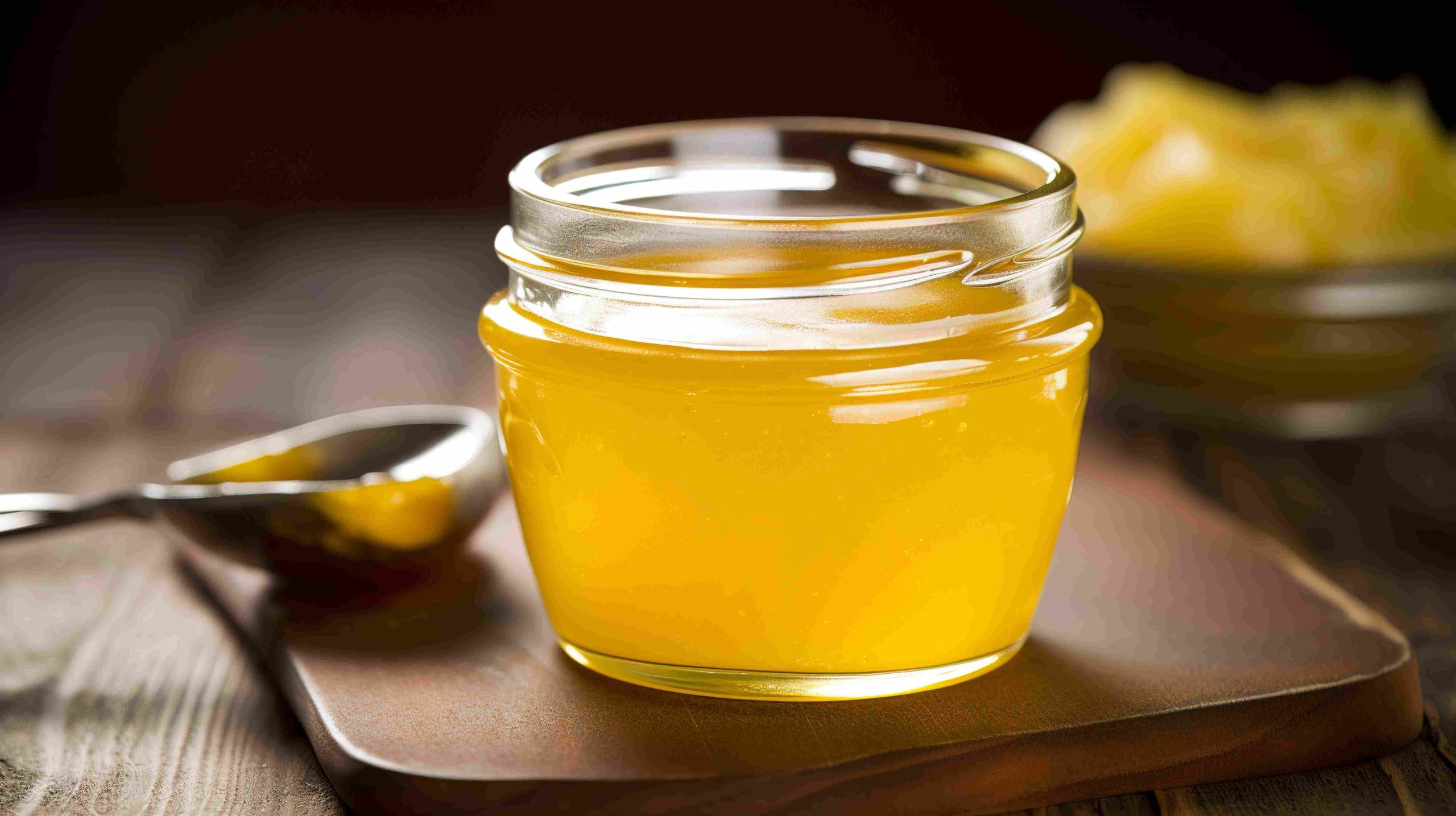
Why are so many Indian sweets laced with ghee? If this has always bothered you, you are likely not acquainted with an early and now forgotten division of Indian food into kachcha and pucca khana. Kachcha khana was food not cooked in ghee—whose importance as a medium for cooking cannot be stressed enough in the cultural and culinary history of the Vedic civilisation. Ghee was one of ancient India’s exports to the Roman world too by the 1st century AD, where the wealthy used it in worship. In India, ghee was not just a ritualistic medium for worship with fire but an ingredient that made everything wholesome and pure. Kachcha khana, where the cooking process did not begin with frying in ghee (such as boiling rice or making kadhi) thus required more careful and ritualistic handling. It was food cooked in homes and not stored, as also in the temple kitchen to be offered as prasad in a highly ritualistic manner. Pucca khana, sanctified by ghee, could be stored, sold outside the temples and apt to travel with. Most mithai cooked by halwais outside homes was thus pucca khana, ritualistically pure because it had been cooked in ghee. Frying was a way of increasing the shelf life too of food that could be distributed.
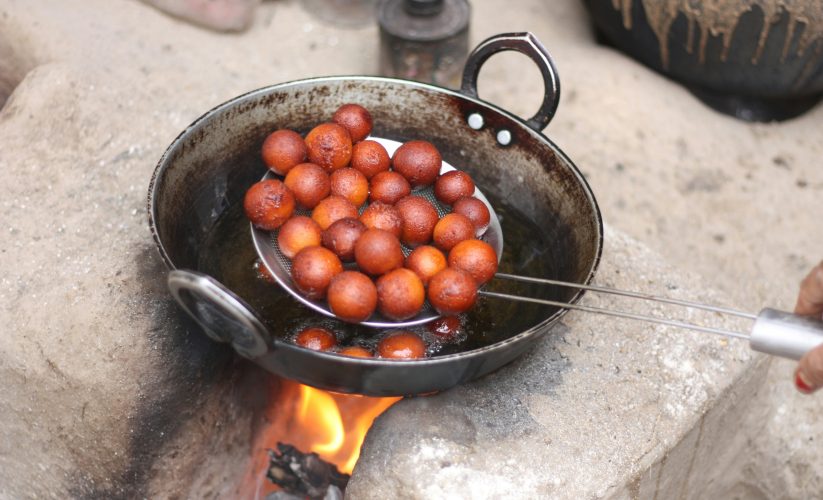
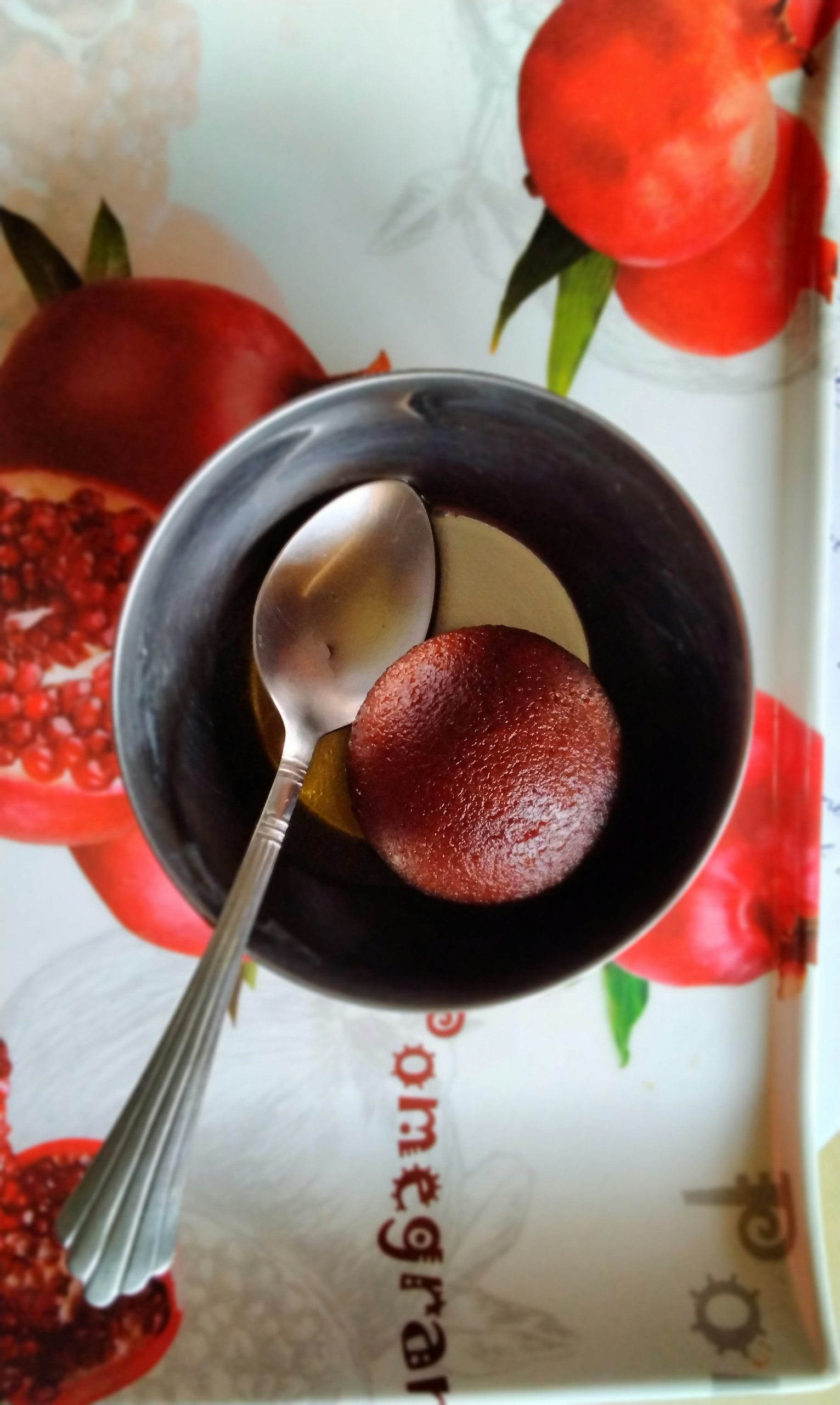
This is perhaps the now obscured reason for why everything from gulab jamun, jalebi to halwa, all medieval mithais inspired by similar sweets in the Middle-East are also fried/cooked in ghee in India instead of being, say, baked.
Milky ways
The other complaint I often hear from people is about Indian mithai being so, well, milk-forward, or khoa-ingrained! 5000 years of cultural memory and practice cannot (and must not) be displaced despite new influences and trends!
Curd is one of the oldest foods mentioned in the Subcontinent’s literature—set not just by using a little left over culture as a starter, but also by using acidic fruit such as ber. Curd that could not be used immediately was churned into butter or makhan. From that stems the makhan-misri delights associated with temple foods. This simple confection sold by vendors outside the temples of Vrindavan or Kasi, on saal leaves in winters, and alongside pucca khana such as poori-kachori, spurred not just the urbane cult of Daulat ki chaat, or Nimish in Delhi and Lucknow in the early modern period, but also a breakfast tradition of street food in the bazaars of every city in the Subcontinent.
People are also perplexed at India, apart from some regions in the mountains, not having a cheese making tradition despite the prevalence of dairy in the Gangetic plain. A Vedic injunction against splitting the ritualistic, Ayurvedically-prized milk meant that other forms of thickened milk products – rabdi, khoa and chenna, initially connoting a less concentrated form of khoa—were obtained without acidification of surplus milk. These became the building blocks for mithai. Sandesh, a lighter successor of the peda, began to be attractively made in auspicious shapes like the conch shell, a harbinger of “good news”, or “Sandesh”.
It was only with the Portuguese influence in Bengal in the 17th century that chenna as we know it today—a less dense product obtained by splitting milk with an acid—was incorporated into mithai-making. The cult of the Bengali rosgulla was born—a split from ritual, and yet with a nod to it.