Why Travel, At All?

From science fiction to Beat Gen writing to the absurdists… literature has championed travel for hope and connection, even when it is staying in the same place!
By Ashwin Ahmad
Science fiction can best make sense of modern-day travel. Today’s world of facial scans, apps, virtual reality and AI that has become de rigueur for the modern-day traveller was envisaged by authors decades ago who warned of the dangers of over-reliance on machines. As Arthur C Clarke wrote in 2001: A Space Odyssey. “The HAL 9000 computer, with its calm voice and limitless memory, controlled every system on the spacecraft. Every course plotted, every manoeuver executed, every life-support function monitored by circuits and programs. Without HAL, the ship would be a tomb, drifting silently among the stars. Here was a new kind of partnership: man had built a machine to carry him through the void, yet the machine itself might outthink its creator.”
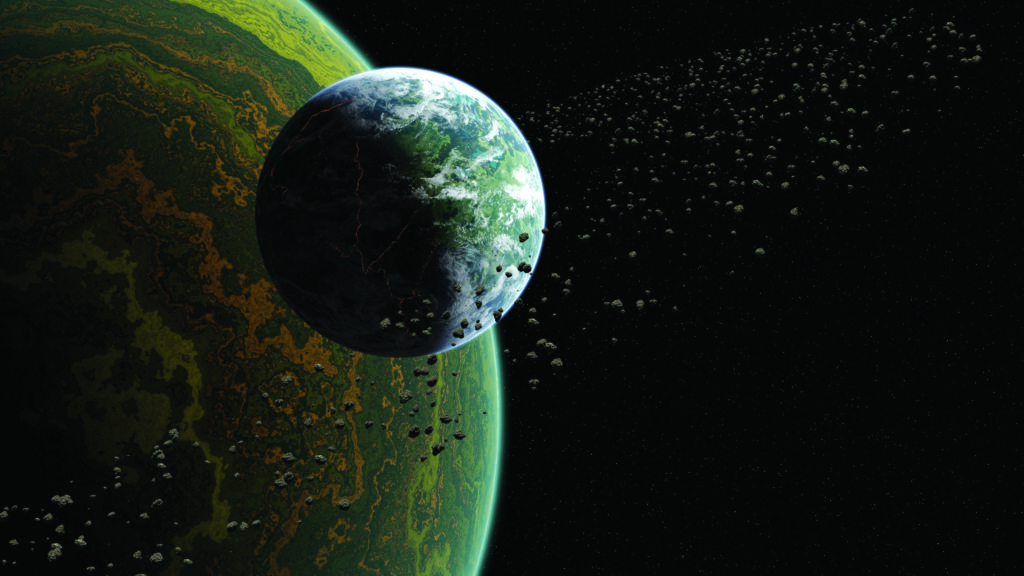
The idea of man surrendering control to machines when it came to travel was one fear but many science fiction writers believed the consequences of travel could and should be attributed to man alone. In The Martian Chronicles Ray Bradbury argued it was basic human desire that prompted men of Earth to come and conquer Mars. “They were leaving bad wives or bad jobs or bad towns; they were coming to find something or leave something or get something, to dig up something or bury something or leave something alone. They were coming with small dreams or large dreams or none at all.”
Bradbury then goes on to show despite their bitterness, the men ironically create the same conditions on Mars that they lived with on Earth. Such warnings prompt us then to ask the big question: is man travelling for the right reasons? And will the nature of his travel lead to greater damage to the Earth and beyond? For Jules Verne the answer to the second question was a firm no. Verne’s epic novel Around the World in Eight Days states quite clearly that we must travel even when there is no immediate impetus to do so.
The novel begins in a gentleman’s club where a lively debate begins on how quickly could man travel the world to which our protagonist, a London gentleman Phileas Fogg, states confidently that he can travel the world and return to the same club within 80 days. Fogg has no desire to travel or conquer the world but as he explains. “A true Englishman doesn’t joke when he is talking about so serious a thing as a wager. I will bet twenty thousand pounds against anyone who wishes that I will make the tour of the world in eighty days or less; in nineteen hundred and twenty hours, or a hundred and fifteen thousand two hundred minutes. Do you accept?”
At the end of the novel, when Fogg has returned home having won the bet, Verne cheekily points out that he need not have made the journey at all. “What had he really gained by all this trouble?” writes the author. “What had he brought back from this long and weary journey? Nothing, say you? Perhaps so; nothing but a charming woman, who, strange as it may appear, made him the happiest of men! Truly, would you not for less than that make the tour around the world?”

Verne’s tone is light-hearted but unlike the dystopian science fiction writers he views travel as necessary for humans to test their mettle and discover the world. Some argue his optimism was understandable because he was a writer in the 19th century who still viewed travel through a romantic lens and did not deal with issues of colonialism, racism and the two World Wars which had transformed the notions of travel for later authors. But not everyone agreed. Verne’s notion of travel as necessary is echoed by even those who were worried about the state of the world in the 20th century. Beat Generation writer Jack Kerouac, who famously wrote the first draft of his novel On the Road on a fifty-foot-long roll of paper, is one of them. Though Kerouac gives voice to the feelings of a generation which had grown up post-the Great Depression and World War II, he manages to retain the exuberance that travel brings. Kerouac’s reason for travel is simple: to meet people. “The only people for me are the mad ones, the ones who are mad to live, mad to talk, mad to be saved, desirous of everything at the same time, the ones who never yawn or say a commonplace thing, but burn, burn, burn like fabulous yellow roman candles exploding like spiders across the stars.” Such a sentence would possibly prompt even the hardest travel cynic to shed his worries about alien conquest and destruction of other worlds and grab his coat and boots and head out of the door.
Kerouac’s focus on the need for connection, on the need to discover people’s and cultures, is perhaps why despite the doom-laden prescriptions human travel continues to be seen as a hopeful enterprise as the Star Trek series illustrates only too well. However, such hope carries a caveat that states that despite man’s best intentions, events beyond his control can turn the most joyful mission into a perilous one. This is best illustrated in H.G. Wells’ book The Time Machine. Wells’ nameless protagonist simply known throughout the book as “The Time Traveller” presents an interesting conundrum. While he takes much delight in explaining the mechanics of time travel, and what man will soon be able to achieve, he also is well aware that there is little he or his audience can do to repair what he sees as the collapse of human civilisation in the future. The journey therefore which starts with such promise soon gives way to a despair which neither the protagonist nor his group of friends can rectify.

The other contention that travel will broaden the mind and change things in any larger way for the better is also at risk. In The Hitchhiker’s Guide to the Galaxy Douglas Adams points to the insignificance of man in the cosmos and therefore argues that the journey as result has itself become moot. “Space is big. Really big. You just won’t believe how vastly hugely mind-boggingly big it is. I mean you may think it’s a long way down the road to the chemist, but that’s just peanuts to space.”
In Adam’s telling therefore it matters little whether we travel or not and what attitude we adopt or not because we simply are too small and insignificant to matter in the larger scheme of things. The solution therefore if there is one is to remain practical throughout the journey rather than look for larger meanings or try
and influence the destination. As he points out in his absurdist fictional novel that a “towel is about the most massively useful thing an interstellar hitch hiker can have” because it provides warmth and endows the owner with respect. For instance if a “strag (non-hitchhiker) discovers that a hitch hiker has his towel with him, he will automatically assume that he is also in possession of a toothbrush, face flannel, soap, tin of biscuits, flask, compass, map, ball of string, gnat spray, wet weather gear, space suit etc.”
Adams’ humour does have a serious side here. Rather than worrying about the journey which one can’t control man would be better off pondering the things he can and simply enjoy the ride into the great unknown. Such a notion where we are all too often concerned with the minute-to-minute process of where we are going and how we are going to get there may be a refreshing attitude to adopt when one considers one’s next journey. As the Red Queen tells Alice in Through the Looking Glass “it takes all the running you can do, to keep in the same place. If you want to get somewhere else, you must run at least twice as fast as that!” Such speed in her view takes the joy out of travel and maybe she has a point. Travel is where you would like to be not where you think you should be. Sometimes that just may involve not taking the journey at all.