Crab is just a medium… it is the ghee roast and cinnamon that’s the hero

While every century has had its definition of “modern”, the basis of Indian gastronomy has always been spices and modern Indian food must play on this strength
By Himanshu Saini
Talking about Indian food is not an easy task. It’s like describing the food pattern of a continent that has gone through many cultural evolutions over thousands of years. But let’s focus on what is known as “modern Indian” food today, all over the world.
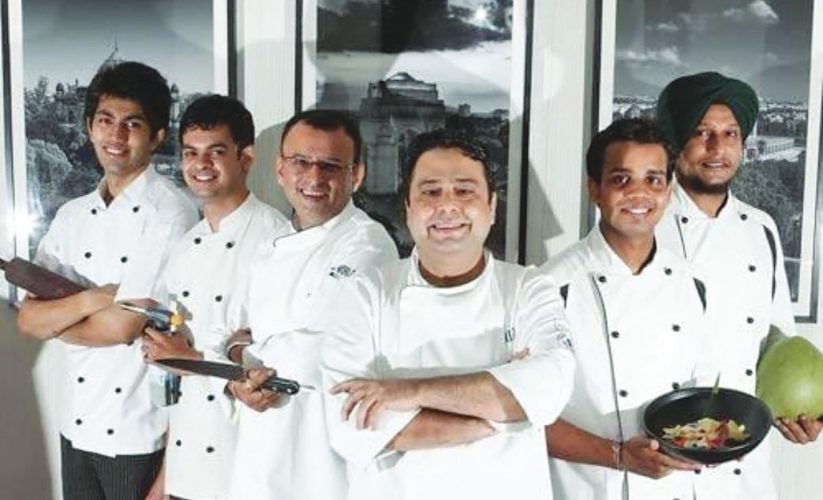
In the last few decades, Indian gastronomy has seen a shapeshift which is described loosely as “Modern” cooking. For me, as I finished my culinary school and landed straight into the world of Chef Manish Mehrotra at Indian Accent (that kickstarted the popular trend towards “modern” Indian; food plated in novel ways with tweaks to traditional cooking), this was an exciting prospect: how every idea was entertained and every “classic” dish was challenged to see how far the envelope could be pushed to.
In fact, what we were doing then, and continue to, is question the idea of “classic” itself. if you look at food history, everything at some point was perhaps termed “modern”— until it became a part of daily cooking. In India, the Portuguese introduced us to new ingredients such as tomato, potato, vinegar, and cashew nuts around 15-17th centuries. Can you imagine cooking without tomatoes now? Or, what was it like to cook without it in the past centuries?
Mughlai cooking (Central Asian dishes and techniques introduced by the Mughal emperors, which slowly got amalgamated into Indian cooking, with the use of spices) is today an inseparable part of Indian restaurants even though it must have been inventive back then. To call something modern, we must define what is traditionally “Indian” then. The answer, for me, lies is the one constant down the ages: spices. Spices or our “sone ki khaan” lured the British, French, Portuguese, and the Arabs to India. International trade flourished. The silk and spice routes served to exchange ideas, recipes, and ingredients.
My biggest learning from Manish Mehrotra…
For me, modern Indian cuisine is just a phase, eventually it will all be termed as Indian cuisine as we go forward. Indian food has followed this path of evolution where the glossary of ingredients has always expanded from time to time. And that was my biggest learning from chef Manish Mehrotra. He has adopted ingredients from around the world and made them his own. Umeboishi, galangal, wasabi, blue cheese were never a part of Indian cuisine but now you see them in every other Indian kitchen.
Indian food is always being very powerful, strong and heavy in flavours, which makes it both popular and unpopular at the same time. My mission is to refine Indian cuisine and dining where flavours and spices are not comprised, instead balanced in a way that every morsel is a meal on its own.
What we do in our kitchen as an Indian restaurant is to elevate and highlight food that has been close to our hearts growing up, food that has been a family specialty or an evening street stroll ritual. My team and I believe in serving food that we would like to eat if we were to go out, or something we want to cherish for life. We do not like to complicate a diner’s experience but rather evoke emotions that may feel familiar but interpreted through our lens.
Growing up in an Indian household, there was no culture of buying commercially available spice mix (MDH, Everest chaat masala or Kitchen King). We have seen our grandmothers buying and grinding spices, making their own garam masala, using them for tempering or as khada (whole) masala. As Indians, we sometimes we forget our roots and do not realize that the potential and strength of our cuisine lies in our spices.
Black truffle thokku, khandvi icecream sans khandavi
At Tresind Studio, in our menu termed, ‘Rising India’, we serve dishes inspired from different landscapes of the country—the Thar desert, Deccan plateau, Coastal plains, Northern plains and the Himalayan mountains. For us, the dishes narrate the story of each region, its produce, spices, culture and historical presence. Most of the dishes on the menu have spices as the hero.
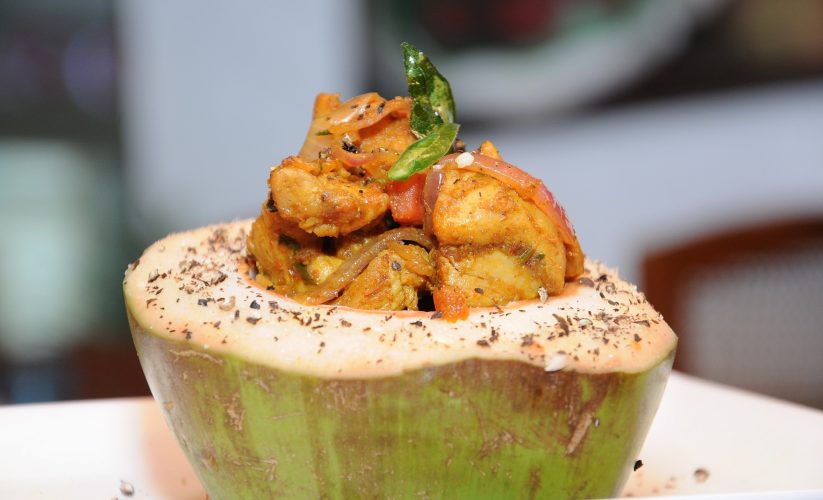
For example, the khandvi ice cream has no khandvi. It’s the tadka of mustard seeds, turmeric, green chili and coconut in yogurt that makes the dish reminiscent of the flavours of khandvi. The dish of crab ghee roast focuses more on the ghee roast masala than the crab. The spice blend is such a beautiful symphony of sweet spices. The dish is further assembled in a bark of cinnamon which is finished in an oven. The final notes of cinnamon makes it a sensorial experience uplifting the sweetness in the crab. Hence, for us, the hero of the dish is the ghee roast masala and cinnamon, the crab is a medium that highlights the spices.
At Tresind studio, a dish of galouti kebab presented as ‘kebab scarpetta’ immediately transports the guests to the streets of Lucknow. A dish famously known for its texture is not spoken enough about its harmonious blend of 18-20 spices. The term scarpetta is used symbolically here to describe ‘khurchan’ to our international guests.
The scrapings, almost burnt, and caramelized flavour of kebab and its spices is all what we crave and fight for. Pickles/achar/thokku gives us a different dimension and is used more than a condiment. Apart from salt, acid and oil, spices boost the flavours of achar. For some dishes we emulsify the blended pickles with honey to prepare the glazes and sauces. The thokku of fresh black truffle may raise some eyebrows but for me it’s a reality which is tasty, complex and original.
We don’t use expensive ingredients to justify our place in the world of gastronomy
When we look into the array of spices and the different ways they can be used is the most interesting part of cooking. The only limitation lies in our minds. Sometimes a simple tadka of mustard seeds, curry leaf, and chilli can add a spark to a dish. Or a simple roasted blend of milagai podi can complete a meal on its own if you eat it with a hot plate of rice and a dollop of ghee.
The key to elevating the traditional spices in modern cooking is to also understand the wider flavor profile and ingredients that can be worked together. When you run a modern Indian restaurant outside of India, you also consider how best you can amalgamate various international flavours that can complement the Indianness of the palate seamlessly without taking away their individual essence and that is the reason we place great emphasis on our in-house R&D. A zaatar podi would make a great condiment but to be able to use it to its full potential and justify the flavours is where one needs to have a technical understanding of cooking because modern cooking is largely a combination of modern technique and traditional flair.
We are fortunate to have our base in Dubai, the exposure to international ingredients and high-quality products has been immensely impactful and influential for our growth. The availability of fresh products, and a seamless and fair supply chain system is as crucial as other factors that play role in the wider eco system. We are able to use the best of supplies from around the world in terms of seafood or meat that only adds greater value to the cooking and overall dining experience. We do not depend on expensive ingredients to justify our stand in the gastronomy world. We know that our spices are far richer and therefore we put great emphasis on its quality that can highlight, complement and further enhance a particular flavour or dish.