TFTA summer book reccos for the serious foodie

From Odia food recipes to how the inherent sustainability of Indian kitchens flows into the cocktail culture, your food for thought is here
By Taniya Sahni
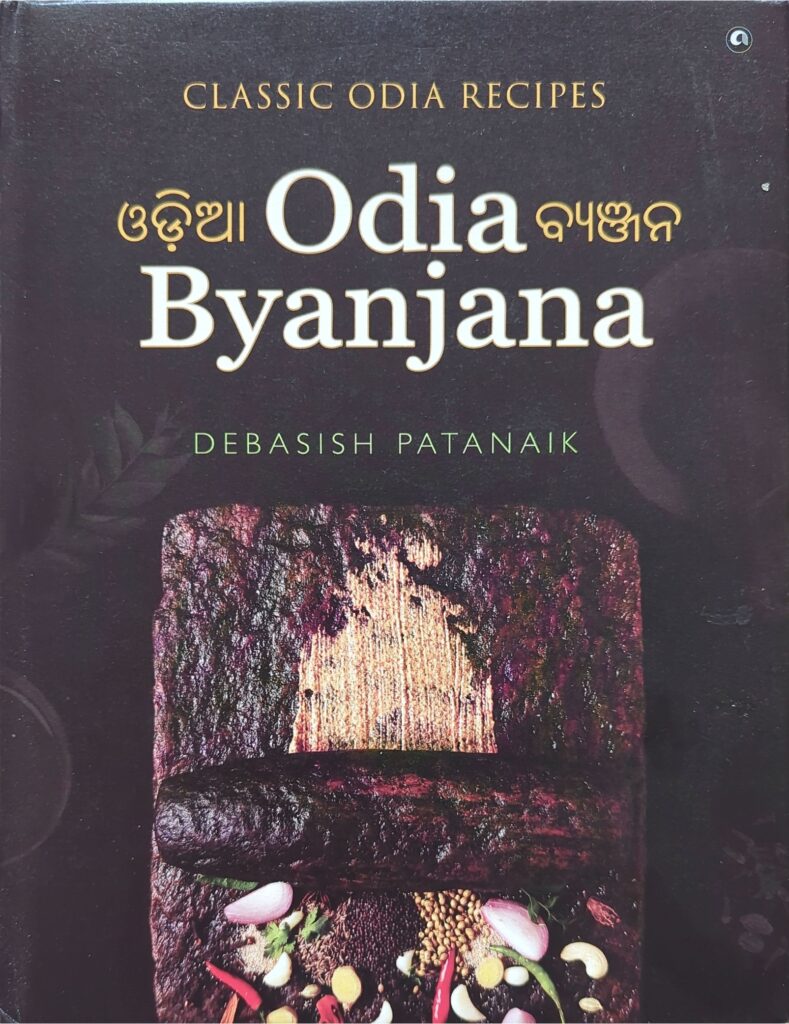
Odia Byanjana
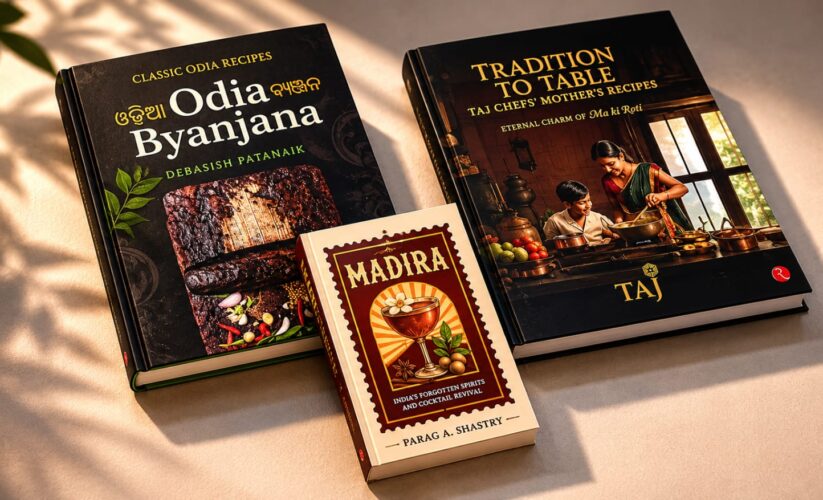
Conversations around Odia cuisine are steadily growing, and Odia Byanjana serves as valuable documentation of the region’s classic recipes and culinary traditions. The book documents 50 traditional Odia dishes spanning everyday home-style meals, street food, festive fare, and the famed temple cuisine of Odisha. It features an assortment of curries, mixed vegetable preparations, and several fish-based dishes that highlight the region’s local varieties of fish.
A close look at the recipes reveals Odisha’s hyperlocal culinary traditions and indigenous ingredients intrinsic to the cuisine, such as aambula (sundried salted mangoes), mandiaa (finger millet), and paanch phutana, among many others. Several recipes also reflect how Odia food celebrates balanced nutrition while thoughtfully using the bounty offered by both land and sea.
One particularly engaging aspect of the book is the contextual introduction that accompanies each recipe. These brief notes trace the dish’s origins, explain the regions and occasions associated with it, and highlight distinctive ingredients or culinary traditions linked to it.
Through its selection of recipes, the book captures both the diversity and regional character of Odia cuisine. From the humble Pakhaala, Odisha’s beloved summer staple, to Kanika, part of the sacred Arna Bhoga offered at the Jagannath Temple in Puri, the recipes traverse everyday meals, temple food, and coastal cooking traditions alike. There is the rustic Badi Churaa, an indispensable accompaniment to an Odia meal; Chhatu Besara, which celebrates the wild mushrooms that spring from Odisha’s rain-soaked soil during the monsoon; and Chingudi Chhechaa, a coastal preparation that transforms tiny fresh shrimps into a deeply flavourful relish. The book also features dishes such as Chunaa Maachha Bhajaa made with small fish, and Aloo Potala Rasaa, equally cherished in Odia homes and as part of Puri’s Mahaprasada. Seafood preparations like Maacha Aambila and Kankadaa Jhola further offer readers a glimpse into the breadth and richness of Odia food traditions.
The visuals are lush and inviting, although one occasionally wishes for deeper storytelling and more expansive narratives around the dishes, their histories, and the communities they belong to. The significance of Odia Byanjana lies not only in introducing wider audiences to Odia cuisine, but also in preserving these recipes for younger generations who may wish to recreate a taste of home wherever they are. The book is written by hotelier Debashish Patnaik of the DALMA chain of hotels, with contributions from Ritu Pattanaik, Chef Rachit Kirteeman, Sweta Biswal, Alka Jena, and Chef Abinas Naik.
The renewed interest in Odia cuisine in recent years makes the timing of this book especially relevant. Industrialist Harsh Goenka, chef Ranveer Brar, and several other culinary voices have drawn attention to the cuisine, while chef Vikas Khanna — who has also written the foreword — recently described dahi bara aloo dum as a “genius dish” on a podcast before recreating it at his restaurant.
Publisher: Aleph Book Company
Price: INR 1999
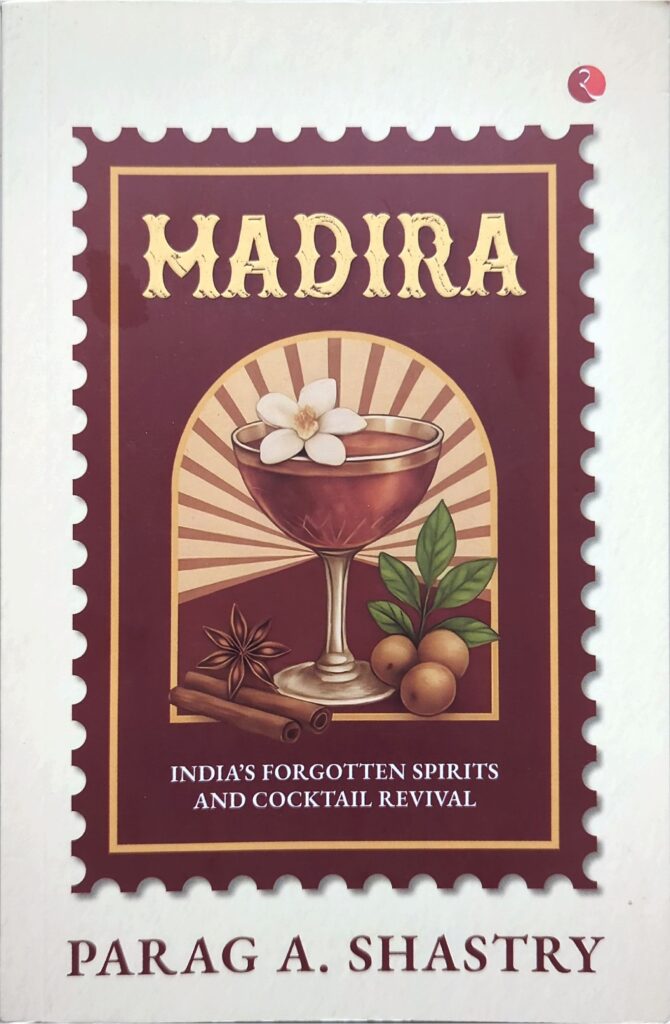
If you judge Madira: India’s Forgotten Spirits and Cocktail Revival by its cover, it delivers instantly — the design alone makes you want to pick it up. But what makes the reader stay is what unfolds inside: expect evocative storytelling, thoughtful cultural exploration, and recipes that are both approachable and inventive in Parag A. Shastry’s collection of 101 cocktail recipes.
At the onset, the author points to what he calls the “great erasure” — how the British significantly diminished India’s vibrant drinking culture with the notion that if it wasn’t bottled in Europe, it wasn’t worth drinking. He goes on to show how the inherently sustainable nature of Indian kitchens flowed seamlessly into the cocktail culture: overripe bananas finding their way into rum punches, leftover rice being fermented into rice beer, and countless such examples. Shastry also writes about cocktails crafted around the five elements.
Beyond the technicalities, the author effortlessly brings places alive: from “a bar in Jaipur that did not advertise” to a tiny bar tucked away in the narrow lanes of Lucknow with “no signage”, and even a teahouse in Shimla that transforms into a speakeasy, reached only after walking “uphill past the ridge and turning at the third lamp post.” The fact that Shastry grew up across small towns in Madhya Pradesh, Maharashtra, Gujarat, and North Bengal adds depth to the indigenous rituals and local brews the book documents.
The internet may be overflowing with cocktail recipes, but it is the storytelling that sets this book apart. Each recipe is preceded by a story. The standout ingredients are introduced briefly before the recipe is detailed — garnish included — followed by a teaser of how the cocktail finally comes together. I found myself returning repeatedly to the book for its use of Indian ingredients: clove syrup, jamun purée, chikoo pulp, toasted banana chip garnish, South Indian filter coffee syrup, a noon chai base made with Kashmiri tea leaves and baking soda, edible silver leaf, saffron strands, Assam tea, Mysore Pak garnish, and Naga ghost chilli.
Shastry deliberately avoids excessive technicality, assuming a reader is willing to improvise with both ingredients and equipment. To his credit, he also encourages substitutions, a dabba in place of a shaker or a katori instead of a jigger, making the book feel more inviting than intimidating. The book expands one’s understanding of how deeply Indian ingredients, memory, and geography can shape a cocktail. He also nudges the reader to pick the book according to season, festival or mood. In that, Madira works equally well as bedside reading, a recipe book, a source of cocktail inspiration, or even a starting point for mocktails. The production quality is excellent, and the photographs make the reading experience immersive.
Publisher: Rupa Publications
Price: INR 695
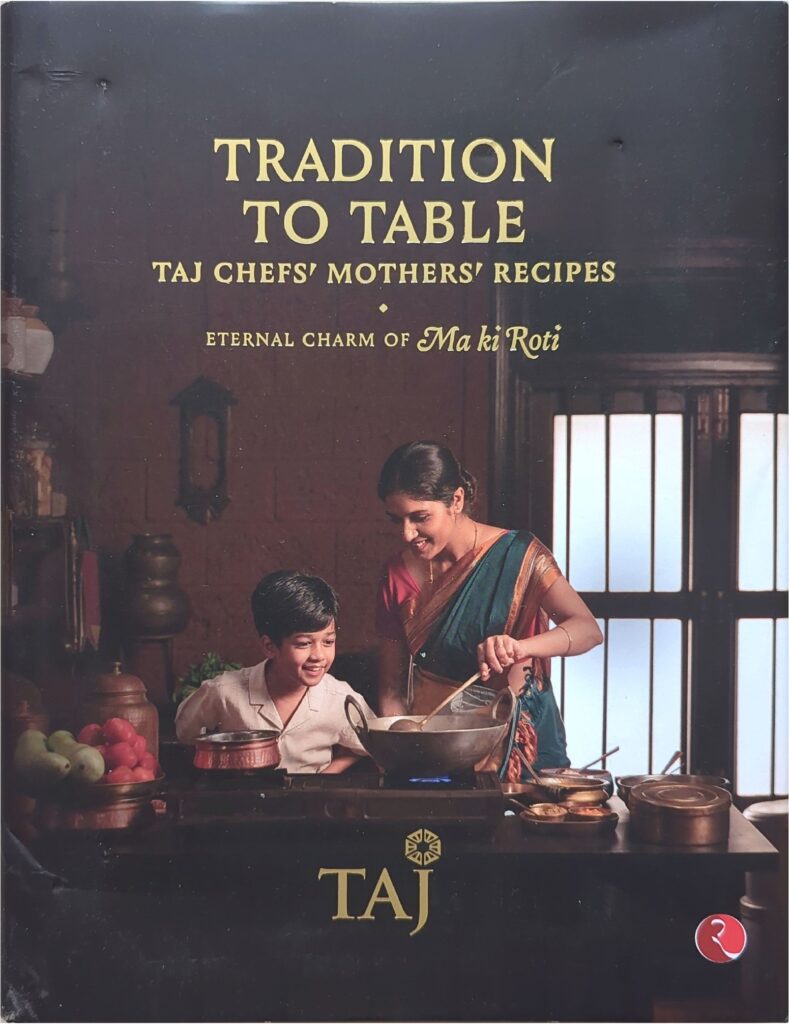
Tradition to Table: Taj Chefs’ Mothers’ Recipes
Tradition to Table: Taj Chefs’ Mothers’ Recipes sets out to capture the “eternal charm of Ma ki Roti”. The title is self-explanatory, and the book delivers exactly what it promises: a collection of recipes passed down by the mothers of Taj chefs across India. Produced as a large-format volume with glossy pages and abundant photography, it occupies the space between cookbook, keepsake, and coffee-table book.
The recipes are organised into the four broad regions – North, South, East, and West of Vindhyas, with individual chefs representing specific states and culinary traditions. From Rajasthan, Chef Mohit Tak shares recipes such as Chakki ki Sabji and Lapsi, while Chef Dakh Chaudhary of Taj Ganges, Varanasi, brings flavours from Uttar Pradesh. Punjab finds representation through recipes contributed by Pankaj Sharma (of Taj Swarna, Amritsar) and Manpreet Singh Malik, with dishes such as Parati Gosht, Kangira Gosht, and Ganne Wale Chawal standing out.
The section from West India is particularly diverse, featuring Shrutika Koli’s mother’s Bharela Paplet, Gitesh More’s mother’s Dalimbache Pohe, Amit Nagvekar’s Chicken Jeerem Meerem and Alle Belle, and Devaram Chaudhary’s Undhiyu. While the book begins with a clear regional structure, the classification occasionally feels uneven. Some chefs represent highly specific regional traditions, such as Coorg, while others speak for an entire state. Yet this inconsistency becomes easier to overlook because the book’s real strength lies elsewhere: as a tribute to mothers and the recipes that shaped these chefs before they stepped into professional kitchens. All chefs have shared what they learnt in their mom’s kitchens and the legacy they carry forward.
Each recipe is accompanied by a short note that explains its context, making the book approachable even for readers unfamiliar with Indian cuisine. Ingredients are listed precisely, and the instructions are straightforward enough to encourage readers to step into the kitchen. Most recipes are accompanied by photographs, though the quality of the visuals is uneven. While several images are inviting and beautifully styled, others feel more functional than memorable.
What ultimately lends the book emotional weight is the personal connection behind every recipe. More than a compilation of regional dishes, Tradition to Table serves as a record of culinary inheritance and family memory. The fact that proceeds from the book support the Ma Ki Roti Foundation further reinforces that sense of purpose. CEO Puneet Chhatwal introduces the book and Amrita Raichand has written the foreword.
Publisher: Rupa Publications
Price: INR 2500