Dubai’s New Restaurants Are About Culture, Not Flash

A slew of new indie and chef-led restaurants built around MENA cultures and
memories of homes are now the most sought-after Dubai dining experiences.
This is in sync with how luxury consumption is moving globally—when
hot reservations no longer connote exclusivity; instead, experiences that
showcase the authentic, the analogue and the craft are defining dining.
By Anoothi Vishal
It is a bright day in February. A week or so before the war
will start and disrupt our times.
Dubai is busy, windy, pleasant in the mid-day sun. I
am entering a rather peaceful precinct of Sufret Maryam,
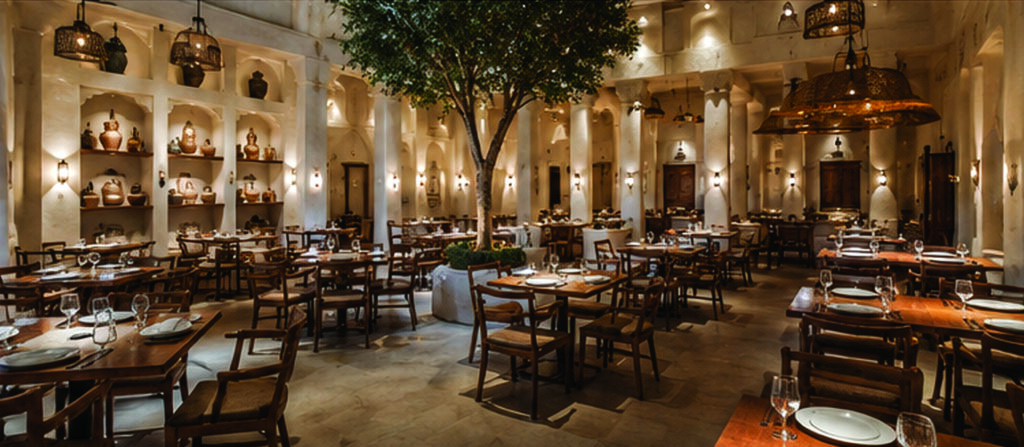
a restaurant designed like an intimate, beautiful home, filled
with intimate bric-a-brac. This is at Wasl 51, Jumeirah, the
quiet neighbourhood that has become Dubai’s latest “with
it” food destination— in the last three or so years, with many
of the city’s best chef-led independent restaurants opening
here. I look out of the large windows at a quiet, tree-lined
avenue, and then begin what will become one of my most
satisfying meals in a 25-plus-year-old professional eating-out
and writing-in life!
Maryam’s the kind of food you don’t forget
Even now, half-a-year past, I can see and taste it in my mind.
The khobez al bait, bread of the house, is fluffed up, but
crusted, football-sized, made with an 18-hour fermented
sourdough that you can taste. The cold mezze that I order
includes a luscious hummus with a deep, deep well of olive
oil from the Levant, and a muhammara rich and smoky with
the taste of roasted red peppers that the Columbian Exchange
brought to the region in the 16th century, as also one of the
restaurant’s most celebrated hot dishes, the kubbet Maryam, kibbeh in a pomegranate sauce, making stunning use of the
ingredient so central in symbolism and taste to the Arab
world.
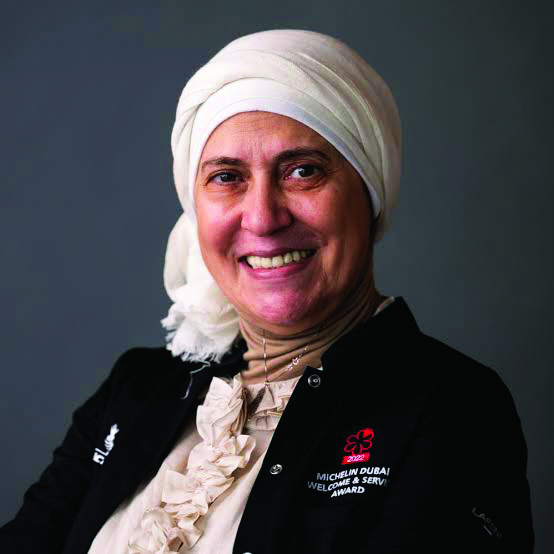
The recipe, I am told, is personal. Borrowed from how
Chef Salam Dakkak’s mother cooked, Salam is one of the
Middle-East’s most celebrated female chefs today—her two
restaurants in Dubai, Bait Maryam (Maryam’s table) and
Sufret Maryam (Maryam’s home), both named after her
mother, have become Dubai’s most talked-about since 2023,
when Bait Maryam first opened with an aim to bring back
to gourmet tables the food legacy of her region and family.
And while in Dubai, as all over in the Middle East, mezzes
are abundant, you have to eat here, at Salam’s table and
restaurant, to realise how refined and nuanced long personal
histories of tastes can be.
This is cooking obviously done with great care. With
high quality ingredients from the Fertile Crescent and with
precision that elevates the familiar to the truly luxe; in turn,
this is exactly the kind of food that you, the diner, care about.
It is not something loud and forgettable, a borrowed
idea, imitating “cool” from elsewhere. But something with
more meaning: a story of a culture and family cooked
without too much fiddling around and that dreaded word
“innovation”. This is exactly the kind of luxury dining we
may now be increasingly gravitating to. Not the spectacle, but the meaningful. Food with depth
and the weight of emotion, forged for a
world riddled with uncertainties, with
the overhanging cloud of machines
mimicking the human. In this world,
emotion is luxury’s currency. What
ChatGPT cannot create (yet) is depth.
Its images, writings and narratives are
flattened, pretty without meaning. In
luxury food, this is exactly what we may
be unconsciously avoiding: vacuous
prettiness, flat tastes. We are seeking
perhaps more humaneness, a sense of
long living, of feelings and attachments that food must evoke
to be special and resonant.
At Sufret Maryam, I feel it. That generosity and heritage
and living. And that is why it is a magical meal. One bright
afternoon, one solo woman, looking out of a window as
the service staff respects the silence, with attentiveness not
performance. It’s a moment in time that glimmers and hangs
like a jewel to look back at.
For years, Dubai was that flashy megapolis with multiple
nationalities who liked to live the glam but didn’t quite bring
their home here. The impression was of big and bling but often little personality — opulent Italian,
chic French, a confluence of Asian,
nightlife, cafes, and the world’s top
chefs opening outposts with a view to
maximising revenue.
Post Covid, there has been a
paradigm shift as Dubai has made
efforts to champion “authenticity” and
emerge as a serious centre for MENA
(Middle East North Africa) art, fashion,
design and more, this increasing
cultural gravitas is now being echoed by
the city’s restaurants too. It’s no longer
only the glitzy, but equally and perhaps more the indie, chefled and slow that are crafting a foodscape that goes much
beyond the idea of food as entertainment—a very Gen X and
older millennial idea.
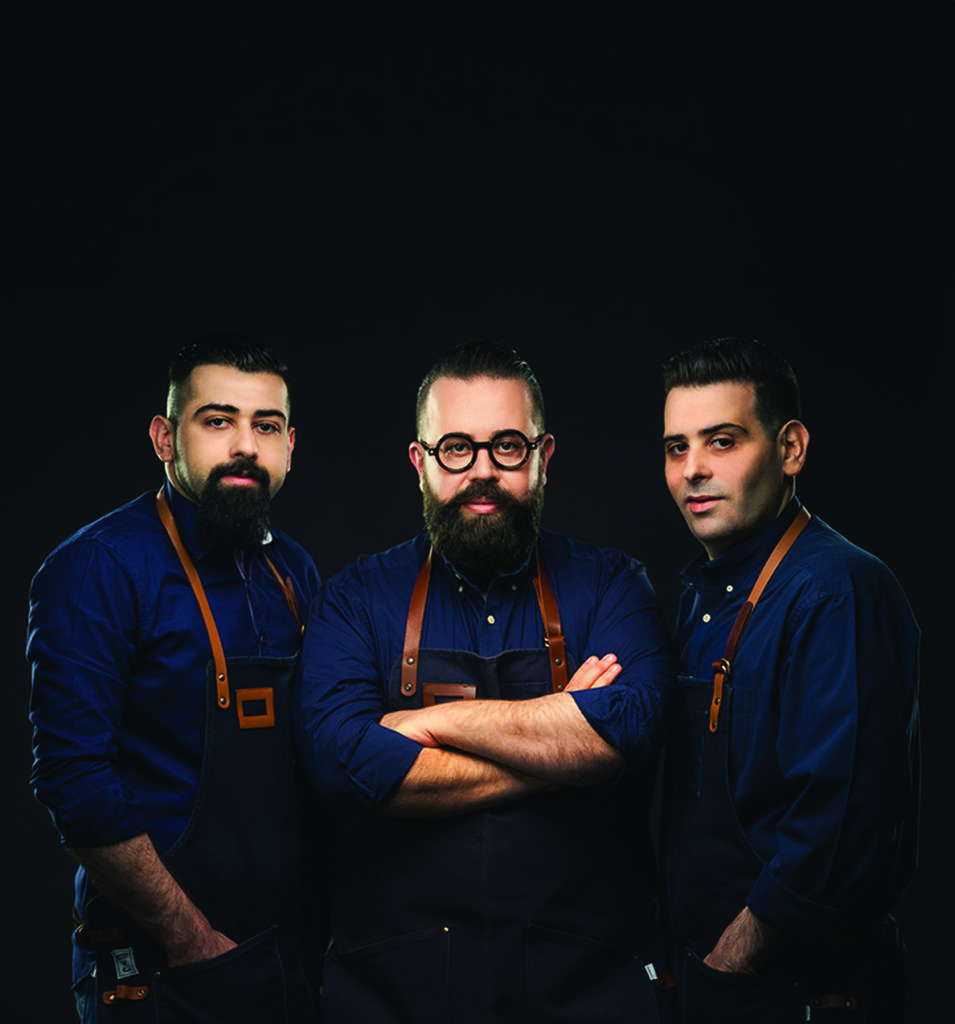
Near Sufret Maryam, also at Wasl 51, is the famous
Orfali Bros, the fine-dining restaurant by the three Syrian
brothers from Aleppo, Mohammad, Wasim and Omar,
who kickstarted this whole culturally-rooted upscale dining
renaissance in Dubai. When I had visited the city prior to this
visit in 2023, Orfali Bros was being spoken about in hushed
tones by the close-knit chef community of Dubai as an under the-radar place to check out (it had opened in 2021). Since
then, the restaurant has had a meteoric rise, winning many top
awards, including being ranked in the top 50 on the World’s
50 Best list and Michelin recognition. While this “OG” serves
contemporary Arabic-Mediterranean food, its more recent,
casual-but-fine brother restaurant, Three Bros, that stands
opposite also in the same complex, is what you should check
out for an extraordinary, fun meal using influences from all
over the world aka what is locally called “Dubai cuisine” to
turn out food that is unique, personal and delicious. There
are Spanish, Japanese and Arabic dishes played around with
great precision by the classical French trained chefs with a
Syrian heritage. This is the kind of favourite dishes you may
turn out if you are 1. a very skilled chef 2. with access to very
high-quality ingredients and 3. With a globally exposed
palate.
I eat on the thinnest fattiest slices of o toro, served with the
OB garum (one of the oldest sauces with fermented fish from
the Mediterranean), the delightful potato au caviar that sets
a new standard for decadent tapas, a morel chawanmushi
and many similar constructions that elevate globally loved
dishes with unusual combinations, and a high level of skill.
I can’t think of any similar place in India doing this level of
inventiveness that feels most unstudied and casual and yet
decadent. The restaurant has a neighbourhood vibe and you
don’t have to dress up for it.
Part of this culturally rooted but sophisticated
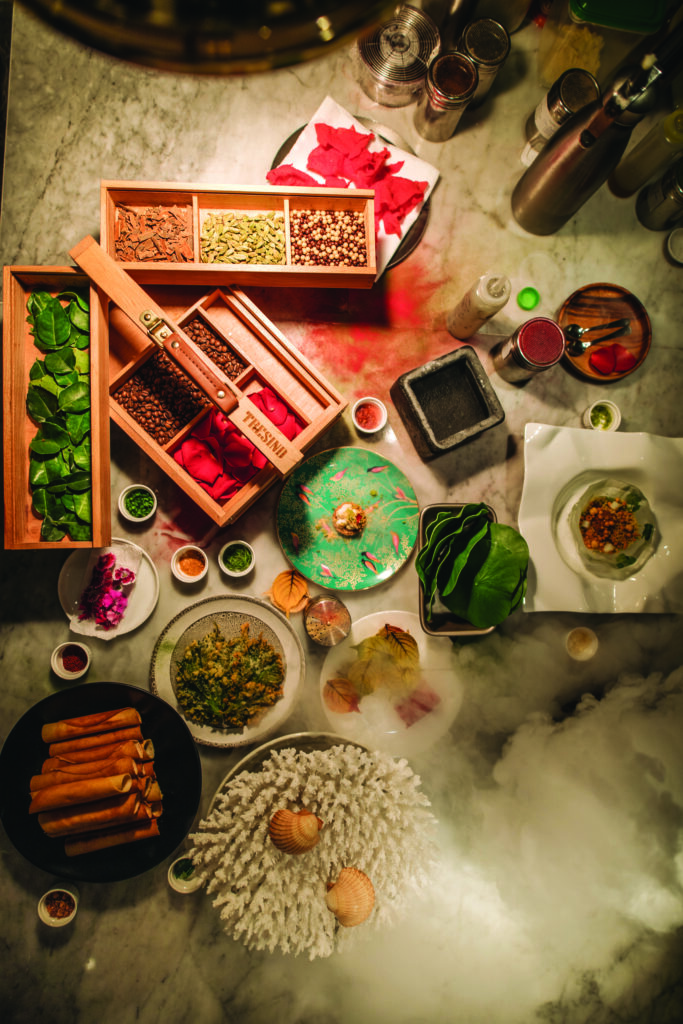
restaurant paradigm in Dubai are also Trèsind Studio
where Himanshu Saini has been creating his own kind of
Indian food that is true to its regional spicing despite the
innovations, and Samyukta Nair’s Jamavar, where chef
Surendra Mohan cooks deep Indian flavours from affluent
traditions of hospitality with all their inherent maximalism,
and uses the kind of high quality ingredients that are easier
to access in Dubai. Trèsind Studio, at the St Regis, with an
18-course tasting menu and an open kitchen became the first
Indian three-Michelin-starred restaurant in the world. And
this year, at the Michelin ceremony in Dubai in October it
successfully retained it too. Jamavar Dubai too is Michelin
starred with more traditional Indian food and researched
royal recipes from homes with a sense of lavish hospitality.
Dishes like Leela’s lobster Neeruli, crab pepper masala and
kulchas with caviar beckon you back to an era of fine tables
that Indian hostesses often took pride in, when the kitchen
was always inventing with finesse and yet nuance.
These are the kind of restaurants that will lead luxury
globally as we enter a phase of eating out where we seek the
non-ordinary and the non-facile but done with both depth
and flair!
Coffee Museum Dubai
Speciality coffee is a big trend globally, but few people realise
that the world’s first coffee culture is Arabic. Coffee beans
of course are indigenous to Ethiopia but it was in Yemen in
the 15th century that Sufi monks first started brewing and
drinking coffee as a hot drink to remain wakeful during late
night spiritual prayers.
Coffee as a drink would spread to the rest of the
Arab world, where local ways of brewing and drinking
it contributed to local coffee cultures. It arrived in India,
possibly via trade to southern India, or as the story goes
because Baba Budan, a Sufi mystic from Karnataka on a
pilgrimage to Mecca in the 17th century, stopped at Moca
in Sudan, from where he smuggled seven beans to the
hills of the Western Ghats. These were planted at what is
now called Chikmagalur, in the Budangiri hills, and over
a period of time resulted in India’s own arabica growing.
In fact, the kahwakhanas of Mughal India were the first
coffee houses modelled on the coffee houses of west Asia,
before the cult of filter coffee grew when the British started
the whole plantation economy in the south.
The Coffee Museum Dubai is the first dedicated coffee museum in the Middle East devoted to such a deep beverage
tradition. I visit it one afternoon, making my way through
narrow lanes of the historic area, Al Fahidi, the heart of
old Dubai. A 150-year-old traditional Emirati home has
been converted into the museum that has an eye-popping
collection of coffee bric-a-brac, brewing and roasting
equipment, from around the world— from ancient Yemeni
brewing vessels to rare World War I-era coffee grinders, and
19th-century cast-iron equipment from Europe.
A restored Emirati Majlis occupies pride of place with
low cushions and carpets, and coffee mixed with green
cardamom makes for a refreshing afternoon drink in the
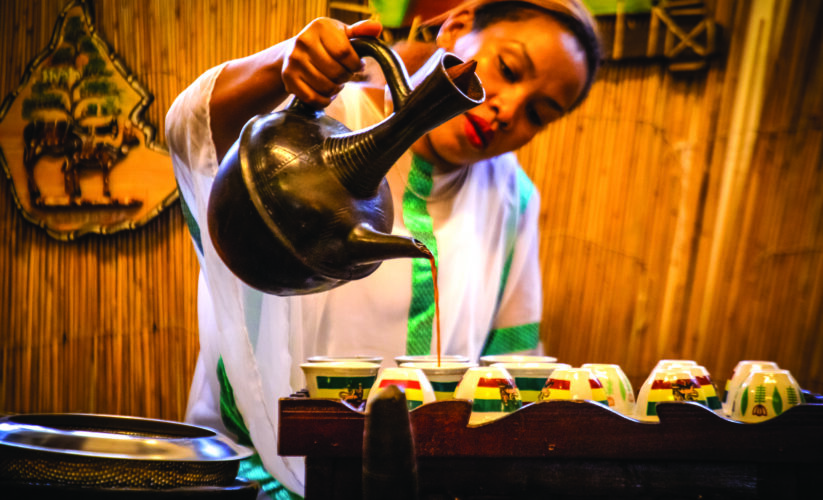
heat. In one section, I also see the traditional Ethiopian way
of brewing and serving coffee— with popcorn! In fact, this
practice is a throwback to the ritual of serving coffee, not with
sugar (an expensive spice in the ancient world) but with salt,
particularly in rural areas, including Kaffa, the place where
coffee derives its name from, its birthplace. I am reminded
of noon chai—served with salt in the higher altitudes of the
Himalayas, similarly.
But a bit of popcorn with a sip of coffee makes for a story
to remember.