CREATIVITY, CRITIQUE AND CULTURAL CURRENCY
FTAlmanac
- November 20, 2025
A new cultural awakening, and a new
collector class interested in contemporary
art is shaping the Middle-East’s exciting and
serious art environ, says artist, curator and
Rockefeller Foundation fellow Rahul Kumar.
By Rahul Kumar
A Museum-Led Movement
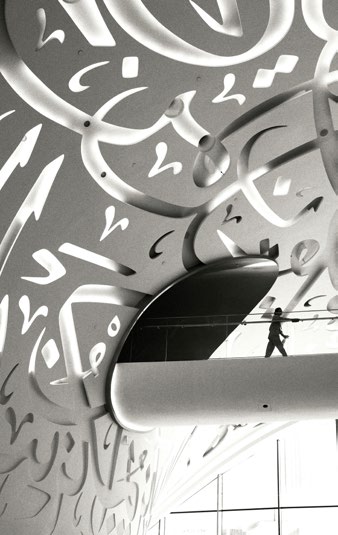
One of the most visible signs of this resurgence is the
proliferation of world-class museums across the Gulf. The
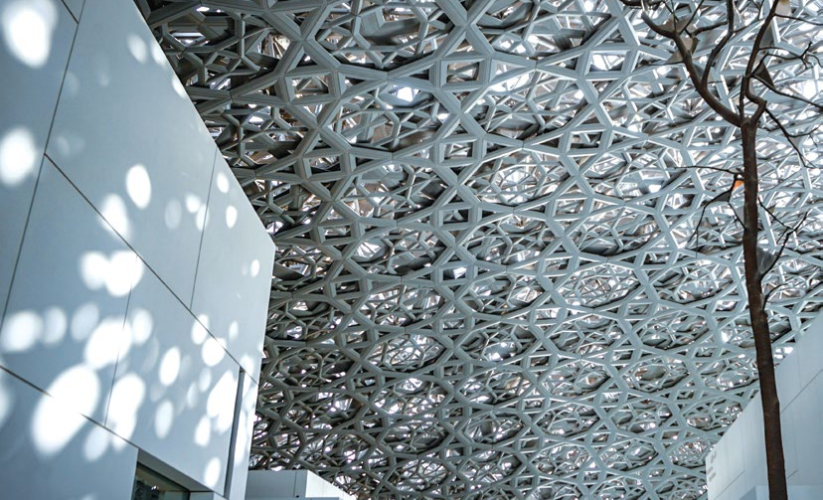
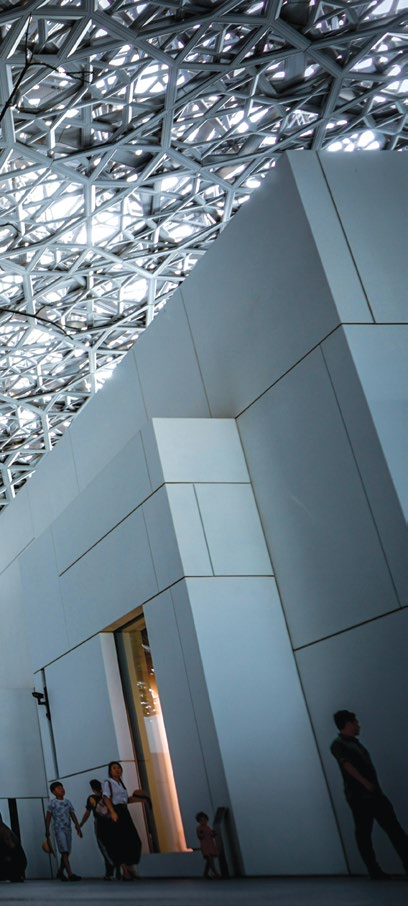
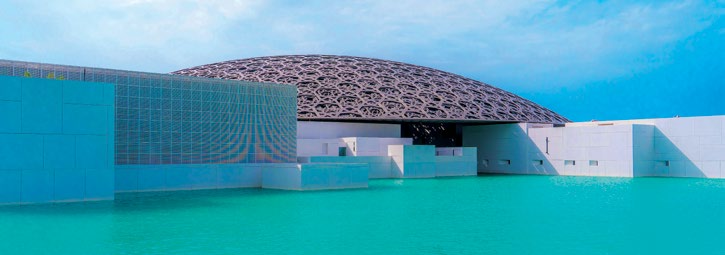
Louvre Abu Dhabi, opened in 2017 as part of a thirty-year
agreement with France, was a symbolic and infrastructural
milestone. Designed by Jean Nouvel, the museum represents
not only architectural ambition but also the region’s desire
to position itself as a global cultural hub. But the Louvre is
far from alone. The Qatar Museums Authority, under the
leadership of Sheikha Al Mayassa bint Hamad bin Khalifa Al
Thani, has developed a formidable portfolio of institutions,
including Mathaf: Arab Museum of Modern Art, which
houses an extensive collection of Arab and regional modern
art. Soon, Qatar will add the Lusail Museum, focused on
Orientalist art, and the Qatar Auto Museum, combining
design, history, and cultural nostalgia.
Alserkal Avenue in Dubai uniquely transforms
former warehouses into a vibrant cultural district,
fostering contemporary art through galleries, residencies,
performances, and dialogue, positioning the region as a
global hub for creativity.
The rise of these events is not merely cultural; it is deeply
strategic. They function as soft power tools, positioning the
Middle East not only as a consumer of global culture but also
as a producer of meaningful and critical work
The Collector Class and the Market’s Maturation
A significant catalyst in the region’s art resurgence is the
emergence of a sophisticated collector base. These are not
just trophy-seekers chasing blue-chip names, but patrons
with a genuine investment in shaping the narrative of Middle Eastern and South Asian art.
Moreover, auctions and art fairs have seen an increase in
participation from regional buyers. The Art Dubai fair has
evolved from a commercial platform into a robust ecosystem
that includes Modern, Contemporary, and Digital sections,
as well as talks and educational programming. In Saudi
Arabia, the Riyadh Art Week and the upcoming Misk Art
Institute’s initiatives are nurturing not just buyers, but a
whole infrastructure of curators, critics, and art handlers.
This growing ecosystem points to a broader trend:
contemporary art in the Middle East is no longer a novelty or
elite interest; it is becoming an industry, one with local roots
and global relevance.
Challenges of Growth: Authenticity vs Spectacle
However, this cultural boom is not without its critics and
complications. For one, there is ongoing concern about the
disparity between investment in infrastructure and the freedom
of expression. While major cities build state-of-the-art museums,
artists in the region still navigate censorship, self-censorship,
and political red lines.
In places like Saudi Arabia, for instance, artists must
balance newfound visibility with constraints on content and
critique. This has led some observers to question whether
state-sponsored culture can ever fully accommodate radical or
dissenting voices.
There is also the danger of spectacle over substance. As
countries compete to build the most prominent museums or
host the most talked-about biennale, some worry that cultural
production may become a race for prestige rather than a space
for introspection or community building.
“There’s a risk,” says one regional curator (who preferred
to remain anonymous), “that we end up importing Western
models of culture wholesale, rather than creating frameworks
that emerge organically from our own histories, struggles, and
forms of knowing.”
Artists Respond: Between Local Realities and
Global Conversations
Despite these tensions, artists from the Middle East are
producing work that is both urgent and poetic, and powerfully
political. From the conceptual installations of Wael Shawky to
the haunting video works of Larissa Sansour and the archival
interventions of Walid Raad, artists from the region are not just
responding to local conditions; they are helping redefine global
contemporary art.
Younger artists, particularly women and those from conflict
zones, are utilizing their practices to explore themes such as
trauma, migration, belonging, and the environment. These
artists benefit from new platforms and residencies, but also
continue to grapple with the complexities of visibility, mainly
when their work is mediated through Western institutions.
Increasingly, the region’s cultural players are asking how
to tell their own stories, on their own terms, without either
isolation or dependency.
The Road Ahead: Building Sustainability
The next phase in the Middle East’s contemporary art resurgence
will depend on sustainability, education, and inclusivity.
Already, there are promising signs: universities in the UAE now
offer art history and museum studies programs; Saudi Arabia
is investing in arts education; and nonprofit initiatives, such as
Tashkeel in Dubai and the Maraya Art Centre in Sharjah, are
offering artist development programs.
More importantly, there is growing recognition that
building a vibrant cultural ecosystem is not just about elite
spaces or large-scale events. It is about supporting artist-led
spaces, mid-career practitioners, independent publishers, and
critical discourse. In this regard, the Middle East stands at a
crucial juncture. It has the resources, talent, and vision to shape
a bold future for contemporary art. The question now is: Can it
build institutions and narratives that are not just reflections of
power, but of people, place, and possibility?