
Chef Vanshika Bhatia travels to the beautiful Taj Corbett, reflects on Kumaoni wisdom, Nordic foraging, and how not to turn culture into commodity!
By Vanshika Bhatia
As a chef constantly seeking meaning in the food I cook, I was recently invited by TFTA to travel to the rich Kumaoni region of the Himalayas and do a piece on the understated flavours, ingredients and culinary rituals of the region, reflecting on these and drawing parallels with what I had observed of the Nordic foraging and cooking traditions to which I had been introduced during my internship at Noma in Copenhagen, some years ago. As I drove down to the beautiful Taj Corbett, located by the Kosi, I went on this unique journey not intending to just compare ingredients or techniques, but to understand how deeply food can embody the rhythm of a place, its people, and their wisdom.
Nestled in the quiet embrace of the mountains and run by the warm-hearted Prasad family, the hotel has a team of chefs eager to showcase the beauty of indigenous ingredients.
But my curiosity leaned toward something even more personal: the kitchens where their families cooked every day. The real heartbeat of Kumaoni cuisine lies there — in quiet homes where generations have stirred pots, ground spices, and told stories by the fire. The highlight of my time in this stunning land, unfolded in the home of Chef Deepak, who works at the Taj Corbett, and whose wife, Durgarya, welcomed me with a shy smile and an open hearth. Their home sat at the edge of a slope, overlooking mist-draped hills and the small farm that provided many of their ingredients. Stepping into her kitchen felt like entering a world suspended in time. The smoke from the chulha curled into the air like an offering, and in that simple, soot-kissed room, stories were told not in words, but through touch, taste, and rhythm.
I watched Durgarya prepare thick ragi rotis, puffing gently over the fire, their nutty aroma filling the space. She spoke little, but her every movement — kneading, flipping, stirring – was measured, practiced, meditative. The roasted wheat chutney she made was rich and earthy, a flavour I can only describe as grounding. Her hempseed chutney was creamy and nutrient-dense, balanced perfectly by aloo gutke – potatoes crisped in mustardy jakhiya seeds harvested from behind their home. To cool it all, she spooned out generous portions of pahadi cucumber raita – light, clean, and quietly elegant.
These weren’t just dishes; they were echoes of a life lived in sync with the land.
Pahadi community cooking Vs a solitary communion with nature
In the Himalayan belt, food is more than sustenance – it’s a philosophy. It draws from Ayurveda, choosing ingredients for their healing properties and balancing qualities. Meals are prepared with an understanding of the body’s needs through the seasons. Spirituality runs through the region’s food in quiet but powerful ways: a sense of reverence, not just for the act of cooking, but for the source of each ingredient.
In contrast, the Nordic foraging traditions I experienced in Copenhagen offered a different lens. There, foraging often felt like a solitary communion with nature – a personal meditation among trees and moss. I remember harvesting chamomile and elderflowers from the forests, ingredients later paired with grilled beach rose petals or served with ants on a plate – guided by Noma’s core philosophy: what grows together, goes together.
But in Kumaon, it is not just about what grows together– – it is about who grows it, who cooks it, and how it’s shared.
Here, even culinary techniques carry stories. Chef Bisht insisted on using the mortar and pestle for pastes and chutneys — not just to enhance flavour, but to honour tradition. I saw women gather in the afternoon sun to make flavoured salts while sharing stories, their hands moving in rhythm as laughter echoed through the air. Food was not an individual act. It was a community ritual.
The diversity of ingredients in the region still lingers on my palate. Bichhu ghaas (stinging nettle), banafsha (sweet violet), Himalayan black salt, and wild kafal berries — all deeply flavourful and medicinal. I smiled when I realized that the first time I ever tasted nettle was in Copenhagen. Now here it was again, growing in thick clusters at the base of the Himalayas, familiar yet utterly new.
Taj Corbett: A Quiet Connection to the Hills
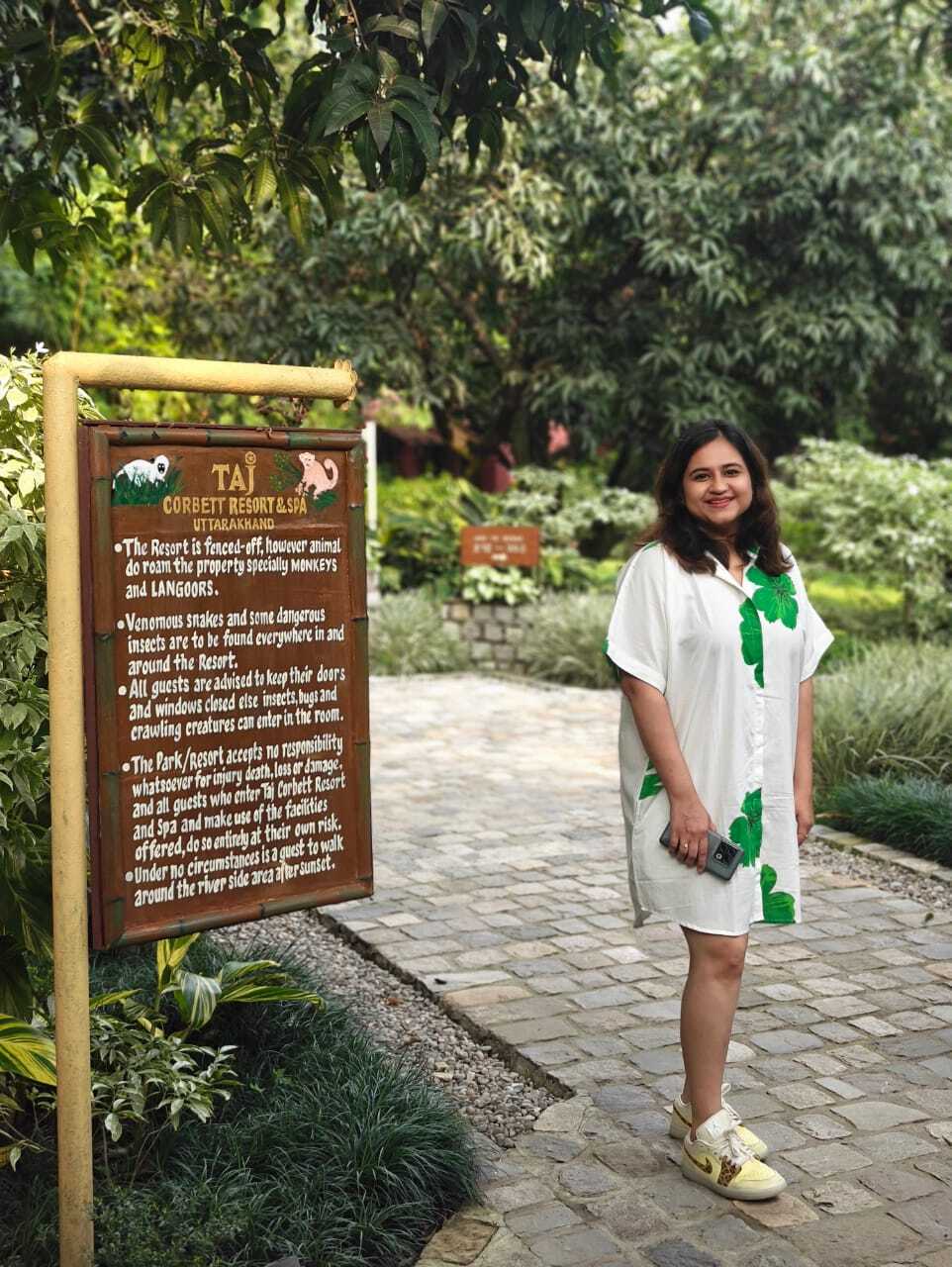
My stay at Taj Corbett was more than just beautiful views and calm surroundings—it felt like stepping into the heart of Kumaon. The resort sits right by the Kosi River, surrounded by lush forest, and everything about it brings you closer to nature.
What stood out most was how deeply connected the team is to local food and culture. I went on a peaceful nature walk with their in-house naturalist, learning about wild herbs, native trees, and how the locals live in tune with the forest.
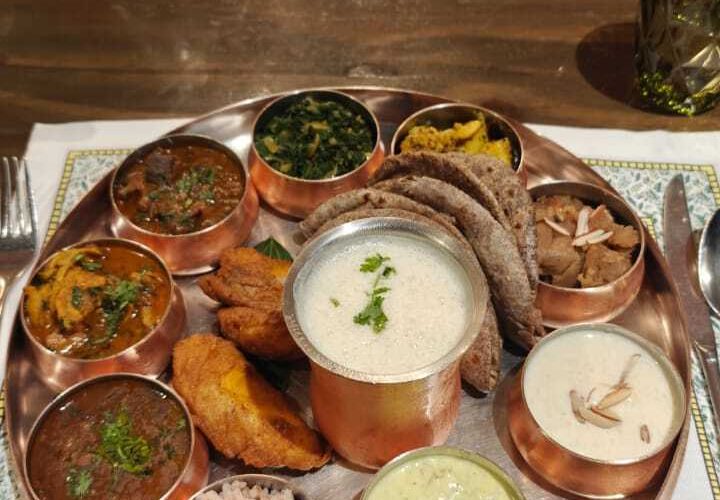
But the real magic happened in the kitchen. The chefs were proud to showcase traditional Kumaoni dishes in a thali prepared specially for us. I also had the chance to cook and eat with local home cooks. We made ragi rotis on the chulha, seasoned aloo gutke with jakhiya from the garden, and cooled it all down with cucumber raita. Each dish had a story—simple, nourishing, and full of character.
Taj Corbett is not just a luxury resort—it’s a place that respects the land and the people. As a chef, it reminded me why I love food: because it connects us to where we are, and to each other.


Buransh, the Elderflower of the Himalayas; smoking a pahadi dish with pine…
Buransh flowers – used in refreshing drinks and healing infusions – reminded me of elderflowers in the Nordic countries. Both are seasonal, both signal the arrival of warmth and celebration, and both root their cuisines in ritual. And that gentle, sweet aroma of chamomile drifting through Himalayan fields – it’s almost indistinguishable from its cousins in Scandinavia, as though the earth whispers similar songs in different languages.
I once made a pahadi mutton curry and smoked it using pine needles. That fragrance, sharp and comforting, reminded me of Nordic kitchens where pine is used for both preservation and aroma. In Uttarakhand, pinewood is chosen as the firestarter for the chulha – not just because it catches fire easily, but because it flavors the food. Someone once told me, almost poetically, that the chapati cooked over pine tastes of the mountains themselves.
But perhaps the most important lesson in all this is not about ingredients or techniques. It is about respect. As chefs, it is easy to romanticise foraging and local traditions for the sake of menus and trends. But unless we sit by the fires, cook with the grandmothers, walk through the fields with the locals, and listen – really listen — we risk turning culture into commodity.
Food is memory. Food is story. Whether it’s fermented spruce shoots in Copenhagen or jakhiya-scented potatoes in Kumaon, what matters is the connection. And we must protect and honor that connection.
My journey through the Himalayas reminded me that cooking is an act of reverence – for the land, for tradition, and for people. In every kitchen I visit, whether lined with copper pans or blackened with wood smoke, I look for that heartbeat. Because it’s in those quiet, intimate moments that food stops being just food – and becomes something truly sacred.