When Indian Food Lost The Hyphen

After travelling the world,
waiting to be discovered, Indian cuisine has finally found the confidence to be just itself—
in all its complexity, without
trying to find an international
definition explaining it.
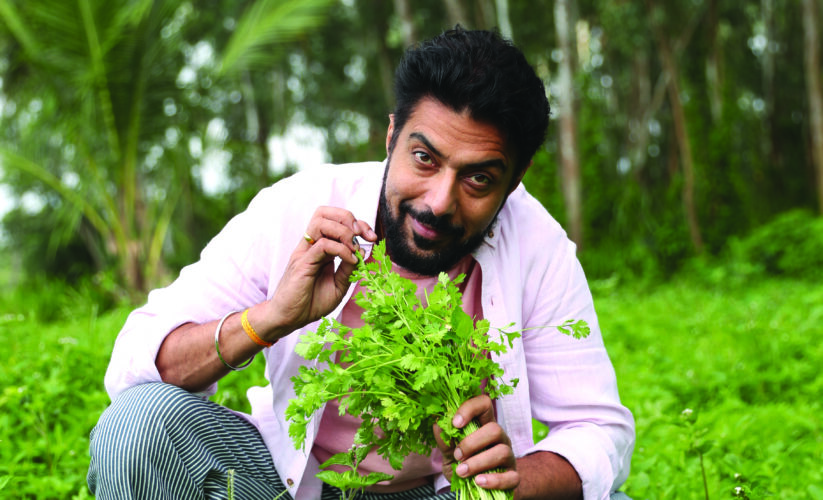
Ranveer Brar
For the longest time, Indian food travelled with
an interpreter. We translated our ingredients. We softened flavours. We changed names, adjusted
textures, removed bones, added gravies and
sometimes created dishes that were simply easier to
understand thousands of kilometres away from the kitchens
that inspired them.
And when Indian food wanted to enter the world’s more
ambitious dining rooms, we gave it another kind of interpreter.
We gave it an adjective. Modern Indian. Progressive Indian.
Contemporary Indian. Elevated Indian. Somewhere along
the way, simply saying Indian did not seem enough.
I understand why.
Every immigrant cuisine initially negotiates with its new home. It searches for familiarity before asking for curiosity.
Generations of Indian chefs and restaurateurs abroad did
extraordinary work creating that familiarity. They built the
bridge on which today’s chefs are walking.
But something rather beautiful is happening now. Indian
food seems to have stopped explaining itself. And the world,
instead, has started asking questions. Not just, “How spicy is it?” But: “What is thecha?” “Why does a Bengali shukto
begin a meal with bitterness?” “Why are there so many
different versions of pitha across eastern India?” “Why does
Kashmir use asafoetida differently from Rajasthan?” And
also things like what makes one indigenous variety of rice
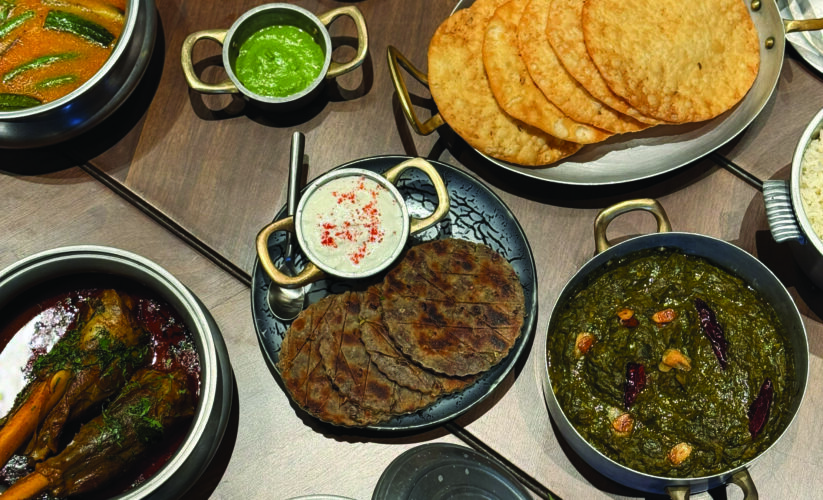
different from another? Or, why does a proper nihari or
sarson ka saag need time?
These are very different questions. Because the question is slowly changing from: “Can you make this familiar to
me?” to: “Tell me where this comes from.” For a cook, those
are two completely different invitations. The first asks you to translate. The second asks you to tell a story. And India
has no shortage of stories. Perhaps this is also why another
change is happening almost simultaneously. The hyphens
are disappearing.
A restaurant doesn’t necessarily have to announce itself
as modern-Indian or progressive-Indian anymore to signal
that it belongs in an ambitious international dining room.
It can simply be Indian. Perhaps that one word has finally
become large enough to contain everything that we are. You
can see that confidence across the world.
At Semma in New York, Vijay Kumar has looked
towards Tamil Nadu, village cooking and the food memories of his childhood without worrying about
whether every ingredient needs translation. At Bungalow,
my dear friend Vikas Khanna tells stories of India through
memory, region and hospitality. In London, restaurants
such as Gymkhana, Trishna and BiBi can present
completely different expressions of India. In Dubai,
Trèsind Studio can take Indian food into an extraordinarily
precise tasting-menu environment.
These restaurants don’t resemble one another. That is precisely the point. The new confidence of Indian food is not producing one internationally
acceptable definition
of Indian cuisine. It is
allowing many Indias to
exist at the same time.
For much of the world,
the enormous culinary
geography of India was represented by a surprisingly small vocabulary. Naan. Curry.
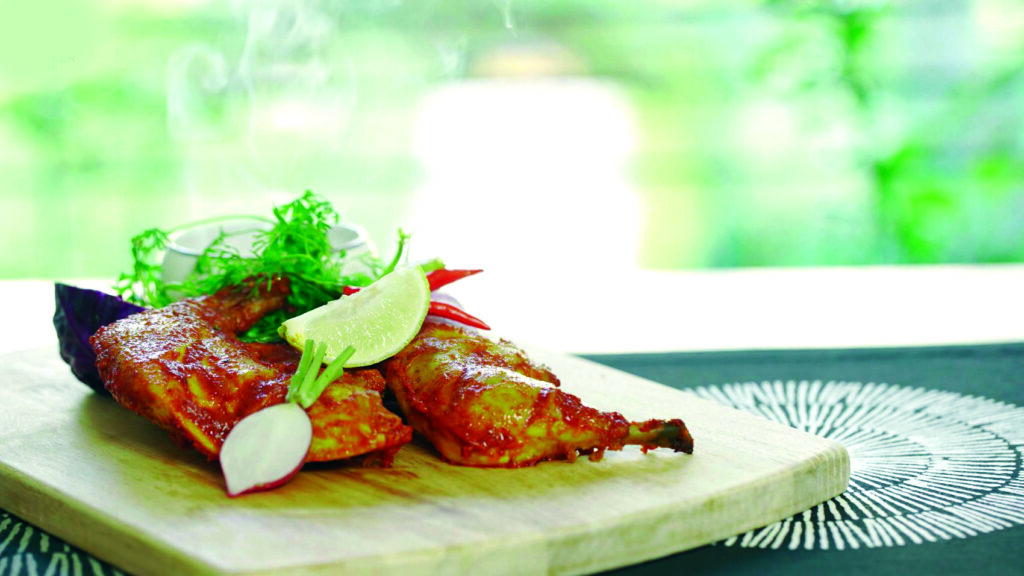
Tandoori chicken. Biryani. Samosa. Butter chicken. There is absolutely nothing wrong with any of them. Butter chicken
doesn’t need to apologise for being popular any more than
pizza does. The problem begins when five or six dishes are asked to carry the burden of representing the food of more
than a billion people.
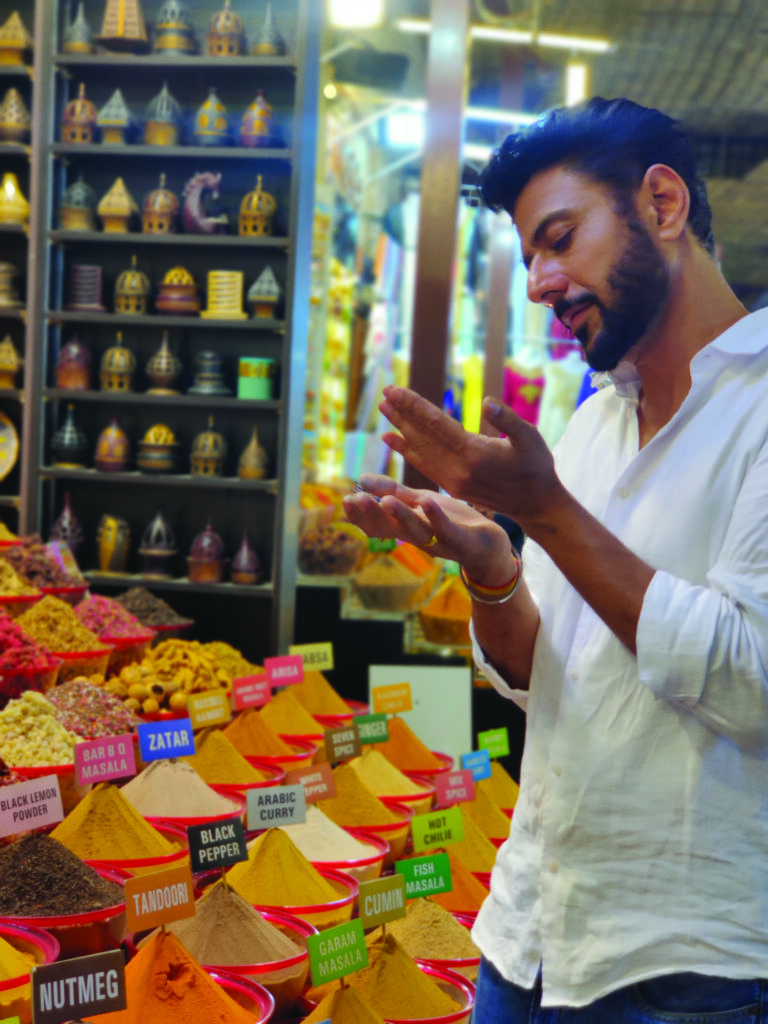
India simply cannot fit inside one restaurant menu. Drive
a hundred kilometres and the grain can change. The cooking fat changes. The souring agent changes. The chilli changes.
Sometimes the language changes. Certainly, the pickle changes. And Indians take their pickles very seriously.
Our food is a map of rainfall, migration, trade, agriculture,
faith, seasonality and survival. Coastal food understands
the sea. Desert food understands scarcity. Mountain food
understands preservation. Forest communities carry
knowledge of ingredients that even urban India is only beginning to rediscover. None of this complexity is new.
What is new is our confidence in its complexity.
For years, many Indian restaurants abroad felt they needed to make Indian food understandable before they could make it desirable. Today, a younger generation
of Indian chefs and restaurateurs is increasingly saying
something quite different: This is how we eat. Come discover
it. And remarkably, the international diner seems ready for
that invitation
People travel differently now. They watch differently.
They read differently. Social media has collapsed culinary
borders in wonderfully
chaotic ways. Someone
sitting in London can
become obsessed with a
dosa stall in Bengaluru.
Someone in New York
can watch a family in
Nagaland cooking over
a wood fire. A cook in
Melbourne can suddenly
want to understand
kokum, gondhoraj,
thecha or gunpowder.
Curiosity has become global. And that curiosity gives Indian
food permission to become more specific.
The paradox is that the more specific we become, the
more universal the food seems to feel. Tell someone vaguely
about “Indian cuisine” and you are describing geography.
Tell them about one street in Lucknow, one temple kitchen
in Odisha, one home in Punjab or one fishing community on
the Konkan coast, and suddenly you are telling them about
people. People connect with people. They connect with
memory. They connect with stories.
And I think this is also why ingredients and techniques
that we once considered too humble for international dining
rooms are finding their place there. Millets. Fermented
batters. Regional greens. Indigenous rice varieties. Pickles.
Chutneys. Dried fish. Lesser-used cuts of meat. Forest
ingredients.
There was a strange period when sophistication in
Indian cooking seemed to require distancing ourselves from
precisely these things. Today we are beginning to recognise something our grandmothers probably knew all along:
Traditional does not mean unsophisticated.
A halwai judging sugar syrup between two fingers
is technique. A grandmother knowing exactly when a
pickle has received enough sunlight is technique. A cook understanding the temperature of a tandoor without looking
at a thermometer is technique. Fermentation is science.
Pickling is chemistry. Tempering is flavour extraction. Slow
cooking is controlled transformation. We didn’t suddenly
discover these techniques. We simply acquired fashionable
vocabulary with which to explain them.
And perhaps now we don’t even need that vocabulary.
There is another word I think we should be careful with:
elevated. We often hear about chefs “elevating” Indian food.
Elevating it from where? A dish that has survived for three
hundred years probably doesn’t require us to rescue it. Our
responsibility as chefs is sometimes simply to listen carefully
enough to understand why it survived. None of this means
Indian food should be trapped in the past. Quite the opposite.
Indian cuisine itself is the result of centuries of movement
and exchange. Chillies travelled. Tomatoes travelled.
Potatoes travelled. Tea travelled. People travelled. Tradition
is not the absence of change. Tradition is the memory that
allows change to have meaning. That is why this moment
feels different. An Indian chef today doesn’t necessarily have
to choose between being rooted and being contemporary.
You can cook something deeply traditional in a beautiful
dining room. You can take a humble ingredient and treat
it with extraordinary precision without apologising for its
origins. You can innovate without disguising where you came from. And you
don’t necessarily need
a hyphen to explain
any of it. Maybe that
is what Indian food
finally finding its place
under the sun actually
looks like. Not another
Michelin star, although
recognition matters.
Not another expensive
dining room.
And certainly not the world suddenly “discovering”
Indian food. Indian food was never sitting around waiting to be discovered. Perhaps what has changed is much
simpler. We are no longer asking permission to be Indian.
And the world is no longer merely asking us how spicy the food is. It wants to know why it is bitter. Why it is fermented. Why it is smoked. Why this rice and not that one. Why this spice is added now and another one later. Who cooked it first. Where it came from. What story it
carries.
Those questions tell me far more about the future of Indian
food than any award ever could. Because when somebody
stops asking you to translate your culture and starts
becoming curious about its details, something fundamental
has changed. The hyphen disappears. The adjective becomes
unnecessary. And after travelling the world for so long explaining what Indian food can be, perhaps we are finally comfortable simply saying what it is. Indian.