
Wine and Gold along the Garden Route

Three generations travel for a coveted golfing (and wine-fuelled) vacay in South Africa. Along the way, hospitality entrepreneur Ashish Kapur also finds a
deceptive par 3, the legendary 1821 Grand Constance wine, some endangered Penguins — and his grandfather’s smiles!
By Ashish Kapur
There are golf holidays, and then there are pilgrimages. Our journey to South Africa — three generations travelling together, clubs in tow — became something far deeper than a sporting getaway. With my grandfather, my parents, my wife Meghana, and my father and I on the fairways, it unfolded as a meditation on wind, wine, wilderness, and the beautiful bond between generations.
We landed in Port Elizabeth — now officially Gqeberha — but in golfing circles fondly called “Cape Port”. Our first tee time was at the fabled Humewood Golf Club — a true Scottish-style links built on rolling sand dunes beside the Indian Ocean. No trees. No shelter. No forgiveness. Just firm fairways, pot bunkers and wind that is not incidental but architectural. Humewood has hosted multiple South African Opens and is regarded as one of the finest links courses in the Southern Hemisphere. Standing on the tee there feels like standing at the edge of a continent.
The Crucible of Humewood
The hole that lingers in memory is the 6th — “Devil’s Elbow.” A short, deceptive par 3 once considered the toughest on the South African Professional Tour. The wind that afternoon was howling left to right at least three clubs strong. I pulled a 9-iron, but the “golf logic” of the Cape dictated a radical line. I had to aim thirty yards right, directly at a gaping bunker, trusting the gale to intervene. I watched, as the wind caught the ball, carving a massive arc through the salt air to deposit it softly fifteen feet onto the dancing grass of the green. It is a place that humbles your handicap and rewards your soul.
That evening, we discovered another side of Cape Port. The region’s cool maritime climate produces delicate whites and elegant dessert wines. At boutique estates like Theescombe Estate, we tasted white muscadel — honeyed yet fresh — paired beautifully with local seafood. Freshly grilled line fish, briny oysters, and prawns kissed by flame met the floral sweetness of muscat in a way that felt like the ocean itself had poured the wine.
From Port Elizabeth, we rented a car and began one of the world’s most iconic coastal journeys: Port Elizabeth to the Garden Route — Tsitsikamma, Plettenberg Bay, Knysna, George — onward to Cape Town and finally Stellenbosch.
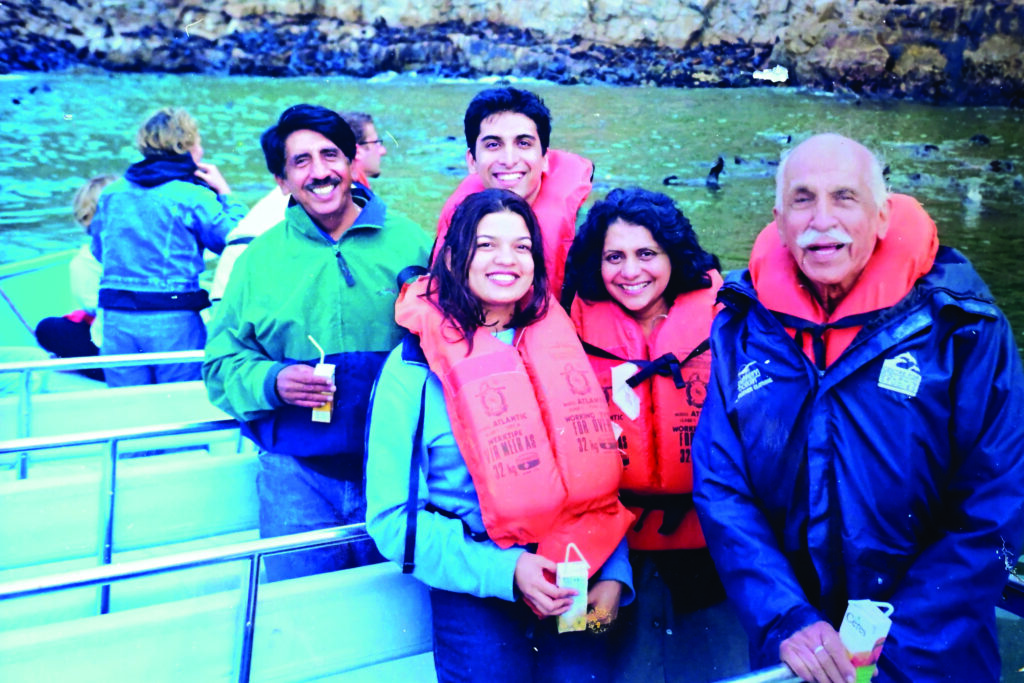
The brigadier smiles!
Our first stop was Pleflenberg Bay—or “Plett”—where the small-town charm feels like a warm embrace. We took a boat ride to witness the majesty of the endangered African penguins at Lookout Beach. It was here that the miracle of nature performed its greatest feat. My grandfather Brigadier NL Kapur was a recipient of the Military Cross at the Battle of El Alamein. A veteran of the Delhi Golf Club, “dadaji” was defined by his ‘old school’ discipline and a ramrod-straight posture. He had a striking, jovial face but, curiously, would never smile for photographs.
Yet, as a pod of dolphins breached alongside our boat and seals frolicked within touching distance, the sheer beauty of the wild finally breached the defenses of the old soldier. I captured a rare treasure: a photograph of him smiling ear to ear. Over a lunch of sustainable hake and chips—its delicate, white flakes perfectly encased in crisp batter—and a few cold Carling Black Labels, we toasted to a man who had finally found his joy and peace in the spray of the Atlantic.
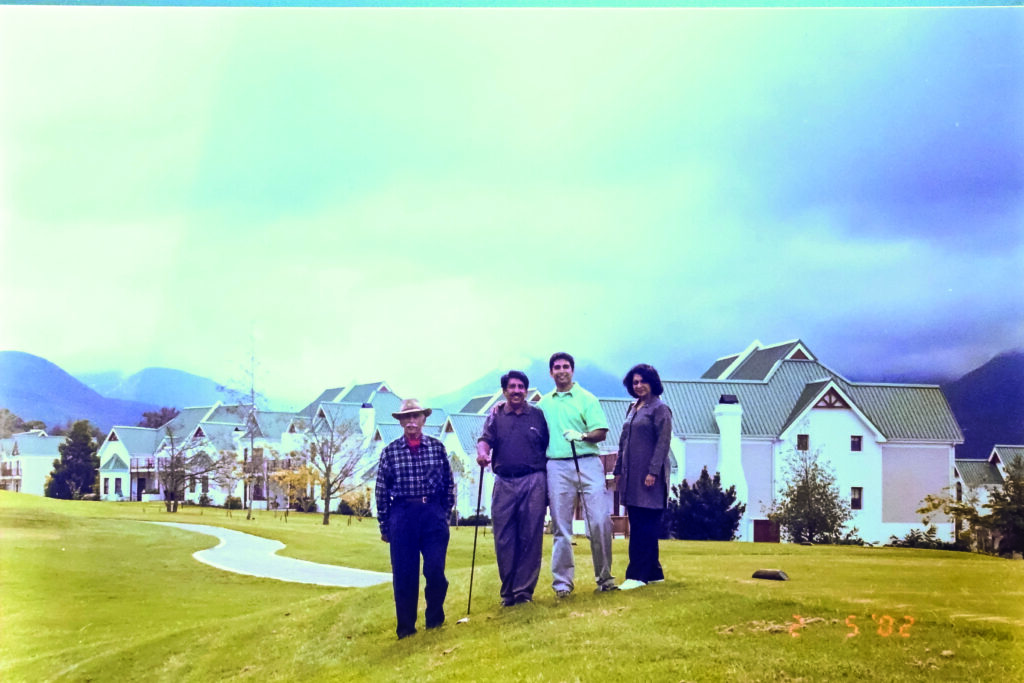
The Links at Fancourt… and the Roman Baths From Plett we continued to George, home to the magnificent Fancourt. Within this luxury estate lie three Gary Player- designed championship courses — Montagu, Outeniqua, and the formidable Links. Before teeing off at The Links, the caddies asked my father and me how many balls we carried. Slightly offended, we replied confidently: six between us.
They suggested doubling that. The previous day, they had looped for Boris Becker, playing off a two handicap — and he had lost four balls.
The Links at Fancourt is a masterpiece of design — undulating fescue, marshlands, blind shots, and narrow fairways that demand precision. One tee shot stands out: elevated high above a valley of reeds and overgrown marsh, the fairway below appearing no wider than a ribbon. Miss by an inch, and your Pro V1 disappears into nature’s embrace. Yet from that tee box, with mountains framing the horizon, it is heartbreakingly beautiful.
While Dad and I tackled the course, Meghna retreated to the Roman Baths, a heated sanctuary overlooking the Outeniqua Mountains. Refreshed, she decided to join us for the final holes, piloting a golf cart with my mother as a somewhat terrified passenger. My mother spent half the time jumping out of the cart before they crossed the small bridges, convinced that Meghana’s driving would send them into the water hazard. Laughter echoed across fairways. And in those rounds beside my father, I found something I hadn’t expected — the quiet comfort of walking fairways together, saying little, yet understanding everything. On a few holes he would nudge me, “Go for it,” urging me to chase a birdie the way he once encouraged me as a child facing something difficult. There was the same steady assurance in his voice. And just like then, it calmed me.

Bonaparte’s last wine!
Driving into Cape Town is an experience that defies prose. As Thabo Mbeki famously said: “I owe my being to the hills and the valleys, the mountains and the glades… the seas and the ever-changing seasons.” We paid our respects to history at Groot Constantia, established in 1685. Walking through the Cloete Cellar, we discussed the legendary 1821 Grand Constance, a wine so coveted it was ordered monthly by Napoleon Bonaparte during his exile on St. Helena. It is said he requested a glass on his deathbed. Tasting the modern iteration, with its notes of honey and dried fruit, you realize you aren’t just drinking wine; you are drinking the heritage
of the Cape. An 1821 bottle, intended for him but undelivered due to his death, later fetched record-breaking sums at an auction. Muscat de Blanc à Petite Grains — small-berried white muscat — carried honey, dried fruit, and caramel through centuries.
The “Steel” Finale in Stellenbosch Cape Town’s golf is equally storied — from the historic Royal Cape Golf Club to King David Mowbray Golf Club, crisp, zesty, and vibrating with notes of green apple. It was the perfect metaphor for our trip: stripping away the “oak” of our daily lives to find the fresh, vibrant core underneath.
Nelson Mandela once wrote, “There is nothing like returning to a place that remains unchanged to find the ways in which you yourself have altered.” South Africa does that to you. The dunes remain. The mountains stand eternal. The ocean keeps breathing. But you return home framed by Table Mountain. We concluded in Stellenbosch at Stellenbosch Golf Club, vineyards lining fairways beneath Simonsberg. Here, Chenin Blanc fermented in stainless steel — “steel wine” — revealed crisp green apple and citrus notes. Locals use this term for Chenin Blanc fermented exclusively in stainless steel tanks. For Meghana and me, it was a revelation. Having grown weary of heavily oaked Chardonnays that taste like vanilla, these “Steel” Chenins were a breath of fresh air— different. Through wind-lashed tee shots, endangered penguins, Roman Baths laughter, historic cellars, and shared drives along the Garden Route, I found not just golf and wine — but family, memory, and the quiet privilege of time together.
A coveted golfing holiday, yes. But more than that — a reminder that in the presence of great landscapes, we become honest with ourselves. And perhaps, like Dadaji at Plett, we smile more easily at the miracle of it all.