The Conch Consortium

Indian craft chocolate is on an upswing with full-of-beans fans appreciating the
diversity in taste in every indigenous bean-to-bar. But beyond the home-grown
brands, it’s a moment when independent growers, fermenters, cooperatives,
researchers and makers must come together to raise the bar further. By
Nolan Michael Mascarenhas
India’s chocolate story is beginning to acquire an accent of its own. It smells of fermenting cacao, carries the character of a farm and arrives with the name of someone who grew it. For a country long accustomed to treating
chocolate as an imported aspiration, this is a delicious change.
Across farms, fermentation centres and small
manufacturing spaces, Indian makers are asking: what might
chocolate taste like when India, with all its diversity, makes
its own? The answers are varied. And that is their beauty.
Consider the different approaches already defining this
space: Mason & Co, based in Auroville, describes working
with organically certified South Indian cacao and an allfemale production workforce. Its published process follows
the bean from harvest and wooden-box fermentation through drying, sorting and roasting. Its contribution lies as much in the relationship between sourcing and craft as in the finished
bar. Paul And Mike works further upstream, combining its
own farms with wet-bean procurement and control over
post-harvest processing. Manam, through Distinct Origins,
places scientific fermentation and drying at the centre of its
West Godavari farmer network.
All these approaches recognise a fundamental— that a
chocolatier cannot rescue problems that begin on a farm.
Soklet’s tree-to-bar approach connects cultivation with
controlled fermentation, drying and
chocolate-making. Kocoatrait, founded
by Poonam and L Nitin Chordia, brings
sustainability, Indian ingredients and
packaging into the conversation, while
Cocoashala contributes training and
incubation. These are complementary
interventions across an emerging
ecosystem, rather than interchangeable
versions of the same business.
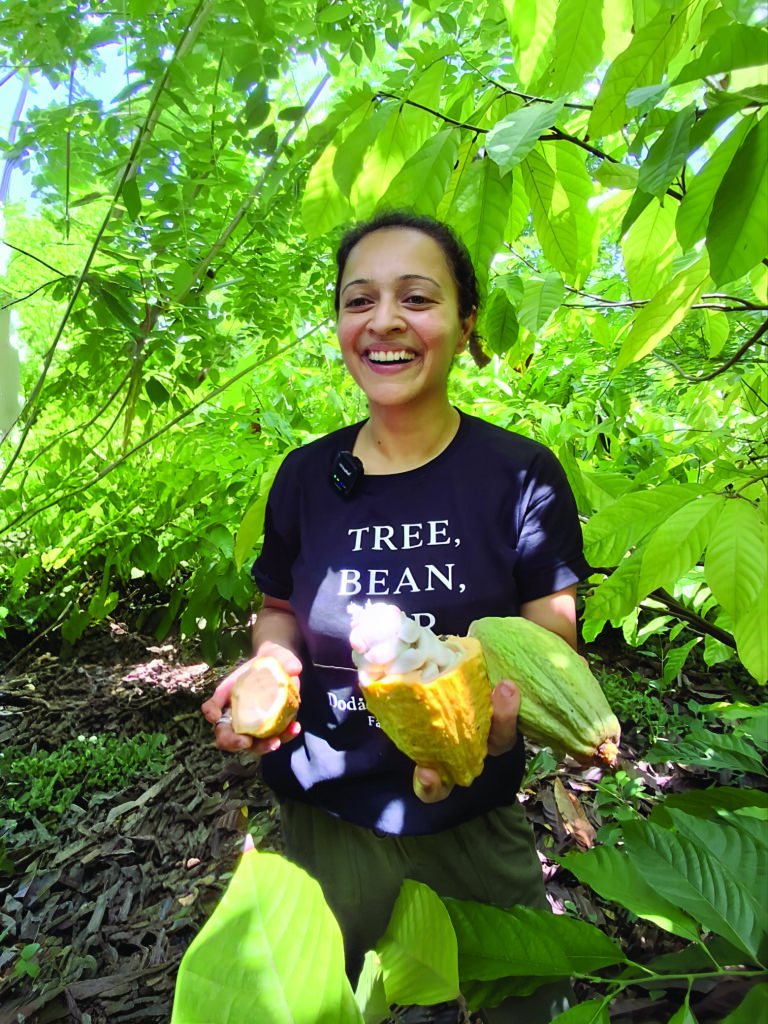
At Dodā, the journey with Chef
Alvinia De Souza begins at The Happy
Hermit Estate in Dodamarg. Growing
cacao and interpreting it through
chocolate brings agriculture and culinary expression into
the same frame. The farm becomes more than a picturesque
sketch on the wrapper.
The craft itself demands that we look beyond the bar.
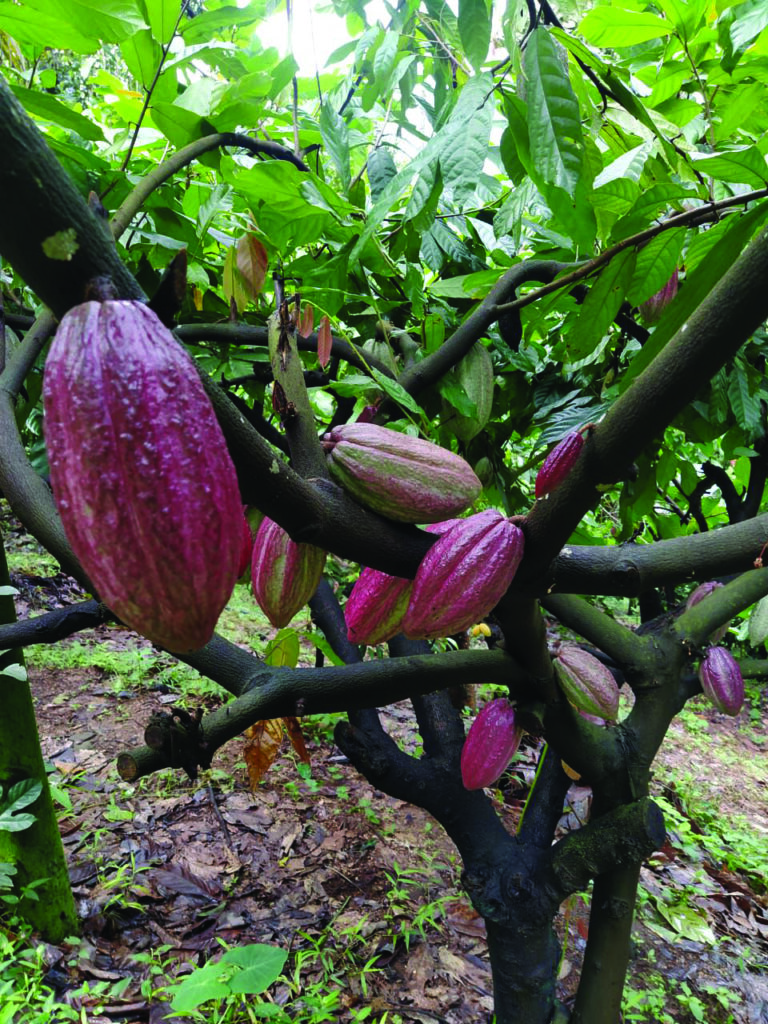
Ripe pods must be harvested and opened; pulp-covered
beans fermented; moisture reduced through careful drying.
Makers then sort, roast, winnow, refine, conch and temper.
Each stage influences the next. Fermentation develops
flavour potential. Drying protects it. Roasting interprets it.
Chocolate making brings it into expression. Independent
growers, fermenters, cooperatives, researchers and makers
whose names rarely receive the same attention as the brands
are vital to how you taste your chocolate.
However, when the industry celebrates the final
expression while underinvesting in the conditions that make
it premium and viable, it is a problem. A beautiful batch is
an achievement. A dependable supply of beautiful batches
is an industry.
For farmers, to grow quality, the questions are practical.
Who will buy the crop? What quality earns a premium?
When will payment arrive? Who carries the loss when
weather disrupts drying or a buyer rejects a lot?
For makers, the questions in turn are: Where will consistent
beans come from? Can flavour remain recognisable across
seasons? How much working capital
must sit in inventory? How does a small
operation absorb testing, equipment,
packaging and transport costs?
In hotels and restaurants, the issues
confronting a pastry chef are dependable
couverture, predictable performance and
technical support. A café needs drinking
chocolate that behaves consistently.
Procurement teams need specifications,
invoices, delivery schedules and a
supplier who answers the telephone.
So, while romance opens the
conversation, it is reliability that everyone is seeking for viable business.
This is where the Indian craft chocolate
movement risks becoming trapped. Each
maker has reasons to protect supplier
relationships, fermentation knowledge
and hard-won commercial advantages.
Sharing appears to strengthen
competitors. Yet, when everyone
withholds everything, the category
inherits duplicated costs, fragmented
knowledge and insufficient capacity to
serve larger buyers.
Some collaboration already exists but
it needs to be more across this nascent
segment. India has a precedent worth examining.
CAMPCO was established in 1973. Its chocolate factory
at Puttur opened in 1986, creating a processing outlet and
market for growers at a time of distress. Its institutional
achievement was to connect farmers with procurement,
processing and demand, rather than leave each grower
negotiating alone.
CAMPCO remains an operating cooperative with
chocolate and industrial cocoa activities. Its own account
describes production under its brand and for other brands.
It should therefore be understood as a continuing institution,
not merely a nostalgic chapter in Indian chocolate history.
Today’s craft sector has different requirements:
segregated origins, flavour-sensitive processing, smaller lots
and meaningful traceability. The opportunity is to adapt the
cooperative logic while designing services for those needs.
An Indian cacao consortium could provide that bridge
Its first task should
be agreement on the
language of quality.
Wet beans, dried
beans and finished
chocolate require
distinct specifications.
Moisture, fermentation
assessment, defects, food
safety and traceability
need measurable
definitions. Transparent
premium schedules
would tell growers what
improvement is worth.
Shared standards should
describe a reliable floor
while preserving the
diversity above it.
Its second task should be regional post-harvest
infrastructure. Farmer groups could access fermentation
facilities, covered drying, storage and testing, supported
by trained operators. Experimental lots should remain
identifiable so that efficiency does not erase origin.
Participation should deliver a visible benefit: better
realised prices, lower rejection rates or access to buyers
previously beyond reach.

The third task is to build a practical bridge into food
and beverage businesses. Participating makers can offer
professional formats through coordinated catalogues,
sampling and technical workshops. Chefs
would encounter a usable ingredient
system with clear applications.
A pilot involving a few farmer
clusters, makers and hospitality buyers
would be more valuable than a grand
launch. Track repeat orders, payment
times, rejected lots, farmer returns and
delivery performance. Let evidence earn
expansion
A consortium should help members
improve quality and reach markets. It
should preserve independent pricing,
customer relationships and commercial
choice. Policy can support this through
extension services, planting-material
research, affordable testing, post-harvest investment
and finance suited to agricultural and manufacturing
cycles. Expansion should follow local suitability, water
availability and ecological assessment. Planting targets
alone tell us little about whether a viable cacao economy
is emerging.
Nor should self-sufficiency become a slogan detached
from demand. India must assess productivity, quality,
processing capacity and buyer requirements together.
Building resilience is a more useful ambition than promising
immediate independence from every imported input.
The beauty of Indian craft chocolate is its plurality.
Auroville need not taste like West Godavari. Dodamarg
should retain its own voice. Different makers should continue
to argue, experiment and surprise us. But they can agree on
how quality is measured, how farmers are treated and how
buyers are served.